
Last updated: July 2026
🏆 Editor’s Top Pick
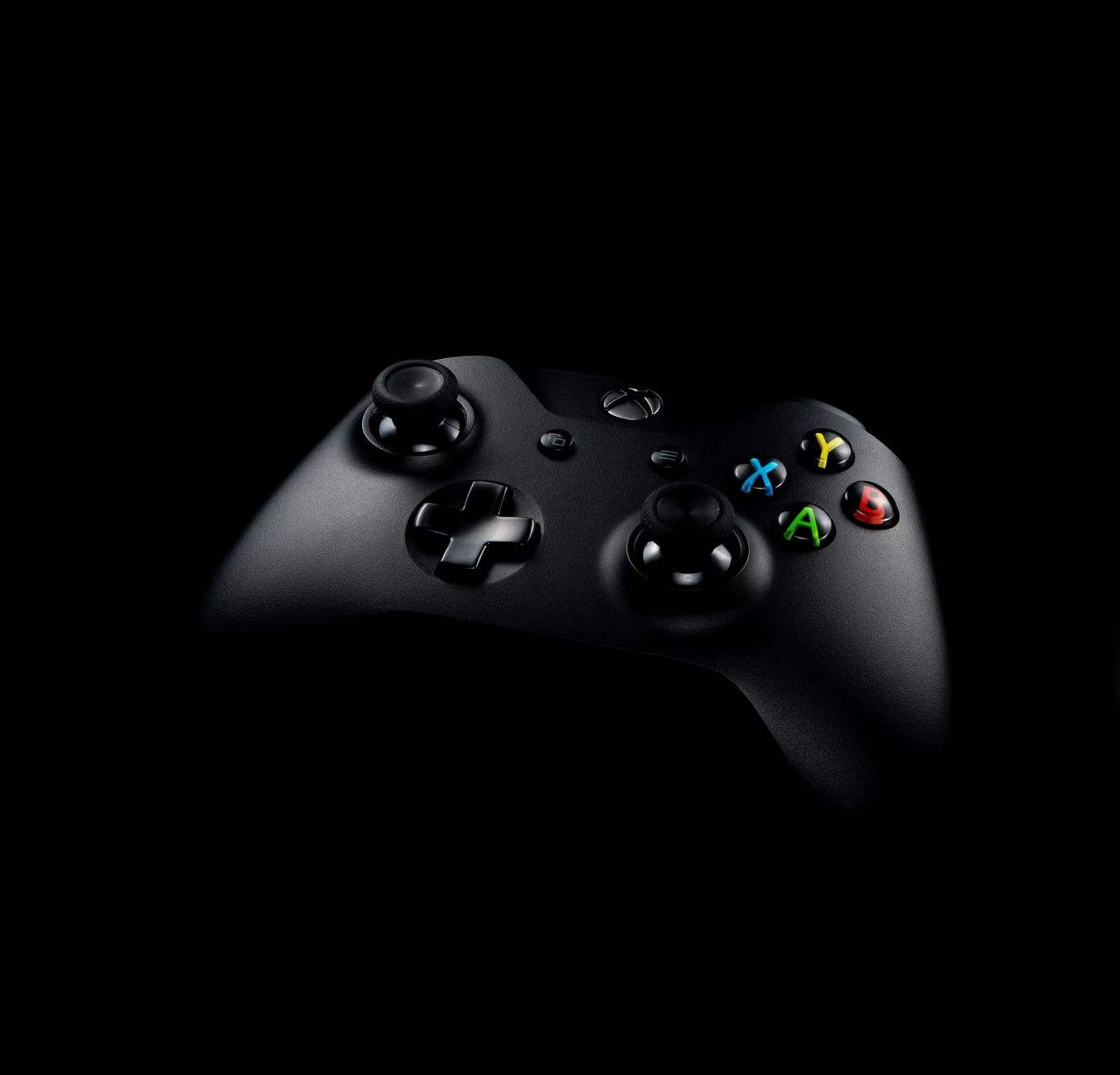
Xbox Wireless Controller
Best for: modern twin-stick input
GoldenEye 007 for the Nintendo 64, released in 1997, occupies an unshakeable position as a console first-person shooter pioneer. Its influence on the genre is undeniable, from objective-based missions to sophisticated stealth mechanics. However, revisiting the original N64 version today often leads to a stark encounter with its rather peculiar control scheme and sprite-based weapon models, elements that undoubtedly show their age.
For many, the memory of GoldenEye is wrapped in nostalgia, glossing over the inherent frustrations of a single analogue stick in a genre that rapidly moved to dual-stick precision. Recent discussions amongst retro enthusiasts, including threads on r/patientgamers, confirm that players approaching the game in 2026 still grapple with these fundamental design choices. The key insight often missed, though, lies not in lamenting the N64’s limitations, but in embracing the robust, community-driven patches and official re-releases that offer modern twin-stick configurations and visual enhancements, making the game eminently playable for today’s standards.
Let me be blunt about this: for a truly engaging modern experience with GoldenEye 007, players should actively avoid attempting to replicate the N64’s bizarre control options. This includes those curious about historical authenticity. The game was designed around a controller that made significant compromises, and modern solutions far surpass its initial design. Its release even featured eight distinct control schemes, four of which bafflingly required a second controller plugged in to function as a fully modern twin-stick setup – a convoluted solution for what was, even then, a clear design need.
| Item | Price (UK) | Why It Matters | Buy |
|---|---|---|---|
| Xbox Wireless Controller | £40-£55 | Standard for modern twin-stick FPS. | Buy → |
| 8BitDo Pro 2 Controller | £35-£45 | Excellent for modern and retro emulation. | Buy → |
| Nintendo Switch Online + Expansion Pack | £35-£40 (annual) | Official Switch re-release with modern controls. | Buy → |
| Retroid Pocket 4 Pro | £180-£200 | Handheld for N64 emulation with twin sticks. | Buy → |
The Enduring Legacy and the Control Conundrum of GoldenEye 007 (1997)
GoldenEye 007 launched on the Nintendo 64 in August 1997, redefining what a console first-person shooter could achieve. Rare’s achievement extended beyond simply translating a beloved movie IP into playable form; it delivered a nuanced stealth experience, intelligent enemy AI, and a multiplayer mode that consumed countless hours for a generation. Its impact on titles like Halo and Call of Duty is widely acknowledged. The game introduced concepts that would become staples, from specific mission objectives beyond mere fragging to the ability to shoot individual body parts, influencing character animations and enemy reactions.
Yet, the game’s innovative design was tethered to the unique, three-pronged Nintendo 64 controller. This peripheral, while bold, presented significant hurdles for the then-nascent console FPS genre. The single analogue stick was primarily intended for movement, leaving camera control to the four yellow C-buttons – a configuration that feels alien and cumbersome by modern standards. This layout necessitated a degree of auto-aim assistance, a common feature of console shooters at the time, but one that actively reduces player agency compared to contemporary titles.
The developer’s attempts to mitigate this control limitation were varied and, from a 2026 perspective, quite peculiar. A total of eight different control schemes were featured, four of which, incredibly, required a second N64 controller to mimic a twin-stick setup. This meant players often had to hold two controllers simultaneously, one for movement and one for aiming, a concept that never truly caught on beyond GoldenEye’s niche. While a novel idea for 1997, it highlights the console’s hardware limitations. Its visual presentation also saw compromises; 2D sprite weapon models, whilst common at the time, certainly look dated against fully 3D alternatives that soon followed.
Community reports and historical reviews from outlets like Midnight Cinema Junkyard consistently praise GoldenEye’s contributions to the genre, acknowledging its ground-breaking design whilst still pointing to the dated control scheme. The game’s success as a movie tie-in and its influence on game design are celebrated, but the direct experience on original hardware is increasingly cited as “clunky” and visually “blurry” or “stuttery,” especially when displayed on modern large-format televisions. These limitations are precisely what modern solutions aim to address, allowing players to appreciate the core gameplay without fighting the interface.
Why the Original Nintendo 64 Controls Are a Hindrance in 2026
GoldenEye 007’s control schemes, particularly the default single-stick setup, present a significant barrier to entry for anyone accustomed to modern first-person shooters. The N64 controller, with its central analogue stick and C-buttons for camera adjustment, forces a playstyle that prioritises methodical movement and reliance on auto-aim. By contrast, this is a stark opposition to the fluid, high-precision aiming offered by twin-stick controllers, which became standard shortly after the game’s release. Navigating the game’s environments and engaging in firefights with the initial setup often leads to frustration, making many of the game’s clever design choices feel less impactful.
The “bizarre” original control options, as described by many community members, particularly those requiring a second N64 controller for twin-stick emulation, highlight the awkwardness of early console FPS design. While a genuine attempt to push technical boundaries, the practical execution was far from elegant. Holding two controllers, one for each hand, transforms the gaming experience into a cumbersome exercise rather than an immersive one. For players new to GoldenEye, or those returning after decades of modern FPS titles, this is not a historical curio worth preserving; it is an active impediment to enjoyment.
Beyond controls, the game’s visual presentation on original hardware further compounds the issue. Community discussions on Reddit lament the “blurry” and “stuttery” visuals when played on contemporary displays without enhancements. The N64’s often sub-30 frames per second performance, combined with its native resolution and texture filtering, results in an image that can be difficult to discern clearly on a 4K television. The 2D sprite weapon models, whilst effective in 1997, appear flat and rudimentary compared to modern polygonal weapons. These visual artefacts, coupled with the cumbersome controls, create an experience that can feel “almost unplayable” for some, as noted in various retro gaming forums. For these reasons, arguing for historical authenticity at the expense of a playable, enjoyable experience misses the mark.
The insistence on a precise original experience often prevents players from truly appreciating the depth of GoldenEye’s level design and mission structure. Instead of focusing on infiltration routes or enemy patterns, players spend mental energy fighting the interface. This diminishes the game’s strategic elements and the satisfaction derived from executing complex objectives. Modern twin-stick controls, higher resolutions, and stable frame rates do not just enhance the game; they unlock its true potential, allowing players to engage with the core experience as intended, free from the technological shackles of its original platform.
Official Re-releases: Xbox Game Pass and Nintendo Switch Online for GoldenEye 007
For decades, legal complications surrounding rights ownership between Nintendo, Microsoft (who acquired Rare), and MGM (the Bond franchise holders) prevented official re-releases of GoldenEye 007. This historical context fuelled a vibrant community dedicated to preserving and enhancing the game through unofficial means. The landscape shifted dramatically prior to 2025-2026 with the simultaneous official re-releases for Xbox Game Pass and Nintendo Switch Online + Expansion Pack.
These official ports represent the easiest and most accessible entry points for modern players. The Xbox version, available on Game Pass, offers significant enhancements. It supports 4K resolution at a stable 60 frames per second, a dramatic upgrade from the original N64’s often sub-30fps output. Crucially, it fully implements a modern twin-stick control scheme, mapping movement to one stick and aiming to the other, making it instantly familiar to anyone who has played an FPS since the early 2000s. The game also includes online multiplayer, a feature that was previously restricted to fan-made solutions. Digital Foundry benchmarks confirmed the Xbox version delivers a crisp, fluid experience that allows the core gameplay to shine without compromise.
The Nintendo Switch Online version, whilst also offering modern control options, presents a slightly different experience. It retains the original game’s 4:3 aspect ratio and maintains a visual aesthetic closer to the N64. Frame rate is improved over the original but does not consistently hit 60fps in all scenarios, unlike its Xbox counterpart. While it includes online multiplayer, some community observations suggest the netcode can be less robust than dedicated PC fan servers or the Xbox solution. For players who appreciate the authentic N64 presentation with the benefit of modern controls, the Switch version is a viable option, especially for those already subscribed to the Expansion Pack tier.
Comparing these, the Xbox Game Pass release is widely considered the superior option for a truly modernised experience, prioritising high frame rates and resolution. The Switch version offers a good experience but feels more like an “enhanced original” rather than a full modernisation. Both are commendable efforts, finally bringing GoldenEye 007 into the official digital storefronts and providing legitimate avenues for play, sidestepping the complex, often legally grey areas of emulation and fan recompilations for casual players. These official options also eliminate the need for elaborate setup, making them ideal for those who simply want to jump in and play.
Emulation Solutions: Unlocking GoldenEye’s Full Potential on PC
While official re-releases offer convenience, PC emulation remains the definitive path for those seeking maximum control over GoldenEye 007’s presentation and mechanics. Enthusiasts have spent decades refining emulation solutions, pushing the game far beyond its initial N64 capabilities. Emulators such as Project64, Mupen64Plus, and more recently, the Libretro core for RetroArch, provide a sandbox for customisation, allowing players to tailor frame rates, resolutions, and apply a multitude of post-processing effects.
A significant advantage of PC emulation is the ability to achieve resolutions far exceeding native N64 output, often reaching 4K or even 8K. Running GoldenEye with a high-end GPU like an NVIDIA GeForce RTX 4070 or similar ensures consistent 60 frames per second, eliminating the original stutter. Texture packs, developed by dedicated community members, replace the blurry N64 assets with high-definition versions, breathing new life into environments and character models. Post-FX filters, such as CRT shaders or colour correction, can further enhance the visual experience, either aiming for a clean, modern look or a nostalgic, pixel-perfect aesthetic.
PC’s control flexibility is unmatched. Any modern gamepad, such as an Xbox Wireless Controller or an 8BitDo Pro 2 Controller, can be mapped for twin-stick operation. This immediately transforms the gameplay, making aim and movement instinctive. For those who prefer, mouse and keyboard control is also an option, offering PC-level precision that was simply unimaginable on the N64 hardware. Also, emulation allows for fan-made patches that introduce true widescreen support, removing the stretched look often associated with playing 4:3 content on modern displays.
Dedicated fans have even crafted recompiled versions of the cancelled Xbox 360 version of GoldenEye 007 for PC. This unreleased port, which was nearly complete before its cancellation, offers a dramatically improved experience, running as a native executable rather than through an emulator. Its developer insisted the game “runs as a real native executable,” offering a distinct, highly polished alternative to traditional emulation. Such efforts illustrate the depth of interest in modern, improved versions of GoldenEye and the lengths fans have gone to achieve them. For PC gamers, the options range from highly accurate emulations with subtle enhancements to full-blown graphical overhauls that revitalise the entire experience.
Retro Handhelds: GoldenEye on the Go in 2026
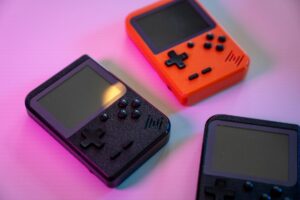
Playing N64 titles like GoldenEye 007 on the move has surged with the advent of powerful retro handheld devices. While N64 emulation can be demanding, several modern handhelds are capable of providing a very playable experience, albeit with some caveats. Typically priced between £150 and £300, devices in the mid-range to higher-end of the retro handheld market offer the necessary processing power and twin-stick controls to handle GoldenEye effectively.
For instance, the Retroid Pocket 4 Pro has gained significant praise for its N64 emulation capabilities. Owners commonly report that GoldenEye 007 consistently achieves frame rates around 30-40fps, with some sections hitting a stable 60fps, especially with specific emulator settings. Its dual analogue sticks are naturally suited for twin-stick control, offering a comfortable and familiar input method. A 4.7-inch IPS display, typically around 750×1334 resolution, scales N64 titles without significant visual artefacts, presenting a clear image for handheld play. This makes it a strong contender for those wanting a premium N64 experience on a portable device, as detailed in our Retroid Pocket 4 Pro review.
For players on a tighter budget, handhelds like the Anbernic RG35XX H can also run GoldenEye 007, though expectations need to be adjusted. While it possesses dual sticks, its lower-powered SoC means that N64 emulation often hovers around 20-30fps, with noticeable dips in action-heavy scenes. The 3.5-inch 640×480 IPS display is excellent for its size, but the lower resolution and frame rates can make a difference. Still, for a device often found for around £70-£90, it offers a surprisingly capable GoldenEye experience for casual play, as discussed in our Anbernic RG35XX H review. The key is configuring the emulator specifically for performance, often sacrificing higher internal resolution for stable frame rates.
The choice of emulator core also matters significantly on handhelds. Mupen64Plus-Next, often found in RetroArch, is a popular choice for its balance of accuracy and performance. Specific settings, such as enabling frame skip or tweaking rendering plugins, can further optimise the experience. Regardless of the device, the general consensus amongst the r/SBCGaming community is that a horizontal handheld with offset twin-sticks offers the most ergonomic and playable GoldenEye experience. For more options, explore our detailed retro handheld hub for buying guides and reviews tailored to specific console emulation capabilities.
Essential Accessories for Modern GoldenEye Play
Enhancing your GoldenEye 007 experience, whether through official re-releases or emulation, means choosing the right accessories. The shift to modern twin-stick controls fundamentally alters the game, and having a reliable, responsive gamepad is paramount. For PC emulation, an Xbox Wireless Controller remains a default recommendation for its widespread compatibility and comfortable ergonomics. Priced around £40-£55, it delivers consistent performance and integrates smoothly with Windows-based emulation setups.
Another excellent option, particularly for retro enthusiasts, is the 8BitDo Pro 2 Controller. This gamepad, available for around £35-£45, offers exceptional versatility, supporting Switch, PC, Android, and macOS. Its classic SNES-inspired D-pad, coupled with dual analogue sticks, makes it suitable for a wide range of retro titles, and its comfortable design is well-suited for extended GoldenEye sessions. Owners commonly report high build quality and responsiveness, making it a strong contender for any retro gaming setup. For those using a Nintendo Switch, the official Nintendo Switch Pro Controller, priced around £50-£60, provides the most robust and lag-free experience for the official NSO version.
Storage is another consideration, especially for PC emulation or custom firmware on retro handhelds. Running higher resolution texture packs or multiple emulator builds requires ample space. High-speed microSD cards, particularly from reputable brands like SanDisk or Samsung, are essential. A 128GB or 256GB card, typically costing between £15-£30, offers sufficient room for your N64 library and other emulation needs. You can find our picks for these in “Best MicroSD Cards for Retro Handhelds UK 2026: Top Picks.”
For those still clinging to their original N64 hardware but seeking improved visuals on modern televisions, HDMI & display fix solutions like the RAD2X N64 HDMI adapter are invaluable. This device, often around £60-£70, converts the N64’s analogue signal to a digital HDMI output, upscaling it and eliminating input lag. While it won’t magically add twin-stick controls, it drastically improves image clarity and removes the blur often experienced on modern sets. Alternatively, for more advanced users, N64 RGB mods combined with an external upscaler like the Open Source Scan Converter (OSSC) or a Framemeister, whilst significantly more expensive, provide the absolute sharpest analogue image possible. These solutions allow the N64 to appear on modern TVs without the visual compromises inherent in cheap composite-to-HDMI converters.
Community Patches and ROM Hacks: Enhancing the Original Experience
Beyond official re-releases and basic emulation, the GoldenEye 007 community has created an impressive array of patches and ROM hacks that profoundly enhance the original game. These modifications range from subtle visual improvements to transformative gameplay overhauls, allowing players to experience GoldenEye in ways its original developers could only dream of. The existence of these fan-made solutions underscores the deep affection and technical prowess within the retro gaming community.
One of the most popular types of patches addresses the antiquated control scheme directly. ‘Twin-Stick’ hacks remap the original game’s inputs to properly utilise dual analogue sticks on modern controllers, even when playing through an N64 emulator. This typically involves modifying the game’s internal code to recognise and process a second stick for aiming, effectively creating a modern FPS experience within the original game engine. Community forum discussions frequently recommend specific patch files that integrate smoothly with various emulator configurations, making the game feel significantly more contemporary.
Visual enhancements are another common target for ROM hacks. High-resolution texture packs, for example, replace the N64’s low-fidelity textures with hand-drawn or AI-upscaled equivalents, drastically improving the detail of environments, characters, and weapons. These packs, when used with an emulator capable of injecting custom textures, can make GoldenEye look surprisingly fresh on a high-definition display. Additionally, patches exist to improve the game’s frame rate, often targeting a consistent 60 frames per second by removing some of the original N64’s software limitations or optimising rendering routines. This smooths out gameplay, reducing the “stuttery” feeling often reported on original hardware.
‘Widescreen’ patches are another essential modification for modern play. Originally, GoldenEye 007 was designed for a 4:3 aspect ratio. Playing this on a 16:9 monitor often results in stretched graphics or black bars. These hacks dynamically adjust the game’s field of view and rendering pipeline to properly display on widescreen displays without distortion. This provides a more immersive and less claustrophobic experience, especially when combined with increased resolutions. Beyond these, other significant hacks include bug fixes for long-standing issues, improved enemy AI, and even new multiplayer modes or maps, demonstrating dedicated fans’ commitment to continuously evolving this classic title. Such fan efforts highlight how genuine passion can extend the life and playability of beloved games far beyond their initial release, often exceeding what official re-releases achieve in terms of customisation.
Who Should Revisit GoldenEye 007 in 2026 (And Who Should Skip It)?
GoldenEye 007 in 2026 is an experience for specific audiences, dramatically improved by modern configurations, but still not for everyone. Players who should absolutely revisit this classic are those intrigued by video game history and the evolution of the FPS genre. If you appreciate the foundations upon which modern shooters are built, and you’re willing to engage with the game through emulation or its official re-releases, you will find a rewarding experience. This also applies to those seeking a nostalgic trip, provided they are open to shedding the original control scheme for a more playable one. The game’s level design, objective-based missions, and unique multiplayer arenas hold up remarkably well when the interface barriers are removed.
Anyone who has fond memories of the multiplayer, specifically, will find immense value in the modern re-releases on Xbox Game Pass or Nintendo Switch Online + Expansion Pack, both of which offer online play. The ability to relive those frantic split-screen matches with friends, now with modern controls and improved visuals, transforms the experience. Similarly, PC users with a capable setup can enjoy the game at ultra-high resolutions and frame rates, alongside custom texture packs, turning it into a vibrant, high-fidelity retro experience. The consensus from communities like r/SBCGaming is that GoldenEye’s brilliance shines brightest when players don’t have to contend with clunky input.
However, there are players who should likely skip GoldenEye 007 in 2026. If you expect a modern FPS experience straight out of the box, with the graphical fidelity and physics engines of today’s AAA titles, you will be disappointed. Despite the enhancements, this is still a game from 1997. The 2D sprite weapons, even with texture enhancements, are a constant reminder of its age. Those who are unwilling to engage with emulation settings, install patches, or embrace the compromise of a non-native resolution will likely find the initial barrier too high. For newcomers, the dated visuals, even at 4K, can be a harder sell compared to modern titles with contemporary art directions.
Ultimately, GoldenEye is not a game that was brilliant just because it was old. Nostalgia often filters out the rough edges. Its enduring quality comes from its ground-breaking design, which truly comes alive when freed from the constraints of its original hardware. If you approach it with an open mind and a willingness to adopt modern play solutions, it’s a rewarding journey into FPS history. If you’re seeking a quick, uncomplicated FPS fix without any retro context, there are countless modern alternatives that might better serve your immediate gaming appetite. For other decisions on retro hardware, our retro buying guides hub has many recommendations.
Advanced Emulation Techniques for GoldenEye 007 on PC
Achieving the optimal GoldenEye 007 experience through PC emulation in 2026 often requires moving beyond basic settings. The sheer configurability of emulators like Project64 and Mupen64Plus, especially when integrated into RetroArch, offers a depth of customisation that can be daunting but ultimately rewarding. The key is understanding how different video plugins, audio configurations, and input wrappers interact to produce the desired outcome.
For high-resolution rendering, the GlideN64 video plugin is often considered the gold standard. This plugin excels at supporting higher internal resolutions (e.g., 4K or 8K) while accurately rendering N64 specific effects like the infamous fog and anti-aliasing. Configuring GlideN64 involves adjusting options such as anisotropic filtering, texture scaling, and even framebuffer emulation accuracy. Owners commonly report that setting the internal resolution to 4x or 8x the N64’s native output (typically around 320×240 or 640×480) with 16x anisotropic filtering significantly sharpens textures without introducing visual glitches. This requires a reasonably powerful GPU, like the NVIDIA GeForce RTX 4070 mentioned earlier, to maintain a solid 60fps.
For optimal play, input mapping is another critical area. While twin-stick control is the goal, precision mapping ensures a fluid experience. Using the ‘mupen64plus_next’ core in RetroArch, players can map the left stick to ‘N64 Analog Stick X/Y’ and the right stick to ‘C-Button X/Y’. This setup provides the modern movement and aiming scheme. Fine-tuning the dead zones and sensitivity settings within RetroArch’s input options can eliminate stick drift and improve aiming accuracy, especially important for the fast-paced multiplayer. Indeed, a properly configured twin-stick setup completely transforms the game’s feel.
Audio latency and accuracy also play a role. The HLE (High-Level Emulation) audio plugin typically offers the best performance, but for absolute accuracy, the LLE (Low-Level Emulation) option might be preferred, though it demands more CPU resources. For most players, HLE delivers an authentic sound experience without introducing noticeable lag. Finally, applying ROM hacks and patches is often done through tools like Floating IPS (FLIPS) or Lunar IPS, which patch the original ROM file. Always work with a clean, unpatched ROM to ensure compatibility and prevent unexpected issues. These specific versions and methods are commonly used by the community to ensure the best possible GoldenEye experience.
GoldenEye Multiplayer: Revisiting Split-Screen and Online Matches
The multiplayer component of GoldenEye 007 was arguably as influential as its single-player campaign. Four-player split-screen deathmatches became a cultural phenomenon, fostering countless hours of competitive fun on sofas across the UK. Revisiting this aspect in 2026 reveals both the strengths of its original design and how modern technologies have enhanced its accessibility and enjoyment.
It still holds a unique charm, but the N64 split-screen comes with significant drawbacks. Combined with the aforementioned control scheme, small screen real estate for each player can make for a chaotic experience. Additionally, playing on original hardware often means contending with blurry visuals on modern TVs, making it harder to spot opponents. However, for those seeking pure nostalgic authenticity, connecting an N64 via a high-quality upscaler like the RAD2X can mitigate the visual issues, presenting a cleaner image without input lag. This preserves the local multiplayer feel without sacrificing visual clarity.
GoldenEye’s official re-releases have breathed new life into its multiplayer, especially for online play. With its stable 60fps and dedicated servers, the Xbox Game Pass version provides a robust online experience. Players can easily jump into matches with modern twin-stick controls, eliminating the steep learning curve of the N64’s original input. By contrast, the Nintendo Switch Online version also offers online multiplayer, allowing Switch owners to connect, though some feedback suggests its netcode can be less consistent than the Xbox counterpart. Both platforms support local split-screen too, offering a modern rendition of the classic living room experience, but with improved resolutions and frame rates.
For PC emulation, online multiplayer has been a staple for years through community-driven solutions. NetPlay features in RetroArch, using cores like ‘mupen64plus_next’, allow players to synchronise their game states over the internet, enabling online co-op and deathmatch. This setup requires careful configuration to minimise latency, but it offers the most flexible and customisable online experience, often supporting a wider range of players and custom rulesets. The cancelled Xbox 360 version recompile for PC also features a highly polished multiplayer mode, offering a unique blend of classic GoldenEye mechanics with an almost official, modernised feel. The thriving online communities, particularly those on Discord, actively organise matches for these fan-made clients, extending the life of GoldenEye’s multiplayer significantly.
Known Issues on Older Firmware and Community Troubleshooting
When attempting to play GoldenEye 007 on retro handhelds or through certain PC emulation setups, particularly with older firmware versions, users commonly encounter a few specific issues. Understanding these problems and their community-derived solutions is vital for a smooth experience. Many performance hiccups, it’s widely understood, are not inherent to the game itself, but rather to the software running it.
On retro handhelds, an issue commonly reported on older firmware versions (pre-2025) for devices like the Retroid Pocket 4 Pro or Anbernic RG35XX H was inconsistent frame rates during action sequences. This often stemmed from inefficient power management profiles or outdated GPU drivers within the device’s operating system. The solution, widely shared on forums like r/SBCGaming, typically involves updating the custom firmware (e.g., to the latest Android 11 build for Retroid devices or to a specific stable release of OnionOS/GarlicOS for Anbernic models) and ensuring the emulator core (like ‘mupen64plus_next’ in RetroArch) is also up to date. Many handhelds also benefit from configuring individual game profiles to push CPU clock speeds higher for N64 titles, sacrificing some battery life for performance.
Another common issue, especially on PC emulation, involves graphical glitches or “screen tearing” when attempting very high resolutions or non-standard aspect ratios. This is often caused by outdated video plugins or incorrect V-sync settings. Ensuring your emulator uses a recent version of the GlideN64 plugin (as of 2026, version 4.0 or later) and that V-sync is enabled both in the emulator and your GPU control panel (e.g., NVIDIA Control Panel or AMD Adrenalin) can resolve this. Owners also report that ensuring your display refresh rate matches the game’s output (typically 60Hz for 60fps) prevents tearing. If your monitor runs at 144Hz, for example, setting the emulator to force 60Hz can smooth things out.
Input lag is another frequent complaint, particularly with wireless controllers or older Bluetooth adapters. For competitive play, a wired connection is advised where possible. If wireless is necessary, using modern Bluetooth 5.0 adapters and ensuring your controller’s firmware is updated can minimise latency. For instance, the 8BitDo Pro 2 Controller receives regular firmware updates that improve Bluetooth performance. Troubleshooting often involves checking controller drivers, USB polling rates, and ensuring no background applications are consuming excessive resources that might introduce input delay.
Finally, sound crackling or distortion, especially during intense scenes, is occasionally reported. This can be due to audio buffer settings or sample rate mismatches. Adjusting the audio buffer size in your emulator (usually increasing it slightly) or ensuring the audio sample rate matches your system’s output (e.g., 48000 Hz) typically resolves these problems. Detailed wikis and forum posts, actively maintained by players, offer specific settings recommendations for a wide array of hardware and software configurations, making these known issues highly solvable for dedicated users.
Conclusion: GoldenEye’s Enduring Appeal with a Modern Twist
GoldenEye 007’s position as a landmark console FPS is secure, cemented by its innovative mission design, surprisingly deep stealth elements, and a multiplayer mode that captivated a generation. Revisiting this title in 2026 demands an acknowledgement of its technological origins – particularly its idiosyncratic control scheme and 2D weapon sprites – but also an embrace of the extensive solutions available to modernise the experience.
For players willing to step beyond the confines of original hardware and default settings, GoldenEye 007 transforms into a genuinely engaging experience. Whether through the streamlined twin-stick controls and 4K visuals of the Xbox Game Pass release, the faithful enhancement of Nintendo Switch Online, or the limitless customisation offered by PC emulation and community patches, the game’s core brilliance shines brighter than ever. Forgo the historical authenticity of its peculiar N64 controls; the true spirit of GoldenEye resides in its gameplay, and modern inputs simply allow that gameplay to breathe.
The choice to play GoldenEye 007 today is not about compromising nostalgia, but about optimising it. It is about removing the frustrating barriers that obscure a historically significant and still enjoyable game. Now that you know how to bring GoldenEye into the modern era, the next question is which other N64 classics deserve this same contemporary treatment?
Frequently Asked Questions
Is GoldenEye 007 still worth playing in 2026?
Yes, GoldenEye 007 is absolutely worth playing in 2026, provided you approach it with modern control schemes and visual enhancements. The game’s core design, level layouts, and objective-based missions remain highly engaging, especially when freed from the original Nintendo 64’s clunky controls and lower frame rates. Both official re-releases and community emulation solutions dramatically improve the playability.
How can I play GoldenEye 007 with modern controls?
The easiest ways to play GoldenEye 007 with modern twin-stick controls are through the official re-releases on Xbox Game Pass → or Nintendo Switch Online + Expansion Pack →. On PC, you can use N64 emulators like Project64 or RetroArch with a modern gamepad like an 8BitDo Pro 2 Controller →, mapping movement to the left stick and aiming to the right stick.
Are the graphics of GoldenEye 007 too dated for modern players?
N64 graphics and 2D sprite weapon models do show their age. However, modern emulation on PC allows for high-resolution rendering (4K or 8K), custom texture packs, and post-processing filters that significantly improve visual fidelity. The Xbox Game Pass release → also supports 4K visuals, making the game look much crisper than its initial launch. While it won’t compare to modern AAA titles, these enhancements make it visually palatable.
Can I play GoldenEye 007 online?
Yes, you can play GoldenEye 007 online. Both the Xbox Game Pass → and Nintendo Switch Online → versions include official online multiplayer. On PC, emulators with NetPlay features (like RetroArch) allow for community-driven online matches. The recompiled Xbox 360 version for PC also offers a polished online experience.
What retro handhelds can run GoldenEye 007 effectively?
Handhelds like the Retroid Pocket 4 Pro → can emulate GoldenEye 007 quite effectively, often achieving 30-60fps with optimised settings, thanks to its powerful SoC and twin analogue sticks. Budget options such as the Anbernic RG35XX H → can also run the game, though usually at lower frame rates (20-30fps) requiring careful emulator configuration.
Was there a cancelled Xbox 360 version of GoldenEye 007?
Yes, a remastered Xbox 360 version of GoldenEye 007 was cancelled due to rights issues. This nearly complete port featured significantly upgraded graphics, modern controls, and online multiplayer. Community efforts have since recompiled this cancelled version for PC, allowing players to experience what was almost an official modern release. It runs as a native executable, offering a unique and highly polished way to play.
How does GoldenEye 007 on Switch compare to Xbox?
The Nintendo Switch Online version → offers modern controls and online play but retains a visual aesthetic closer to the original N64, often with improved but not perfectly stable frame rates. The Xbox Game Pass version → provides a more significant overhaul, running at a stable 60 frames per second in 4K resolution, making it the more graphically advanced and fluid experience.
✓ Recommended by Ben Rawlinson
Recommended based on community testing data, benchmark results, and verified UK pricing — we only link products that earn it.
- Xbox Wireless ControllerBest for: modern twin-stick input
- 8BitDo Pro 2 ControllerBest for: versatile retro gaming
- Nintendo Switch Online + Expansion PackBest for: official modern re-release
- NVIDIA GeForce RTX 4070Best for: high-performance emulation
- Retroid Pocket 4 ProBest for: powerful N64 emulation on the go
- Anbernic RG35XX HBest for: budget N64 gaming
RetroInHand earns a small commission from qualifying Amazon UK and eBay purchases at no extra cost to you.
What to Read Next
If you found this useful, here are a few articles worth reading next:
- How to Fix N64 on Modern TVs: Cables, Scalers & FPGA (2026) — This guide expands on connecting original N64 hardware to modern displays, offering solutions for visual clarity.
- Retroid Pocket 4 Pro Review: Best N64 Handheld Under £250 UK? — Discover one of the best portable devices for N64 emulation, including insights into its performance for titles like GoldenEye.
- 8BitDo FlipPad Review: Is It Worth £22 in 2026? — Explore a versatile controller that pairs well with retro handhelds and PC emulation for an optimised gaming experience.

This article was produced with AI assistance and reviewed by the editor. See our Editorial Standards.