Last updated: July 2026
🏆 Editor’s Top Pick
AYN Odin 2 Pro
Best for: high-end PS2/Switch emulation
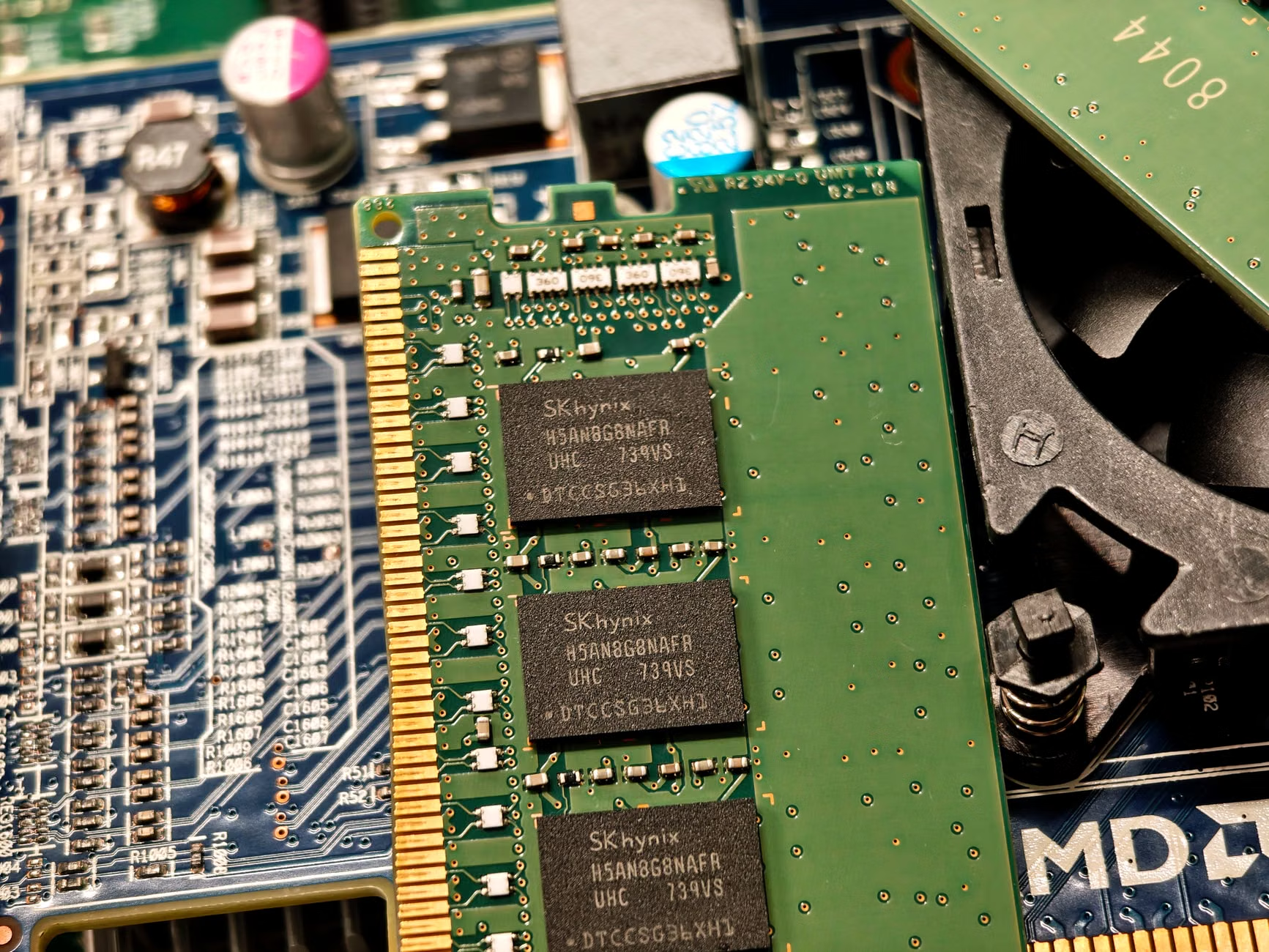
The tech headlines often scream about market volatility, and 2026 is already shaping up to be a turbulent year for memory. Mainstream tech advice points to upgrading desktop PC RAM now, citing predicted shortages and significant price increases. This stems largely from the overwhelming demand for high-bandwidth memory (HBM) and server-grade DDR5 from the burgeoning AI industry, which diverts manufacturing capacity and impacts pricing for consumer-grade components. UK market analysis projections are particularly stark, with DDR5 16GB module pricing expected to rise by over 40% by Q2 2026. This isn’t just about desktop upgrades, however; this economic pressure fundamentally reshapes the landscape for retro handheld manufacturing and, by extension, what we can expect from future devices.
While general tech coverage fixates on PC upgrades, the crucial role of RAM in new retro handhelds goes beyond simply replacing old sticks. For our corner of the gaming world, the question isn’t whether to upgrade your existing PC memory, but rather ensuring that new handheld devices offer sufficient capacity for demanding new emulators. The market will see an anticipated surge in component costs, certainly, but higher RAM counts on new retro handhelds in 2026 are a non-negotiable for stable PS2 and Switch emulation, not an optional luxury. This shift means that savvy buyers need to understand how memory capacity directly impacts their experience with the games they truly want to play.
Forget the vague marketing. We need to look at specific hardware and how it handles the most challenging emulation targets. Handhelds with limited memory capacity, such as 2GB or 4GB, will struggle or fail entirely with anything beyond older 8-bit, 16-bit, and even 32-bit systems like the PlayStation Portable. For those aiming to play more modern retro consoles, from the PlayStation 2 and Nintendo GameCube right up to early Nintendo Switch titles, 8GB of RAM should be seen as the baseline minimum in 2026, with 12GB or even 16GB offering far greater stability and performance headroom. This isn’t just about raw processing power; it’s about giving the emulator and the operating system the necessary breathing room to handle complex game states and texture caches efficiently.
| Product | Price (UK) | Best For | Score | Buy |
|---|---|---|---|---|
| AYN Odin 2 Pro | £350–£450 | High-end PS2/Switch emulation | 9.5/10 | Buy → |
| Retroid Pocket 4 Pro | £200–£250 | Premium PS2/GameCube emulation | 8.8/10 | Buy → |
| Anbernic RG556 | £170–£200 | Entry-level PS2/Dreamcast emulation | 7.9/10 | Buy → |
The Shifting Landscape of Memory Costs and AI Demand in 2026
The global memory market is experiencing unprecedented pressure, and 2026 is only expected to intensify these trends. Reports from analysts like TrendForce and IC Insights confirm that the overwhelming demand from the AI industry for High-Bandwidth Memory (HBM) and server-grade DDR5 is reshaping manufacturing priorities. Large-scale data centres, powering everything from generative AI models to advanced machine learning algorithms, require vast quantities of high-performance, high-capacity memory. This demand is incredibly lucrative for manufacturers, who naturally prioritise these high-margin products over the lower-margin consumer-grade RAM modules traditionally used in PCs and retro handhelds.
This redirection of resources creates a “legacy shortage” for older DDR4 modules, as manufacturers scale back production to focus on the more profitable HBM and server DDR5. But it also affects new DDR5 for consumer devices. UK market analysis specifically projects DDR5 16GB module pricing to rise by over 40% by Q2 2026. This isn’t a minor fluctuation; it’s a significant inflationary pressure that impacts the entire supply chain. What does this mean for handhelds? It means the cost of including sufficient RAM in a device is climbing, and manufacturers have to either absorb that cost, pass it on to consumers, or compromise on memory capacity. For a sector like retro handhelds, where price-to-performance is a critical metric, this creates a challenging environment.
Reddit threads such as “Why Is RAM So Expensive Right Now? The 2026 Memory Shortage Explained” and “What buying RAM in 2026 feels like” illustrate the community’s frustration with rapid price inflation. Consumers buying PC components are already grappling with this. However, many in the retro handheld community might not immediately connect these macro-economic trends to the devices they purchase. The connection is direct: the same memory chips, albeit in different form factors, are subject to the same supply and demand pressures. This makes devices already offering a generous RAM allocation a potentially better long-term investment, as the cost of manufacturing similar devices will only increase. Handheld manufacturers who secured supply early or have robust existing contracts might fare better, but eventually, everyone feels the pinch.
This market shift reinforces the need for consumers to make informed decisions, considering not just the immediate price tag but the future proofing of their purchases. A handheld purchased in 2026 with an inadequate RAM allocation will feel outdated far quicker than one with a higher memory count, especially as emulation software continues to evolve and demand more resources. This understanding is crucial for those navigating the RAM shortage when buying a retro handheld in the UK, ensuring they avoid buyer’s remorse later on.
Beyond Desktop: How RAM Shortages Impact Retro Handheld Manufacturing
The implications of the 2026 memory shortage extend directly into the manufacturing process for retro handhelds. Small-to-medium enterprises, which dominate the retro handheld market, often lack the purchasing power of tech giants. They acquire memory modules in smaller batches, making them more susceptible to spot market pricing and inventory fluctuations. When larger players like NVIDIA, AMD, and server builders are hoovering up available supply, the cost of even standard LPDDR5 or LPDDR4X memory for a handheld SoC (System on a Chip) increases significantly. This isn’t just about the raw chip cost; it also affects lead times and the overall cost of assembly, which can translate into higher retail prices or, more subtly, a reduction in device specifications to maintain a competitive price point.
Consider the cost difference between a handheld with 4GB of RAM and one with 8GB or 12GB. In a stable market, this difference might be marginal in terms of overall bill of materials. However, with memory prices rising by over 40% for specific modules, that seemingly small difference in GBs can add substantial cost to the final product. A manufacturer might opt to stick with a lower RAM configuration to hit a desired price point, even if they know it compromises performance for higher-end emulation. This puts the onus on the buyer to understand these trade-offs. The community’s discussion about “Should I buy IT hardware now or wait for memory prices to drop?” directly applies to handhelds; waiting for a significant drop in RAM prices for consumer devices might not be a realistic strategy given the AI industry’s insatiable appetite.
For UK buyers, this situation is often compounded by additional import duties and shipping costs, which further inflate prices compared to other regions. A handheld that might launch at $150 in the US could easily hit £170-£190 in the UK, and if a manufacturer had to pay significantly more for its RAM components, that price tag climbs further. This commercial reality means that a handheld boasting 8GB or 12GB of RAM at a given price point in 2026 is offering better value than it might have appeared just a year or two prior. It represents a significant investment by the manufacturer in providing a capable device, rather than cutting corners on one of the most critical components for modern emulation workloads. This context is vital when evaluating devices available today and planning for future purchases in our retro buying guides hub.
The scarcity also means that manufacturers may not have the flexibility to offer multiple RAM configurations as readily. Previously, it was common to see 4GB and 6GB variants of the same device. As sourcing becomes more challenging, manufacturers might consolidate to a single, higher (or lower, if they’re cutting costs) RAM option, simplifying their supply chain but potentially limiting consumer choice. This situation underscores why paying close attention to the announced specifications, particularly RAM, is more important than ever for buyers in 2026.
Why Higher RAM Counts Are Non-Negotiable for Modern Emulation
For serious retro handheld enthusiasts looking beyond PlayStation 1 or N64, sufficient RAM is no longer a luxury; it is a fundamental requirement. The dream of playing PlayStation 2, Nintendo GameCube, or even lighter Nintendo Switch titles on a portable device hinges heavily on adequate memory. These consoles, particularly the PS2 and GameCube, had complex architectures that, when emulated, require significant system resources to translate effectively. A modern handheld isn’t just running the game code; it’s running an entire virtualised environment, and that environment needs memory.
PlayStation 2 emulation, for example, is notoriously demanding. Emulators like AetherSX2 or PCSX2 for Android need substantial RAM to handle the PS2’s texture caching, complex geometry, and unique Emotion Engine architecture. While the CPU handles the heavy lifting of instruction processing, RAM serves as the fast access storage for all the assets the emulator needs at any given moment. Community testing on r/SBCGaming shows that many PS2 titles, especially those with larger worlds or more detailed textures like God of War II or Grand Theft Auto: San Andreas, will exhibit stuttering, visual glitches, or even outright crashes on devices with less than 8GB of RAM, regardless of how powerful their CPU is. Even if a game manages to boot, the experience is often compromised, with frame drops during busy scenes or when loading new areas.
GameCube and Wii Emulation Requirements
Nintendo GameCube and Wii emulation through Dolphin also benefit immensely from more RAM. Whilst some simpler titles might scrape by on 6GB, complex titles such as The Legend of Zelda: Twilight Princess or Metroid Prime demand closer to 8GB for stable performance at playable resolutions. Dolphin often uses a significant amount of RAM for its JIT (Just-In-Time) compiler and texture packs. If the system is constantly swapping data between slower storage and RAM due to insufficient capacity, it introduces noticeable latency and hitches. Retro Game Corps’ analysis of several handhelds consistently highlights how devices with higher RAM configurations maintain smoother frame rates and avoid audio desync issues that plague lower-spec alternatives when running these demanding systems.
Early Switch Emulation and RAM
Moving into early Nintendo Switch emulation on Android-based handhelds, the RAM requirements become even more critical. Emulators like Yuzu or Ryujinx, even in their early Android iterations, are incredibly memory-intensive. The Switch itself has 4GB or 6GB of LPDDR4X RAM, and emulating that system, alongside the Android OS and other background processes, demands a significant overhead. Trying to play titles like Celeste or Cuphead – games known to be relatively light on the Switch – on a handheld with less than 8GB of RAM is often an exercise in frustration. Devices with 12GB or even 16GB of RAM offer substantially more headroom, allowing for better background task management and reducing the likelihood of the emulator being killed by the OS due to memory pressure. This distinction means the difference between a playable experience and one that constantly crashes, making higher RAM a necessity, not just a preference.
The AYN Odin 2: Setting the Standard for High-RAM Emulation
The AYN Odin 2 Pro has, without question, established itself as the benchmark for high-end retro handheld emulation in 2026, largely due to its potent combination of the Snapdragon 8 Gen 2 SoC and generous RAM configurations. Available in 8GB, 12GB, and even 16GB LPDDR5X options, this device directly addresses the memory demands of modern emulation. Owners commonly report its ability to handle challenging PlayStation 2 titles via AetherSX2 at upscaled resolutions (e.g., 3x resolution for God of War II, achieving a consistent 60fps in many areas), something that lesser-specced handhelds struggle to achieve even at native resolution.
For Nintendo GameCube and Wii emulation with Dolphin, the Odin 2 Pro’s 12GB or 16GB RAM models demonstrate remarkable stability. Titles like The Legend of Zelda: Wind Waker frequently maintain a locked 60fps at 3x or 4x native resolution, even with custom texture packs applied. The larger RAM buffer means the system rarely has to offload or re-load textures, leading to a smoother and more consistent frame rate. This capacity is particularly noticeable in open-world GameCube games or during intense action sequences where many assets are in play simultaneously. Digital Foundry’s technical analysis of similar Snapdragon 8 Gen 2 devices consistently highlights how sufficient RAM complements the powerful CPU to unlock these higher performance ceilings.
Early Nintendo Switch Emulation on the Odin 2 Pro
Perhaps most importantly for forward-looking enthusiasts, the Odin 2 Pro’s higher RAM variants are currently the most capable for early Nintendo Switch emulation on Android. While this area is still under active development for Android, titles like Cuphead or Hades are reported by the community to be playable at near-native resolutions and respectable frame rates on Yuzu or Ryujinx with the 12GB or 16GB models. The Legend of Zelda: Tears of the Kingdom is still a stretch, but even getting it to boot and run at 720p 30fps with some frame drops is a feat on a handheld, directly attributable to the combined power of its SoC and substantial memory. The difference between an 8GB Odin 2 and a 12GB one, for Switch emulation, can often be the difference between frequent application crashes and a stable, albeit not perfect, experience.
At around £350–£450 for the Pro and Max models in the UK, the AYN Odin 2 Pro represents a significant investment. However, considering the forecasted increases in memory costs throughout 2026, its current pricing for the performance and RAM capacity offered makes it a strong contender for those who prioritise maximum emulation capability. It’s a handheld that truly future-proofs itself against the increasing demands of emulators and the rising cost of its internal components. 9.5/10 — Check price on Amazon UK →
Retroid Pocket 4 Pro: A Mid-Tier Contender with Solid Memory
The Retroid Pocket 4 Pro has carved out a strong niche as a mid-tier Android retro handheld, and its 8GB of LPDDR4X RAM plays a crucial part in its success. While it may not reach the same high-end Switch emulation benchmarks as the AYN Odin 2, its memory allocation, paired with the Dimensity D1100 SoC, provides a highly capable platform for PlayStation 2 and Nintendo GameCube. Community consensus on platforms like r/SBCGaming consistently praises its ability to handle a significant portion of these libraries at very playable frame rates, often at 2x or even 3x native resolution for many titles.
For PS2 emulation via AetherSX2, the 8GB RAM ensures that games like Tekken 5 or Gran Turismo 4 maintain a stable 60fps when upscaled to 720p or 1080p, depending on the title. Less demanding titles, or those with performance hacks applied, often see a similar boost. The operating system and emulator have enough memory overhead to prevent constant garbage collection or asset reloading, which is a common performance bottleneck on devices with only 4GB or 6GB of RAM. While it won’t run every single PS2 title perfectly, particularly the most demanding ones at high upscaling, its performance is a noticeable step up from handhelds with less memory, offering a much smoother overall experience.
GameCube Performance and Battery Life
Nintendo GameCube emulation on the Retroid Pocket 4 Pro, using Dolphin, also benefits from the 8GB RAM. Titles like Super Mario Sunshine and F-Zero GX typically achieve solid frame rates with 2x or 3x resolution upscaling. The memory capacity helps maintain these higher resolutions without introducing significant stutter or lag during intensive graphical periods. Owners commonly report around 5-7 hours of battery life during sustained GameCube emulation sessions, a figure that would likely be lower if the system were constantly struggling with memory management and pushing the SoC harder to compensate. This combination of processing power and sufficient RAM creates a balanced device for advanced retro gaming.
Retroid’s pricing strategy, typically around £200–£250 in the UK, makes the Retroid Pocket 4 Pro an attractive option. Given the projected rise in component costs, securing a device with 8GB of RAM at this price point in 2026 is a commendable achievement by the manufacturer. It offers a strong argument for not needing to stretch to the very highest-end devices if PS2 and GameCube are your primary targets, demonstrating a well-thought-out balance of components. 8.8/10 — Check price on Amazon UK →
Anbernic RG556: The Entry Point for Higher RAM Needs
The Anbernic RG556, with its 8GB of LPDDR4X RAM, represents one of the more accessible entry points into Android-based retro handhelds capable of handling some PlayStation 2 and Dreamcast emulation. Priced around £170–£200 in the UK, it makes a compelling case for those looking for a modern Anbernic device that moves beyond the typical 4GB offerings. While its T820 processor isn’t as potent as the Dimensity D1100 or Snapdragon 8 Gen 2, the 8GB of RAM provides a crucial buffer that allows it to punch above its weight for specific emulation targets.
For Dreamcast emulation via Redream or Flycast, the RG556 delivers a near-flawless experience, running titles like Shenmue or Soulcalibur at 2x native resolution with ease. The 8GB RAM ensures that these emulators have plenty of space for texture data and game state, preventing slowdowns that can occur on lower-memory devices. Similarly, for PlayStation Portable (PSP) games, the RG556 is excellent, with titles such as God of War: Chains of Olympus running at 3x or 4x resolution with solid frame rates. The additional RAM means that the device isn’t constantly juggling resources, allowing the CPU to focus on rendering and emulation tasks.
PS2 Emulation and Known Limitations
PlayStation 2 emulation on the RG556 is where the 8GB RAM proves its worth as a baseline, though with acknowledged limitations. Many lighter PS2 games, like Kingdom Hearts or Metal Gear Solid 2, are quite playable through AetherSX2, often at 1x or 2x resolution. However, demanding titles, such as God of War II or Jak II, will struggle to maintain consistent frame rates, even at native resolution. Community testing suggests performance often hovers in the 25-40fps range for these more intensive games. While the 8GB RAM is certainly an improvement over 4GB devices, the processor simply doesn’t have the raw power to fully exploit the memory for the most challenging PS2 scenarios. This device is best seen as an experimental entry point for PS2, rather than a definitive solution.
Anbernic’s design and build quality are typically solid, and the RG556 continues this trend, offering a comfortable form factor. The 8GB RAM, at around £170–£200, makes it a device where you’re not paying a premium for memory alone. It’s packaged as a complete, mid-range Android handheld, and that 8GB spec is key to its position in the market. It represents a sensible investment for those wanting to explore Dreamcast, PSP, and some PS2, especially as component costs rise. 7.9/10 — Check price on Amazon UK →
Who Should Prioritise RAM When Buying a Handheld in 2026?
Understanding who truly needs to prioritise RAM when buying a retro handheld in 2026 is crucial to making an informed purchase, especially given the anticipated market changes. Not every retro enthusiast requires a device with 8GB or more, but for specific use cases, it’s a make-or-break specification. The ideal buyer for a higher-RAM handheld falls into a few distinct categories, driven by their emulation ambitions and desire for future-proofing.
Firstly, if your primary goal is to emulate PlayStation 2, Nintendo GameCube, or early Nintendo Switch titles, then a high RAM count is non-negotiable. These systems, as discussed, demand significant memory overhead for their emulators to run smoothly and consistently. Anything less than 8GB will lead to compromised experiences, including stuttering, crashes, and unplayable frame rates on many desirable titles. You are someone who wants to play God of War II at upscaled resolutions, or The Legend of Zelda: Twilight Princess without constant frame drops. You understand that paying a premium for more RAM now saves frustration later.
Secondly, if you consider yourself a ‘future-proofer’ and want your handheld to remain relevant for several years, investing in more RAM now is a smart move. Emulators are constantly evolving, and generally, their memory demands tend to increase rather than decrease over time, especially as developers push for higher accuracy and additional features. A device with 12GB or 16GB of RAM purchased in 2026 is more likely to handle future emulator updates and more demanding emulation targets that might emerge. This buyer appreciates longevity and wants to avoid needing to upgrade their handheld again within a year or two simply because the memory became a bottleneck.
Finally, enthusiasts who enjoy experimenting with different operating systems, custom firmware, or advanced RetroArch configurations will benefit from more RAM. Running multiple applications in the background, using overlays, or even switching between different emulators can put a strain on system memory. A higher RAM count provides the flexibility to multitask and tinker without bogging down the system. If you enjoy the technical side of retro gaming as much as playing the games themselves, the additional memory offers significant headroom for your exploits. Those who only play 8-bit or 16-bit systems, or only want to emulate PSP and older, may find 4GB or 6GB devices perfectly adequate, but for the more ambitious, more RAM is simply a necessity.
The Trade-Off: Cost vs. Capability in 2026 Handhelds
The decision to invest in a higher-RAM retro handheld in 2026 inevitably involves a trade-off between upfront cost and the overall emulation capability. With the predicted rise in memory prices, handhelds with 8GB, 12GB, or 16GB of RAM will carry a higher price tag than their lower-specced counterparts. This cost differential is no longer just about the raw silicon; it reflects the market pressures and manufacturing costs we’ve already explored. For UK consumers, the price difference can be even more pronounced due to import fees and regional markups, making every pound spent on RAM a more considered decision.
However, paying more for adequate RAM can be seen as an investment in stability and future-proofing. A handheld with 4GB of RAM might be significantly cheaper, perhaps in the £80–£120 range. Yet, its practical lifespan for playing anything beyond N64 or Dreamcast will be severely limited. You might save £100 upfront, but then find yourself unable to play your favourite PS2 titles, leading to frustration and potentially another purchase down the line. This is where the ‘value’ proposition truly comes into play: a device that delivers the desired experience, even if it costs more, often represents better long-term value than a cheaper device that consistently disappoints.
Conversely, for those who only ever intend to play older systems, such as the Game Boy line, SNES, or original PlayStation, pushing for 8GB+ of RAM might be an unnecessary expense. Devices like the Anbernic RG35XX H (typically around £70-£90) with its 256MB of RAM is more than enough for these older systems, delivering pixel-perfect experiences. In such cases, a higher RAM count would simply add to the cost without providing any tangible benefit to the user’s specific gaming library. The key is aligning your purchase with your actual emulation goals rather than chasing the highest numbers available for their own sake.
The balance, then, is about finding the sweet spot for your needs. If PS2, GameCube, or experimental Switch emulation is on your radar, the additional expenditure on 8GB or more of RAM is a justified, if not essential, cost. If your retro gaming tastes are more modest, a budget handheld with less RAM will serve you perfectly, allowing you to save your money for games or accessories. The market in 2026 demands a clearer understanding of these component costs, ensuring buyers don’t overspend on capabilities they won’t use, nor underspend on memory that ultimately cripples their desired gaming experience.
Optimising Performance: RAM’s Role Beyond Raw Capacity
While raw RAM capacity is a critical factor, the discussion extends beyond just the gigabyte count. The type and speed of the RAM also contribute significantly to a handheld’s overall emulation performance. Modern retro handhelds predominantly use LPDDR4X or LPDDR5/5X memory. LPDDR5X, found in high-end devices like the AYN Odin 2, offers higher bandwidth and lower power consumption compared to LPDDR4X, translating into faster data transfer rates and more efficient operation. This means not only can a device hold more data in RAM, but it can also access and process that data more quickly, which is vital for the demanding, real-time nature of emulation.
The operating system and firmware also play a part. Android, the operating system of choice for many higher-end retro handhelds, is itself a memory-intensive environment. It requires a certain baseline RAM just to function smoothly, manage background processes, and run its user interface. If a device has, for instance, 4GB of RAM, and the Android OS and its services consume 2GB, that leaves only 2GB for the emulator and the game data. This limited headroom leads to constant memory pressure, forcing the system to slow down as it struggles to keep everything in active memory. Even a theoretically powerful CPU can be throttled by insufficient or slow RAM.
Optimisation techniques within emulators also rely on available RAM. Many emulators use texture caching, pre-caching, and JIT compilation to improve performance. These techniques all consume memory. For example, a texture cache stores commonly used game textures in RAM, so they don’t have to be re-loaded from slower storage (like an SD card) every time they’re needed. A larger RAM pool allows for a more extensive cache, leading to fewer stutters and faster loading times. Emulators for systems like the PlayStation 2 and GameCube are particularly aggressive with texture caching to compensate for the original hardware’s unique memory architectures.
Therefore, when evaluating a handheld, look beyond just the SoC. The RAM configuration – its capacity, type, and speed – forms a synergistic relationship with the processor. A top-tier SoC with insufficient or slow RAM will never reach its full potential for emulation, particularly with complex systems. Conversely, even a mid-range processor can deliver surprisingly competent emulation if paired with a generous amount of fast RAM, providing the necessary breathing room for the software to do its work effectively. This intricate relationship means that in 2026, memory is a co-equal partner to the CPU in the quest for superior retro emulation.
Navigating the Memory Market: Tips for UK Buyers in 2026
With memory prices on the rise and supply chain uncertainties lingering, UK buyers of retro handhelds need to adopt a strategic approach in 2026. The days of simply picking the cheapest option or blindly trusting headline specifications are over, especially if your emulation ambitions extend beyond the 16-bit era. Being informed and patient can save you both money and disappointment. Consider the long-term value, not just the immediate discount.
Firstly, research the specific RAM requirements for your target emulation systems. If you primarily want to play NES, SNES, or Mega Drive, then 2GB to 4GB of RAM is perfectly adequate, and you can save money by choosing a device in that category, like the Anbernic RG35XX H. If PlayStation 2, GameCube, or even light Switch emulation is your goal, then 8GB should be your absolute minimum, with 12GB or 16GB being ideal. Do not compromise on this if those are your core systems, as a cheaper device with less RAM will ultimately fail to deliver. Community forums like r/SBCGaming are invaluable for understanding real-world performance on specific devices and RAM configurations.
Secondly, keep an eye on sales and price drops, particularly around major shopping events like Prime Day or Black Friday. While the overall trend for RAM prices is upward, individual retailers or manufacturers might offer promotional deals to clear inventory. Sites like CamelCamelCamel UK can help you track price history for specific devices on Amazon, allowing you to identify genuine discounts rather than manufactured sales. However, be wary of waiting too long; the long-term forecast suggests prices are unlikely to drop significantly and sustainably across the board for memory modules due to persistent AI demand.
Thirdly, consider buying slightly older flagship models. A device that was top-tier in 2024 or 2025 with 8GB or 12GB of RAM, like the original AYN Odin Pro, might still provide excellent performance for your target systems at a reduced price point compared to 2026’s new releases. These devices often represent fantastic value, having already depreciated in price but still offering plenty of muscle for demanding emulation. This approach often gets you more RAM and a more capable SoC for your money than a brand-new, lower-tier device. Our retro handheld hub offers comparisons of these older but still relevant options.
Finally, understand that even with higher RAM, software optimisation remains key. Ensure the device you purchase has good community support for custom firmware or popular emulation frontends like RetroArch. A well-optimised emulator running on a capable device with ample RAM will always outperform a poorly optimised setup, even on theoretically more powerful hardware. Paying attention to both hardware specifications and software ecosystems will be essential for making the most of your retro handheld purchase in 2026.
Anticipated Developments: What Comes After DDR5 for Handhelds?
The memory landscape is in constant flux, and while DDR5 is the present and immediate future for many consumer devices, including higher-end retro handhelds, discussions about its successors are already prevalent. High-Bandwidth Memory (HBM) is currently dominating the AI and high-performance computing sectors due to its incredible speed and efficiency, but its cost and complexity make it unsuitable for handhelds. However, the technologies and optimisations developed for HBM could eventually trickle down into more mainstream LPDDR (Low Power Double Data Rate) standards.
The most likely evolution for handhelds will be further iterations of LPDDR technology. LPDDR5X is already in use, pushing higher clock speeds and bandwidths while maintaining power efficiency crucial for battery-powered devices. Future LPDDR6 or even LPDDR7 standards will continue this trend, offering even faster transfer rates and potentially greater capacity in a smaller physical footprint. This progression is vital because as emulation targets become more complex – for instance, tackling more demanding Nintendo Switch games or even early PlayStation 3 emulation – the memory bandwidth requirements will only grow. A faster pipe to the CPU and GPU means less waiting and smoother performance.
Another area of development concerns how memory is integrated with the SoC. Chip-on-chip or package-on-package solutions, where the RAM is physically stacked or tightly integrated with the main processor, reduce latency and improve power efficiency. This kind of integration is already seen in some mobile chipsets and will become more common in high-performance handhelds. Such tight coupling means that even if raw gigabyte counts don’t jump massively, the effective speed and responsiveness of the memory subsystem will improve. This architectural shift is as important as the raw capacity increase for future emulation challenges.
Ultimately, while HBM might remain a niche for data centres, its influence on LPDDR development is undeniable. The innovations in efficiency and density being driven by AI demand will inevitably benefit the consumer market, even if it causes short-term price volatility. For handhelds, this means future devices will likely feature even faster, more efficient LPDDR RAM, enabling a wider range of high-fidelity emulation experiences. However, these advancements will come with a cost, and 2026’s market conditions serve as a clear precursor to this trend: advanced memory is a premium component, and its impact on handheld pricing will be felt for years to come.
Verdict
✓ THE GOOD
- Essential for stable PS2, GameCube, Switch emulation
- Future-proofs handhelds against rising emulator demands
- Allows for higher resolution upscaling and texture packs
- Supports advanced operating systems and custom firmware
✗ THE BAD
- Increased cost due to market shortages
- Less critical for older 8/16-bit emulation
For serious retro handheld enthusiasts in 2026, investing in more RAM is a non-negotiable step to unlock the full potential of modern emulation.
Frequently Asked Questions
Why are RAM prices rising so much in 2026?
RAM prices are surging primarily due to overwhelming demand from the AI industry for high-bandwidth memory (HBM) and server-grade DDR5. Manufacturers are prioritising these high-margin products, leading to reduced supply and increased costs for consumer-grade DDR4 and DDR5 modules, affecting both PCs and handhelds. Analysts predict DDR5 16GB module pricing to rise over 40% by Q2 2026.
How does the RAM shortage affect retro handhelds in the UK?
The RAM shortage directly impacts retro handheld manufacturing by increasing the cost of key components. This can lead to higher retail prices for devices, or manufacturers may opt for lower RAM configurations to keep prices competitive, potentially limiting emulation capabilities. UK buyers also face additional import duties and shipping costs on top of these inflated component prices. If you are looking to buy one, check the AYN Odin 2 Pro for higher RAM options.
What is the minimum RAM needed for PS2 emulation on a handheld in 2026?
For stable and consistent PlayStation 2 emulation on a retro handheld in 2026, 8GB of RAM should be considered the absolute minimum. Devices with less RAM will frequently experience stuttering, crashes, or unplayable frame rates on many demanding PS2 titles, even if their CPU is otherwise capable. Community testing shows 12GB or 16GB provides noticeably better performance headroom for upscaled resolutions.
Is 4GB of RAM enough for modern retro handhelds?
No, 4GB of RAM is generally not enough for modern retro handhelds aiming to emulate demanding systems like PlayStation 2, Nintendo GameCube, or Nintendo Switch. While 4GB is sufficient for older systems like PS1, N64, Dreamcast, or PSP, it will often lead to performance bottlenecks, crashes, and a compromised experience with more resource-intensive emulators. Devices like the Retroid Pocket 4 Pro or Anbernic RG556 offer 8GB RAM as a better baseline.
Should I wait for RAM prices to drop before buying a handheld?
Waiting for RAM prices to drop significantly before buying a retro handheld in 2026 is unlikely to be a viable strategy. The core drivers of the price increase—AI industry demand—are long-term trends, and widespread, sustained price reductions for memory modules are not widely forecasted. It is more prudent to buy a handheld with sufficient RAM when you find a good deal, ensuring it meets your emulation needs today and for the foreseeable future.
Does faster RAM make a difference in emulation performance?
Yes, faster RAM, in terms of higher clock speeds and bandwidth (e.g., LPDDR5X compared to LPDDR4X), does make a noticeable difference in emulation performance. Faster RAM allows the CPU and GPU to access game assets and emulator data more quickly, reducing latency and preventing bottlenecks. This is particularly important for demanding emulators that frequently read and write large amounts of data, leading to smoother frame rates and more responsive gameplay.
✓ Recommended by Ben Rawlinson
Recommended based on community testing data, benchmark results, and verified UK pricing — we only link products that earn it.
- AYN Odin 2 ProBest for: high-end PS2/Switch emulation
- Retroid Pocket 4 ProBest for: premium PS2/GameCube emulation
- Anbernic RG556Best for: entry-level PS2/Dreamcast emulation
RetroInHand earns a small commission from qualifying Amazon UK and eBay purchases at no extra cost to you.
What to Read Next
If you found this useful, here are a few articles worth reading next:
- How to Buy a Retro Handheld During the RAM Shortage (UK 2026) — provides practical advice on navigating the current market for handheld purchases.
- AYN Odin 2 Review: Worth £400 for GameCube Gaming in 2026? — a detailed look at one of the highest-RAM handhelds on the market and its performance.
- Retro Handheld Hub — explores a wide range of devices and helps you find the perfect portable for your retro gaming needs.


This article was produced with AI assistance and reviewed by the editor. See our Editorial Standards.