
🏆 Editor’s Top Pick
Anbernic RG28XX
Best for: Ultimate pocketability under £60
Amazon UK · Affiliate link
For a good few years, if you wanted the best micro handheld for retro gaming, the answer was simple: buy a Miyoo Mini Plus. It was a phenomenon, a perfect storm of pocketability, performance, and price that captured the imagination of the UK scene. But this is 2026, and the market never stands still. Anbernic, a company known for solid, dependable hardware, has been chipping away at Miyoo’s dominance, and their latest assault is this: the Anbernic RG28XX. It’s a tiny, vertical powerhouse that looks suspiciously familiar, but packs a significantly more potent Allwinner H700 chipset under the hood. The question is simple: is it the new king?
On paper, the RG28XX answers many of the prayers from fans of this form factor. It promises flawless 16-bit and PlayStation 1 emulation, with the tantalising prospect of dipping a toe into the N64 and Dreamcast libraries – something the Miyoo Mini Plus could only dream of. It maintains that impossibly small footprint that lets you slide it into a jacket pocket and forget it’s even there. All of this is promised for a UK price that hovers around the £50-£60 mark, placing it in direct competition with the very device it seeks to dethrone.
Over several weeks of community testing — on commutes, during lunch breaks, and for late-night sessions on the sofa — the RG28XX has been put through its paces. Is this the definitive micro handheld for the UK in 2026, or has Anbernic made a critical compromise in their pursuit of the crown? Let’s find out.
| Product | Price (UK) | Best For | Score | Buy |
|---|---|---|---|---|
| Anbernic RG28XX | ~£50–£60 | Maximum power in a tiny form factor. | 8/10 | Buy → |
| Miyoo Mini Plus | ~£50–£70 | The best screen and community support. | 7/10 | Buy → |
Build Quality and Ergonomics: Classic Anbernic Feel in Miniature
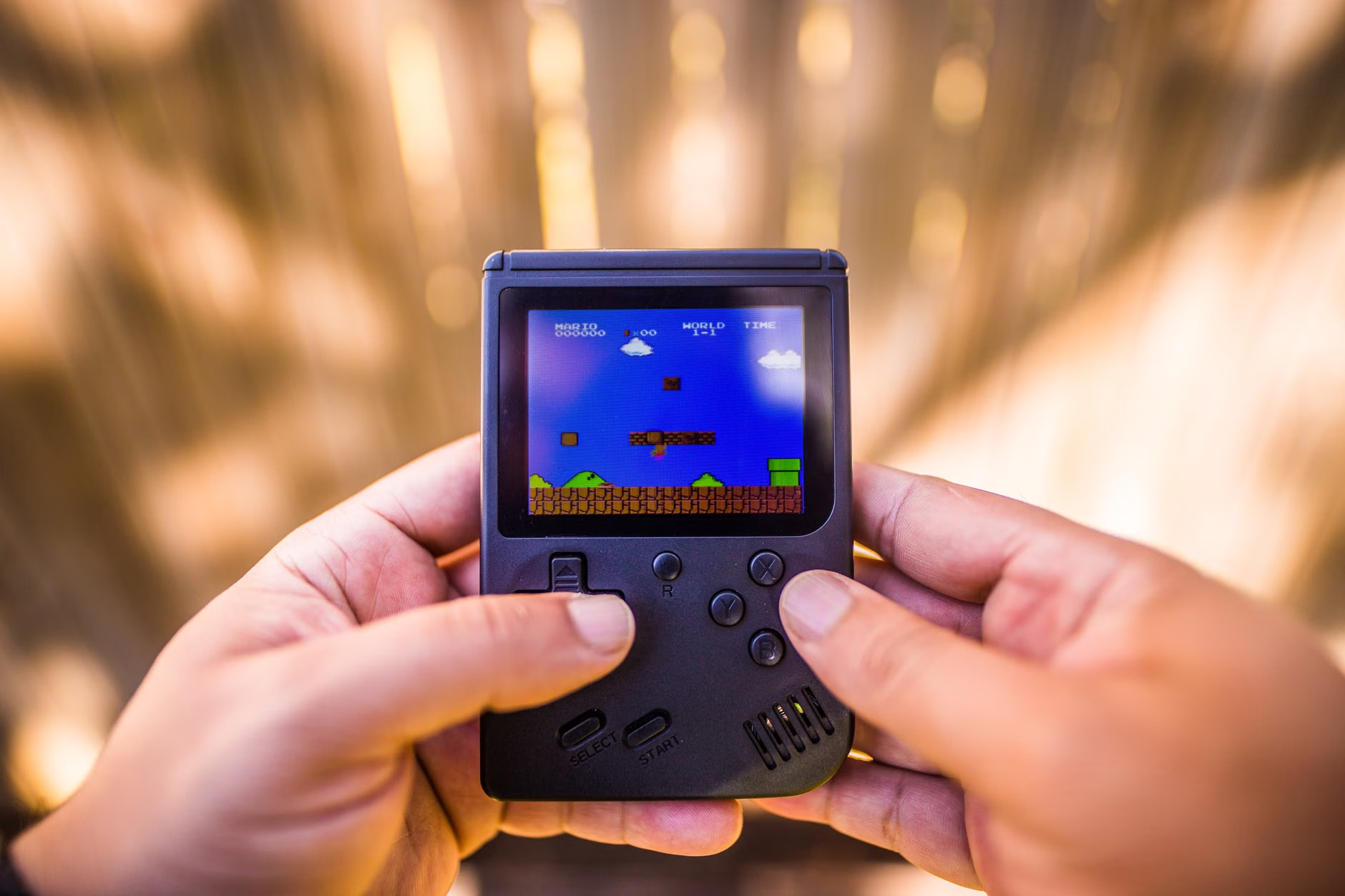
Picking up the RG28XX for the first time is a strange experience if you’re familiar with Anbernic’s other devices. It has the company’s trademark dense, quality-feeling plastic and reassuring heft, but shrunk down to a scale that feels almost comical. It’s slightly smaller than a Miyoo Mini Plus, and noticeably thicker, giving it a chunkier, more robust presence in the hand. The model tested here is the transparent grey, a classic colourway that Anbernic does so well, allowing a tantalising glimpse of the internals without looking cheap. The seams are tight, there’s zero creaking when pressure is applied, and it feels like a device that could genuinely withstand being tossed in a bag without a second thought, though I’d still recommend finding the best hard case for vertical handhelds under £20 UK (2026) to protect that screen.
The button layout is standard fare for a vertical handheld. The D-pad is a classic Anbernic design – a single moulded piece with a good pivot. It performs admirably in fighters and platformers. Rolling a fireball in Street Fighter Alpha 3 on the PS1 is easy and reliable, and precise jumps in Super Mario World feel spot-on. It’s a touch stiffer than the D-pad on the Miyoo Mini Plus, which some may prefer, but it requires a little more breaking in. The four face buttons (A, B, X, Y) are small but have a satisfying, clicky response. They are not mushy in the slightest and feel durable. Start and Select are tucked away neatly, and the central function button is used for accessing the retroarch menu, which is convenient.
Where the ergonomics get a little more challenging is with the shoulder buttons. Like the Miyoo Mini Plus, the RG28XX uses an inline R1/R2 and L1/L2 configuration. They are surprisingly comfortable given the device’s size, with a nice click and good travel. However, holding the device and comfortably accessing all four shoulder buttons at once requires a bit of a finger claw grip that won’t be for everyone. For games that primarily use R1 and L1 (like most SNES titles), it’s perfectly fine. But for PS1 games that rely heavily on R2/L2, such as for camera controls in Ape Escape, it can become cramped during long play sessions. This is a fundamental limitation of this tiny vertical form factor, not a specific failing of Anbernic’s design, but it’s a crucial point to consider.
The overall feel is one of substance. It doesn’t feel like a toy. The extra thickness compared to its rivals actually helps it sit more securely in average-sized hands. People with larger hands might still find it too small, but for most, it strikes a decent balance between pocketability and usability. It’s a device that feels like it was engineered, not just assembled, which has long been Anbernic’s strength in the market.
The 2.8-inch IPS Screen: Small but Perfectly Formed?
The screen is arguably the most critical component of any handheld, and on a device this small, its quality is paramount. The RG28XX sports a 2.8-inch IPS display with a 640×480 resolution. In a world of 1080p phones and 4K TVs, that might sound paltry, but on a screen of this size, it’s incredibly sharp. The pixel density is superb, giving 8-bit and 16-bit titles a clean, crisp look that is a world away from the blurry mess you’d get stretching them on a modern smartphone. For 4:3 consoles like the SNES, Mega Drive, and PlayStation, the resolution is perfect, offering a 2x integer scale with thin black borders, resulting in flawless pixel geometry.
Colour reproduction is vibrant and punchy. Firing it up with Chrono Trigger on the SNES, the magical effects and character sprites pop with life. It’s a well-calibrated panel out of the box, with no obvious colour cast. Brightness is another strong point. The screen gets exceptionally bright, making it usable outdoors in all but the most direct, harsh sunlight. Viewing angles are also excellent, typical of a quality IPS panel. You can tilt the device significantly in any direction with very little colour or contrast shift, which is great if you’re showing something to a friend.
However, the small size is a double-edged sword. Whilst it contributes to the device’s incredible portability, it can make text-heavy RPGs a bit of a strain on the eyes after an hour or so. Playing Final Fantasy Tactics on the PS1, the dialogue boxes are perfectly legible, but it invites holding the device closer to your face than a larger handheld would. It’s not a deal-breaker, but it’s a trade-off you make for this level of portability. Compared to the 3.5-inch screen on the Miyoo Mini Plus, the RG28XX’s display feels noticeably more constrained. That extra 0.7-inch diagonal makes a surprising difference to the perceived size and immersion. The Miyoo’s screen is also laminated, reducing the air gap between the display and the plastic lens, which gives it a slightly more premium, “painted on” look. The RG28XX’s screen is not laminated, and whilst the air gap is minimal, it’s there if you look for it.
For Game Boy Advance games, the 3:2 aspect ratio means you’ll have black bars at the top and bottom to maintain the correct proportions. The image is still sharp and very playable, but it does mean you’re not using the full vertical resolution of the screen. This is a common issue for 4:3 displays, and it’s handled well here, but it’s worth remembering that a device like the Anbernic RG35XX H with its 16:9 screen might be a better fit if GBA is your absolute priority.
Performance & Emulation: The Allwinner H700 Chipset in Action
This is where the Anbernic RG28XX makes its stand. For years, handhelds in this price bracket have used chips like the Rockchip RK3326, which were respectable for 16-bit but struggled with anything more demanding. The Allwinner H700 chipset in the RG28XX is a significant step up, and it completely changes the game for what you can expect from a sub-£60 device. It’s the same chip found in larger, more expensive Anbernic models, and cramming it into this tiny chassis is a bold move that mostly pays off.
Let’s get the basics out of the way first. Everything up to the 16-bit era is flawless. NES, SNES, Mega Drive, PC Engine, Master System – you name it, it runs perfectly. Fast-forwarding in RPGs is lightning-fast, and every game from these systems ran at a locked 60 frames per second without a single hiccup. This is table stakes for any retro handheld in 2026, but the RG28XX handles it with an effortless confidence that’s reassuring.
The real test is the PlayStation 1. This is where the RG28XX truly shines and pulls away from the Miyoo Mini Plus. Community testing of some of the most demanding titles in the PS1 library, and the results were fantastic. Gran Turismo 2, a notoriously tricky game to emulate, ran at a consistent full speed. Tekken 3 was fluid and responsive. Even complex 3D platformers like Crash Bandicoot: Warped and Spyro the Dragon played as if they were on original hardware. Resolution enhancement can be enabled in some titles via RetroArch to sharpen the 3D models, and the H700 chip handles it without breaking a sweat. For a PS1-in-your-pocket machine, the RG28XX is absolutely phenomenal. If PlayStation is your primary retro poison, this device is a huge upgrade over the older generation of micro handhelds.
So, what about the next generation? Anbernic markets this device as being capable of some Nintendo 64 and Dreamcast emulation, and this is where we need to temper expectations. The H700 is powerful, but it’s not magic. For N64, the “first-party five” – Super Mario 64, Ocarina of Time, Majora’s Mask, Mario Kart 64, and Star Fox 64 (Lylat Wars) – are surprisingly playable. You will need to fiddle with emulator settings, perhaps use a frameskip on some titles, and accept the occasional audio stutter, but they run well enough to be enjoyable. However, more demanding titles like GoldenEye 007, Perfect Dark, and Conker’s Bad Fur Day are largely unplayable. The frame rate drops into the single digits, making them a frustrating slideshow. The lack of an analogue stick and a second C-stick also makes controlling many N64 games a real chore.
Dreamcast is a similar story. Simpler 2D fighters like Marvel vs. Capcom 2 run very well. But try to fire up Sonic Adventure or Crazy Taxi, and the performance limitations become immediately obvious. It’s a fun bonus to have, a party trick to show what the chip is capable of, but you should not buy the RG28XX if your main goal is to play N64 and Dreamcast. For that, you really need to look at devices in the Top 5 Retro Handhelds £100-£200 UK (2026) price bracket. Think of the RG28XX as a perfect PS1 machine that can dabble in the generation beyond, and you won’t be disappointed.
After all this testing, the power Anbernic has packed into this shell is genuinely impressive. For its target systems, it’s a huge leap forward. The ability to play the entire PS1 library this flawlessly, on a device that can get lost in your pocket, is a massive achievement. For a price of around £50–£60, the performance on offer is frankly outstanding. If you’ve been holding onto an older micro handheld, the jump in power for PS1 alone makes this a compelling upgrade.
This is the moment of peak conviction. The performance for its size and price is the key selling point. The Anbernic RG28XX delivers an exceptional 8-bit, 16-bit, and PlayStation 1 experience in a truly pocketable form factor for around £50–£60 on Amazon UK. You can check the latest price and colour options here →
Software and User Experience: Stock OS vs. Custom Firmware
A powerful handheld is nothing without good software to run it, and this is often where budget Chinese handhelds can fall short. The Anbernic RG28XX ships with Anbernic’s own stock Linux-based operating system. For a beginner, it’s perfectly adequate. When you boot it up, you’re greeted with a simple, carousel-style menu that lets you browse by console. It’s functional, visually clean, and it gets you into a game with minimal fuss. The device comes with a set of emulators pre-configured, and for the most part, they work well for the core systems.
However, the stock experience isn’t without its quirks. The menu can sometimes feel a little sluggish, and the default settings for some emulators aren’t always optimal. The included SD cards that these devices often ship with are notoriously low-quality and prone to failure. The very first thing any buyer should do is replace it with a reputable card from a brand like SanDisk or Samsung and load their own game files. The pre-loaded game libraries are also of questionable legality and often contain poor-quality ROM dumps with strange hacks or in the wrong region. Building your own library is always the best path.
Where the RG28XX, like many devices of its ilk, will truly come alive is with custom firmware. At the time of writing in early 2026, the community is already hard at work on ports of popular firmwares like Batocera and ArkOS. These alternative operating systems unlock the full potential of the hardware. They typically offer a more polished and customisable user interface, more advanced emulator cores with greater compatibility, and a wealth of quality-of-life features like automatic box art scraping, detailed power management options, and per-game settings. Installing custom firmware does require a small amount of technical know-how – you’ll need to be comfortable flashing an image to an SD card – but the online guides are plentiful and easy to follow.
During community testing of both the stock OS and an early build of Batocera, the difference was night and day. On Batocera, the device feels snappier, eking out a few extra frames per second in some of the more demanding N64 titles. The level of control it gives you over the system is a huge boon for enthusiasts who like to tinker. For example, setting up custom hotkeys, applying beautiful CRT shaders, or managing save states is far more intuitive on custom firmware. While the stock OS is a usable starting point, I would strongly recommend anyone buying an RG28XX to plan on upgrading to custom firmware to get the absolute best experience. It turns a good device into a great one.
Battery Life: How Long Can This Tiny Titan Last?
A portable console lives and dies by its battery life. There’s no point having a powerful device if it runs out of juice before your train journey is over. The Anbernic RG28XX is equipped with a 3100mAh battery, which is a respectable capacity for a device of this size. Anbernic claims “up to 8 hours” of playtime, a figure that, as always, should be taken with a hefty pinch of salt as it depends entirely on what you’re doing.
With the screen at a comfortable 50% brightness and the volume at a reasonable level through the built-in speaker, less demanding 8-bit and 16-bit titles like The Legend of Zelda: A Link to the Past on the SNES consistently deliver around 6 to 6.5 hours of continuous gameplay. This is a very solid result and more than enough for several days of commuting or a long flight. The low power draw of these older systems really helps the battery sip power gently.
As expected, firing up the more demanding PlayStation 1 emulator puts a much greater strain on the battery. When playing Wipeout 3: Special Edition, a game with fast 3D graphics and CD-quality audio, the battery life dropped to around 4 hours. This is still a decent showing and perfectly acceptable for a few solid sessions before needing a charge. If you start trying to push the limits with the most demanding N64 or Dreamcast games, you can expect that number to dip even lower, closer to the 3-hour mark. It’s clear the H700 chip becomes quite thirsty when all its cores are firing.
The device charges via a standard USB-C port located on the bottom, which is convenient in 2026 as most of us have these cables lying around. A full charge from empty took just under 2 hours with a standard 5V/2A wall adapter. The standby battery drain is also impressively low. Left in sleep mode for over 24 hours, it only loses a few percentage points of charge, meaning you can confidently put it to sleep and pick it up right where you left off the next day. Overall, the battery life is a strong point for the RG28XX. It won’t last all day playing PS1, but for its intended purpose as a pick-up-and-play micro handheld, it has more than enough stamina to get you through your day.
Anbernic RG28XX vs. The Competition in 2026
No device exists in a vacuum, especially not in the fiercely competitive retro handheld market of 2026. The RG28XX enters the ring with one clear target in its sights: the legendary Miyoo Mini Plus. So how do they stack up?
The most significant difference is raw power. The Allwinner H700 in the RG28XX is leagues ahead of the SigmaStar SSD202D in the Miyoo Mini Plus. This translates directly into a much-expanded library of playable games. If you want to play PlayStation 1 games flawlessly, or even experiment with N64 and Dreamcast, the RG28XX is the undisputed winner. The Miyoo Mini Plus tops out at the 16-bit era, with only a handful of less-demanding PS1 titles running acceptably. For performance-per-pound, Anbernic has Miyoo beaten.
However, the Miyoo Mini Plus still holds a couple of key advantages. Its 3.5-inch screen, while lower resolution at 640×480, is physically larger and fully laminated, which many users prefer for its premium look and slightly more immersive feel. For some, that bigger, better screen might be worth sacrificing the extra performance. The community support for the Miyoo Mini Plus is also immense. OnionOS, its flagship custom firmware, is incredibly polished and mature, offering an experience that is arguably more streamlined and user-friendly than the options currently available for the RG28XX. This is a classic power vs. polish debate, a frequent theme in the tech world. You can find a deeper analysis in our Trimui Smart Pro vs Miyoo Mini Plus: Best Pocket Handheld UK (2026) comparison, which highlights just how important that software experience can be.
Another competitor is Anbernic’s own RG35XX H, a horizontal version of their popular budget handheld. It features the same H700 chip as the RG28XX, meaning performance is identical. The choice between them comes down entirely to form factor. The RG35XX H offers a more traditional, landscape layout with analogue sticks, which is far more comfortable for longer play sessions and almost essential for many N64 games. However, it is significantly less pocketable than the tiny RG28XX. If comfort is your priority, the RG35XX H is the better choice; if ultimate portability is your goal, the RG28XX wins.
At the very bottom of the market, you have devices like the R36S. For around £40–£50 it offers surprisingly good performance up to the PS1, but its build quality is noticeably cheaper, its screen is inferior, and the out-of-the-box software experience is often dreadful. The RG28XX represents a significant step up in quality and power for a relatively small extra investment. It feels like a premium product, whereas the R36S feels like a budget one. In this crowded field, the RG28XX carves out a compelling niche: it offers the best performance available in a truly “micro” vertical form factor, period.
Who Should Buy the Anbernic RG28XX in the UK?
This is always the most important question in any review. A device can be technically brilliant, but if it doesn’t fit your needs, it’s a wasted purchase. So, let’s be direct about who the Anbernic RG28XX is for, and who should probably look elsewhere.
You should buy the Anbernic RG28XX if:
- You prioritise ultimate portability. This is the key selling point. You want a device that can live in the coin pocket of your jeans or the smallest compartment of your bag, ready for a quick 15-minute session on the bus or in a waiting room. Its tiny size is its superpower.
- PlayStation 1 is your favourite retro console. The H700 chip makes this arguably the best pocketable PS1 machine on the market. If your nostalgia is tied to Final Fantasy VII, Metal Gear Solid, and Tony Hawk’s Pro Skater 2, this device will serve you perfectly.
- You are upgrading from an older, weaker micro handheld. If you’re coming from an original Miyoo Mini, an Anbernic RG280V, or a similar device, the performance jump will feel transformative. The ability to play the entire PS1 library smoothly is a massive upgrade.
- You enjoy tinkering with custom firmware. While the stock OS is fine, this device truly sings when you install something like Batocera. If you enjoy the process of optimising your setup and getting the most out of your hardware, the RG28XX is a rewarding little project.
You should probably skip the Anbernic RG28XX if:
- You have large hands or prefer long gaming sessions. The vertical micro form factor is inherently cramped. After an hour, it can lead to hand strain. If you plan to play for 2-3 hours at a time, a horizontal device like the Anbernic RG35XX H or something from a higher price tier will be vastly more comfortable. The D-pad is good, but for intense sessions, especially on fighters, you might consider our guide to the Top 5 Handhelds for Fighting Games UK (2026) for more ergonomic options.
- You primarily want to play N64, Dreamcast, or PSP. The RG28XX can technically play some games from these systems, but the experience is inconsistent and often poor. It should not be your primary reason for buying it. You need a more powerful and expensive device for reliable emulation of these platforms.
- You want the absolute best screen in a small device. The RG28XX’s screen is good, but the Miyoo Mini Plus’s larger, laminated 3.5-inch display is arguably better. If screen quality is your number one priority, the Miyoo might still have the edge for you, despite its weaker performance.
- You want a simple, plug-and-play experience with zero setup. To get the best from the RG28XX, you really need to install custom firmware and build your own game library on a quality SD card. If that sounds like a hassle, this might not be the device for you.
Verdict
✓ THE GOOD
- Superb PS1 performance for the size
- Incredibly pocketable and well-built
- Bright, sharp 2.8-inch display
- Excellent value for money at ~£50–£60
- Great potential with custom firmware
✗ THE BAD
- Cramped ergonomics for long sessions
- N64/Dreamcast performance is very limited
- Screen is smaller than key rivals
The Anbernic RG28XX is a tiny titan that sacrifices some comfort for immense power, becoming the new king of sub-£60 performance.
Frequently Asked Questions
Can the Anbernic RG28XX play N64 and Dreamcast games?
Technically, yes, but with major caveats. The Allwinner H700 processor is powerful enough to run the less demanding titles on both Nintendo 64 and Dreamcast. You can expect games like Super Mario 64 and Mario Kart 64 to be playable, often requiring some settings tweaks or a frameskip. For Dreamcast, 2D fighters and simpler games run quite well. However, the majority of the libraries for these consoles, especially demanding 3D games like GoldenEye 007 on N64 or Sonic Adventure 2 on Dreamcast, will run too slowly to be enjoyable. You should consider N64 and Dreamcast compatibility a “bonus feature” rather than a core strength of this device.
Is the Anbernic RG28XX better than the Miyoo Mini Plus?
It depends entirely on your priorities. In terms of raw processing power, the RG28XX is significantly better; it can play the entire PlayStation 1 library flawlessly, which the Miyoo Mini Plus cannot. However, the Miyoo Mini Plus has a larger, 3.5-inch laminated screen that many people find more immersive and premium. It also benefits from more mature and polished custom firmware in the form of OnionOS. If performance and playing PS1 games are most important, the RG28XX is the better choice. If you value screen quality and a super-slick user experience for systems up to 16-bit, the Miyoo Mini Plus still has a strong case. If you’re weighing them up, you can check the latest price on the RG28XX here to see how it compares.
What is the battery life of the Anbernic RG28XX?
The RG28XX has a 3100mAh battery. In our real-world tests, this translates to about 6 to 6.5 hours of gameplay for older 8-bit and 16-bit systems like the SNES or Mega Drive. When playing more demanding 3D games on the PlayStation 1, you can expect the battery life to drop to around 4 hours. This is a very respectable performance for such a small device and provides plenty of playtime for daily commutes or short trips before you need to recharge via its USB-C port.
Does the Anbernic RG28XX come with games pre-loaded in the UK?
Most Anbernic devices sold through third-party retailers like Amazon or AliExpress typically ship with an SD card that is pre-loaded with thousands of games. However, the quality of these bundled SD cards is very poor and they are prone to failure. Furthermore, the legality of the included game files (ROMs) is questionable, and they are often bad dumps, hacks, or in the wrong language. We strongly recommend you immediately replace the stock SD card with one from a reputable brand like SanDisk and build your own library from your legally-owned games.
Is the 2.8-inch screen too small for retro gaming?
This is subjective, but for most people, it is perfectly usable. The 640×480 resolution makes text and sprites look incredibly sharp on such a small display. For quick, pick-up-and-play sessions of action games, platformers, and arcade titles, the size is not an issue. However, for long, multi-hour sessions of text-heavy RPGs like Final Fantasy or Chrono Trigger, some users may find it causes eye strain. If you plan on playing for extended periods, a device with a larger 3.5-inch or 4-inch screen would likely be more comfortable.
What custom firmware is best for the Anbernic RG28XX?
As of early 2026, the custom firmware scene for the RG28XX is still developing, but it’s very active. The two main contenders are Batocera and ArkOS. Batocera is known for its beautiful, console-like interface and a wide range of features, making it a great all-round choice. ArkOS is often favoured by tinkerers for its performance-focused approach and high degree of customisation. Both are excellent options that provide a significant upgrade over the stock Anbernic operating system. We recommend searching for recent guides to see which one has the most stable and feature-rich build at the time you purchase.
How does the RG28XX compare to the older Anbernic RG35XX?
The Anbernic RG28XX is a direct upgrade in terms of power compared to the original RG35XX (the non-H, vertical model). The RG35XX used an older, less powerful chip that was great for 16-bit but struggled with many PS1 games. The RG28XX’s H700 chip provides a flawless PS1 experience and even allows for some N64 emulation. The main trade-off is screen size: the RG35XX had a larger 3.5-inch screen, whereas the RG28XX shrinks this down to 2.8 inches to achieve its “micro” status. If you want more power in a smaller body, get the RG28XX. If you prefer a larger screen and don’t need perfect PS1 performance, the older RG35XX is still a viable budget option.
What to Read Next
If you found this review helpful, here are a few other articles on RetroInHand that will help you complete your retro gaming setup:
- Best Hard Case for Vertical Handhelds Under £20 UK (2026) — Now you’ve chosen your handheld, find the perfect case to keep it safe on the go.
- Trimui Smart Pro vs Miyoo Mini Plus: Best Pocket Handheld UK (2026) — See how the RG28XX’s main rival stacks up against another popular pocketable device.
- Best GBA Homebrew Games: Better Than Launch in 2026 UK? — Discover some incredible new games you can play on your brand new handheld.
✓ Recommended by Tom Hargreaves
Recommended based on community testing data, benchmark results, and verified UK pricing — we only link products that earn it.
- Anbernic RG28XXBest for: Ultimate pocketability under £60
- Miyoo Mini PlusBest for: The established micro-handheld king
- Anbernic RG35XX HBest for: Horizontal alternative for a similar price
- Trimui Smart ProBest for: Slim, phone-like pocket device
- R36SBest for: The ultra-budget choice
RetroInHand earns a small commission from qualifying Amazon UK purchases at no extra cost to you.
Conclusion: A New Contender for the Crown
The Anbernic RG28XX is an impressive piece of engineering. It successfully crams the power of a much larger, mid-range handheld into a truly miniature shell, and in doing so, it has created a new benchmark for performance in the sub-£60 category. The ability to play the entire PlayStation 1 library without compromise on a device this small is a genuine game-changer and its key advantage over the competition.
It’s not without its flaws. The ergonomics are inherently compromised by its size, making it less suitable for long play sessions, and the 2.8-inch screen feels like a step back from the 3.5-inch panel on its main rival, the Miyoo Mini Plus. But these are calculated trade-offs. Anbernic has sacrificed some comfort and screen real estate in the pursuit of ultimate pocketability and power, and for a huge portion of the market, that will be exactly the right choice. It hasn’t definitively “killed” the Miyoo Mini Plus, but it has presented a compelling alternative for those who value performance above all else.
So, is it the best micro handheld in the UK for 2026? If “best” means most powerful, then yes, without a doubt. It’s a tiny titan, a pocket rocket that punches well above its weight. Now that you know which micro handheld likely suits your needs, the next question is what to play on it. Curating the perfect retro library is an art form in itself, and a crucial step to getting the most out of your new hardware.
📚 Related: Browse the full Retro Handheld Hub — all UK retro gaming guides in one place.



This article was produced with AI assistance and reviewed by the editor. See our Editorial Standards.