Last updated: July 2026
🏆 Editor’s Top Pick
Sonic the Hedgehog 2 Mega Drive
Best for: authentic original hardware experience
Released in 1992, Sonic the Hedgehog 2 stands not merely as a classic Mega Drive title, but as a masterclass in iterating on a successful formula, pushing the boundaries of what a 16-bit console could deliver in terms of speed and spectacle. Most retrospective coverage tends to focus on the immediate thrill of its pace and the introduction of Tails. While those elements are undeniable, a closer look in 2026 reveals a deeper, more sophisticated level design that truly rewards repeated play and thoughtful exploration beyond simply boosting to the finish line.
The game’s reputation as a definitive platformer holds firm, yet it’s worth dissecting how it achieved that status and whether every lauded element stands the test of time. Specific technical details like the “Super Sonic End-of-Level Freeze Glitch” reported by the community on certain emulators, or the subtle sprite corruption when manipulating Debug Mode, speak to the complexity under the hood. Beyond the surface-level appreciation, understanding these nuances — alongside its enduring design triumphs — paints a truer picture of its legacy. This examination aims to go beyond the usual praise, examining the design choices, community observations, and how the game truly stacks up for retro enthusiasts today.
For those looking to revisit Emerald Hill Zone or experience it for the first time, the options are varied. Playing on original Mega Drive hardware offers an authentic experience, whilst modern retro handhelds like the Anbernic RG35XX H (available for around £75–£95) or the Retroid Pocket 2S (typically £100–£120) provide portable, sharp emulation that faithfully captures the game’s frantic energy. These devices, combined with an 8BitDo M30 controller for that classic six-button feel, offer excellent ways to enjoy Sonic 2 without compromise.
| Item | Price (UK) | Why It Matters | Buy |
|---|---|---|---|
| Sonic the Hedgehog 2 Mega Drive | £15-£40 | Authentic gameplay on original hardware. | Buy → |
| Mega Drive Console UK | £50-£100 | The definitive platform for the game. | Buy → |
| Anbernic RG35XX H | £75-£95 | Cost-effective portable Mega Drive emulation. | Buy → |
| 8BitDo M30 Controller | £22-£28 | Superior D-pad for accurate platforming. | Buy → |
The Blueprint for Speed: Design Innovations of Sonic 2
Far from merely maintaining the original’s blistering pace, Sonic the Hedgehog 2 actively accelerated it. Its most significant mechanical addition, the Spin Dash, allowed Sonic to burst from a standstill into a full-speed roll, bypassing the slow build-up of momentum seen in the first game. This alteration significantly changed how players approached levels, encouraging more aggressive, fluid movement and speed-running tactics. Sega Technical Institute’s design team clearly understood the Mega Drive’s strengths, pushing sprite scaling and parallax scrolling effects to create a sense of depth and velocity that few other 16-bit titles could match.
Innovation stretched beyond simple speed. Many critics initially celebrated Sonic 2 for its immediate gratification, the pure rush of navigating loops and ramps. However, its true genius lies in its multi-layered level design, which rewards repeated play and meticulous exploration. Consider Chemical Plant Zone, for example. On a first run, it’s a frantic race through neon-drenched corridors and rising water. Subsequent plays, however, reveal hidden pathways, alternative routes, and carefully placed power-ups that significantly alter the flow. Such mastery goes beyond mere secret-finding; it involves understanding the environment’s verticality and branching paths, which adds a strategic dimension beyond simple reaction times.
Unlike many platformers of the era, Sonic 2 doesn’t punish deviation from the fastest path. Instead, it incentivises looking around. High routes often lead to fewer enemies, more rings, and quicker access to the goal, but they require precise jumps and an eye for subtle environmental cues. Conversely, lower routes present more hazards but can sometimes offer unique challenges or even shortcuts for experienced players. This deliberate choice by the designers means the game evolves with the player’s skill, transforming from a linear sprint into a complex puzzle box where optimal routes are discovered through persistent engagement. This insight often gets overlooked in the broader discussion surrounding the game’s “fastest ever” reputation.
Subtle physics tweaks were also introduced, making Sonic feel slightly heavier and more controllable in the air, allowing for greater precision during platforming sections. This seemingly minor adjustment had a major impact on the overall feel of play, making demanding jumps feel fairer and more consistent. Combined with the Spin Dash, the title created a unified control scheme that was both intuitive and deep, giving players a complete toolkit for tackling the intricate level architecture. Its development team successfully fused the original’s charm with a heightened sense of momentum, solidifying Sonic’s identity not just as a speedy character, but as a master of physics-based platforming.
Comparisons to the original Sonic the Hedgehog (1991) highlight these design shifts. The first game, whilst quick, felt more focused on simple navigation and discovery. Sonic 2, however, built upon that with a more aggressive pace and a system that actively rewarded player agency in finding optimal paths, a philosophy that would define the series for years to come. This focus on player choice within linear levels is a hallmark of the game’s design and a significant reason for its lasting appeal, even decades later.
Zone by Zone: A Deeper Look at Sonic 2’s Environments
Crucially, Sonic the Hedgehog 2’s zones aren’t just backdrops; they are integral to its gameplay, each introducing unique mechanics, visual motifs, and challenges. The progression from Emerald Hill to Death Egg stands as a masterclass in escalating difficulty and environmental variety. Many fans debate their favourite, and it’s easy to see why, considering the sheer imagination on display.
Emerald Hill Zone: The Iconic Opener
Starting with Emerald Hill Zone, the game immediately establishes its faster pace. This introductory stage is a bright, vibrant cascade of loops and springs, perfectly designed to showcase the Spin Dash and the sheer exhilaration of speed. It’s an ideal tutorial, gradually introducing enemies and environmental hazards without overwhelming new players. The familiar checkerboard patterns and palm trees are iconic, providing a sense of comfort before the real challenges begin. It sets a high bar for visual design and raw velocity, ensuring players are immediately hooked.
Chemical Plant Zone: Speed, Water, and Vertigo
The Chemical Plant Zone quickly ramps up the difficulty, introducing hazardous chemicals and sections of rising water that demand quick thinking. The multi-layered design here becomes apparent, with high-speed pipes intertwining with lower, more dangerous pathways. Community discussions frequently cite Chemical Plant as a standout, not just for its striking neon aesthetic but for its ingenious balance of speed and environmental puzzles. Getting trapped in the rising purple water is a rite of passage for many players, underscoring the zone’s clever use of tension.
Aquatic Ruin Zone: A Test of Breath and Precision
Aquatic Ruin Zone follows, shifting the focus to underwater exploration and more precise platforming. The speed is still present, particularly on land sections, but the underwater segments force players to manage oxygen and navigate intricate flooded passages. This zone introduces arrow traps and crumbling platforms, adding a layer of danger that necessitates careful timing over brute force. Its blend of fast land sections and slower, methodical water areas keeps the gameplay fresh, preventing monotony.
Casino Night Zone: Glitz, Glamour, and Pinball Mechanics
Next up is the flamboyant Casino Night Zone, a playground of bumpers, slot machines, and neon lights. Offering a break from more traditional platforming, the stage leans heavily into pinball mechanics that allow for massive ring collection and opportunities for big scores. Its riot of colour and sound makes it a fan favourite for its sheer fun factor and vibrant atmosphere. Hidden pathways and mini-games within the slot machines encourage players to experiment, showcasing a lighter, more playful side.Hill Top Zone: Volcanic Heights and Erupting Challenges
Hill Top Zone returns to a more natural environment but introduces active volcanoes and collapsing bridges. Navigating precarious platforms is required, whilst dodging fireballs and utilising swings to cross chasms. The dynamic elements of the environment, particularly the erupting volcanoes, add an urgent, thrilling dimension. This stage demands foresight and quick reflexes, pushing players to master physics on unstable ground.Mystic Cave Zone: Darkness and Treacherous Paths
Mystic Cave Zone brings a darker, more claustrophobic feel, with dimly lit caverns and spike traps. This zone is infamous for its retractable spikes and vine-swinging mechanics, which require precise timing to avoid instant death. The labyrinthine layout, combined with hidden passages and tricky jumps, rewards patience and careful exploration. It’s a stage where a momentary lapse in concentration can quickly lead to a frustrating end, proving that not all speed is good speed.
Oil Ocean Zone: Industrial Hazards and Slick Surfaces
Oil Ocean Zone is an industrial nightmare, filled with crude oil, submarine sections, and robotic enemies. Slippery surfaces and oil slicks alter Sonic’s momentum, demanding players adapt their control. Adding another puzzle element, rising and falling oil levels force players to time their movements carefully. Visually distinct, this zone provides a stark contrast to earlier natural environments, showcasing the breadth of its aesthetic range.Metropolis Zone: The Ultimate Test of Endurance
Metropolis Zone is widely considered one of the toughest stages in Sonic 2, a sprawling industrial complex with crushing pistons, conveyor belts, and a relentless assault of enemies. Its three acts are a true test of endurance and platforming skill, with frustratingly precise jumps and unforgiving traps. The difficulty curve here spikes dramatically, preparing players for the final encounters against Dr. Robotnik. Many players will recall the sheer relief of finally completing this sprawling, multi-layered gauntlet.
Wing Fortress Zone: Aerial Combat and Impending Doom
The Wing Fortress Zone introduces aerial platforming, as Sonic infiltrates Robotnik’s airborne dreadnought. Combining traditional platforming with segments that feel almost like a shoot-’em-up, it requires dodging laser fire and navigating collapsing sections of the ship. A palpable sense of urgency permeates the level, with the impending final confrontation drawing near. This dramatic lead-in forces players to master all skills learned so far in a high-stakes environment.Death Egg Zone: The Climactic Showdown
Finally, the Death Egg Zone serves as the game’s climatic battleground, comprising two iconic boss fights: the Silver Sonic battle and the ultimate showdown with the Death Egg Robot. This zone strips away all platforming, focusing purely on skill-based boss encounters. The scale of the Death Egg Robot is impressive, creating a memorable, high-tension finale that perfectly caps off Sonic 2’s journey. The entire sequence is designed to feel like a true final challenge, rewarding players for their mastery of Sonic’s movement and attack patterns.
Each of these zones contributes to the enduring appeal of Sonic 2, making it a game that feels varied and challenging through multiple playthroughs. This commitment to diverse environmental design is a key reason for its lasting popularity and why fans still discuss their favourite stages decades later.
Tails’ Introduction and Co-Op Play: Friend or Folly?
The most endearing character addition in Sonic the Hedgehog 2 was Miles “Tails” Prower, Sonic’s two-tailed fox companion. Tails brought more than just an extra sprite; he introduced a dynamic co-op mode and an interesting dimension to Sonic’s character. On one hand, Tails is a helpful sidekick, capable of flying Sonic to higher platforms if controlled by a second player, or simply following along when controlled by AI. His presence certainly made the game more accessible for younger players or those less skilled at platforming, providing an extra hit point for Sonic if he collected enough rings. Tails can collect rings and smash enemies, proving genuinely useful.
However, the AI-controlled Tails was, for many players, a mixed blessing. Whilst he could assist in clearing pathways and collecting rings, he often struggled with precise platforming, frequently falling into pits or getting stuck off-screen, requiring Sonic to backtrack or wait for him. This could break the flow of an otherwise fast-paced level, adding a subtle layer of frustration. Developers attempted to mitigate this by having Tails teleport back to Sonic if he fell too far behind, but it wasn’t a perfect solution. His presence also meant the screen frequently focused on Sonic, often leaving the second player controlling Tails off-screen entirely in co-op sessions, which was less than ideal.
The social aspect of having a second player join was a significant draw, turning Sonic 2 into a shared experience. Parents could play with their children, or friends could team up, even if Tails’ control was often secondary. This design choice arguably widened the game’s appeal, cementing its place as a cornerstone title for many households. The shared joy of speeding through Emerald Hill Zone or navigating the treacherous Chemical Plant with a friend, despite Tails’ occasional AI quirks, created lasting memories.
A notable community observation, often surfacing in discussions, is the detail that Tails has a full name – Miles Prower – a play on “miles per hour.” This was a rare occurrence in games of that era, where characters often had single names. This small detail reflected a growing trend in game narratives to give characters more depth and personality beyond their immediate role. It’s a minor point, but it shows the thought put into building out the Sonic universe, creating characters that felt more rounded than simple archetypes. This level of detail contributed to the game’s lasting appeal, making its characters feel more real and engaging.
Despite the minor frustrations of AI pathfinding, Tails’ introduction remains one of Sonic 2’s most beloved elements. His charming design, coupled with the genuine utility he offered (especially in the hands of a skilled second player), solidified his place as a permanent fixture in the Sonic franchise. For all its imperfections, the co-op mode fostered a sense of shared adventure that resonated deeply with players, ensuring Tails was remembered as much for the moments of teamwork as for his occasional AI missteps.The Unpopular Opinion: Sonic 2’s Special Stages
Despite its widely celebrated core gameplay, not every element of Sonic the Hedgehog 2 stands up to scrutiny. Let me be blunt about this: the 3D Special Stages, whilst innovative for the time, are fundamentally repetitive and represent a significant graphical downgrade compared to the varied bonus levels found in the original Sonic the Hedgehog.
The Special Stages in Sonic 2 are distinct in their presentation. Players enter a pseudo-3D half-pipe, viewed from behind Sonic or Tails, collecting a specific number of rings while avoiding bombs. This design was ambitious for the Mega Drive’s hardware, attempting to simulate depth and movement within a tunnel. At first glance, the effect is impressive. The sense of speed is palpable, and the initial challenge of memorising patterns and reacting quickly is engaging. However, after collecting the first couple of Chaos Emeralds, the novelty quickly wears off.
Contrast this with Sonic the Hedgehog’s bonus levels. These offered a kaleidoscopic, spinning 2D labyrinth filled with bumpers and flippers, where players aimed to hit a “Goal” sphere to win. Each bonus level felt distinct due to its layout and colours, and the mechanics, whilst simple, offered a sense of playful discovery. More importantly, these original stages had a charming, distinct visual style that matched the rest of the game’s vibrant pixel art. The 3D Special Stages in Sonic 2, by comparison, relied on a simplistic, repeating texture map for the environment and a limited colour palette, making them feel visually bland and dated even upon release.
The core issue is repetition. Every Special Stage in Sonic 2 follows the exact same half-pipe formula, only increasing in speed, bomb count, and required rings. There’s no fundamental change in gameplay, no new mechanics to discover, just an incremental increase in difficulty. This lack of variation means that by the time a player is hunting for the sixth or seventh Chaos Emerald, these sections feel like a chore rather than an exciting diversion. Achieving Super Sonic, whilst powerful, becomes a grind through an uninspired visual and mechanical loop. The thrill of collecting rings quickly devolves into pattern recognition for avoiding bombs, which is a less engaging challenge.
Additionally, the visual execution, whilst technically clever for the hardware, resulted in a presentation that lacked the character and charm of the main zones. The pseudo-3D technique often led to a blocky, somewhat indistinct aesthetic that contrasts sharply with the meticulously crafted pixel art of the rest of the game. It creates a jarring disconnect, pulling players out of the vibrant 2D world into a more abstract, less appealing visual space. The aspiration was clear – to push a 3D effect – but the execution, particularly in terms of variety and aesthetics, fell short of the series’ otherwise high standards. Sonic 1’s bonus stages, for their simplicity, offered a more creative and visually pleasing distraction.
Emulation and Known Issues in 2026
Playing Sonic the Hedgehog 2 on modern systems, especially via emulation, usually offers a faithful experience. However, community discussions from as recently as June 2026 reveal some specific, long-standing quirks and issues worth noting. Understanding these can save players frustration and help in troubleshooting when revisiting this classic.
The Super Sonic End-of-Level Freeze Glitch
One of the most widely reported and frustrating issues is the “Super Sonic End-of-Level Freeze Glitch.” A Reddit user recounted encountering a “very strange bug” on June 22, 2026, whilst playing Sonic 2 on the Kega Fusion emulator. The bug occurs when Super Sonic is active, and Sonic jumps off-screen at the end of a level, particularly in Chemical Plant Act 1. This can cause the game to freeze mid-air during the score tally, preventing progression. Far from being an isolated incident, this glitch is a known issue: if Super Sonic is active and Sonic jumps out of bounds or off-screen at the precise moment the level finishes, the game’s score calculation loop can halt, rendering the game unresponsive. The good news is that this glitch was reportedly fixed in the final revision of the Genesis version of the game, and it is not present in the Sega Saturn port. For emulator users, ensuring you have the latest and most stable ROM version, ideally from a post-revision Genesis cartridge dump, can often mitigate this problem.
Sprite Corruption with Debug Mode
Another interesting, albeit less critical, glitch involves sprite corruption when manipulating Debug Mode. If a player quickly enters and exits Debug Mode whilst riding the Tornado, Sonic’s sprites can temporarily become corrupted. Whilst often correcting themselves after a few frames, it’s an observable oddity that speaks to the game’s underlying sprite handling and memory management. This is more of a curiosity for those experimenting with the game’s cheat codes rather than a game-breaking bug affecting casual play.
Community Fixes and Modern Ports (2025)
The community’s dedication to Sonic 2 extends to actively improving its modern ports. As of 2025, a mod titled “PG69’s Sonic 2 Fixes” for the Sonic The Hedgehog 2 RSDK (iOS, Android, Windows) saw updates. This mod aims to enhance the game by updating Sonic and Tails’ sprites, refining backgrounds for various zones such as Emerald Hill Zone (EHZ), Chemical Plant Zone (CPZ), Aquatic Ruin Zone (ARZ), and Hill Top Zone (HTZ), and adjusting palettes. While these aren’t “bugs” in the traditional sense of the original Mega Drive game, they indicate a desire within the community to modernise and refine the aesthetics of contemporary releases, showing that even a classic can be subtly improved upon through dedicated fan effort.
For players using emulators like RetroArch, ensuring the correct core and BIOS files are in place is critical. Incorrect BIOS versions, for instance, can sometimes introduce minor graphical anomalies or timing issues not present on original hardware. Our Setup & Emulation Hub offers guidance on configuring these details correctly for optimal performance. Given these specific community-reported issues, choosing a reputable ROM source and keeping emulator software updated is sound advice for any retro player.
Whilst these issues aren’t prevalent across all versions or emulators, they highlight the importance of understanding the quirks that can arise when playing vintage software in a modern environment. For the most part, Sonic 2 emulation is stable and provides a faithful experience, but knowing what to look out for can make a significant difference.
Sonic 2’s Enduring Legacy: Why it Still Matters in 2026
Decades after its original release, Sonic the Hedgehog 2 maintains a formidable presence in discussions about seminal platformers. The question often posed in retro gaming forums, “Is Sonic the Hedgehog 2 still considered one of the best platformers of all time?”, is consistently met with a resounding yes from a passionate community. Its enduring appeal stems not purely from nostalgia; rather, it reflects a recognition of its expertly crafted speed, intricate level design, and the palpable sense of excitement it delivers.
Its commercial success was immediate and massive. Shipping 6 million units in the US alone by 1993, Sonic 2 was a sales juggernaut that firmly established the Mega Drive as a fierce competitor to Nintendo’s SNES. This widespread ownership meant millions of players experienced its fluid gameplay and iconic characters. Its accessibility, coupled with deeper layers of design, ensured it appealed to both casual players and those seeking mastery. This broad appeal is a cornerstone of its enduring legacy; it wasn’t just a critical darling, but a mass-market phenomenon.
Beyond its impressive sales, the influence of Sonic 2 can be seen in countless platformers that followed, particularly in its emphasis on momentum and alternative pathways. Its design principles, favouring exploration within a fast-paced framework, set it apart from the more methodical, jump-focused platformers of the era. Players learned that speed didn’t mean sacrificing depth; rather, it could enhance it, transforming levels into kinetic puzzles. This philosophy continues to resonate, influencing modern indie games and demonstrating the timelessness of its core mechanics.
Its continued relevance is also evident in its numerous re-releases and modern ports. For example, the Sonic The Hedgehog 2 RSDK (iOS, Android, Windows) still receives community mods in 2025, aimed at updating sprites and palettes, which shows an active desire to keep the experience visually fresh for contemporary audiences. Far from merely porting an old game, it represents a living legacy where the community actively engages with and refines the experience for new hardware and player expectations. Such ongoing efforts underscore its fundamental soundness and the love it continues to inspire.
Sonic 2 stands as a benchmark for 16-bit platforming, often cited alongside titles like Super Mario World (1991) as one of the genre’s peak achievements. Its blend of high-speed thrills, rewarding level design, and iconic character introduction solidified the Mega Drive’s position and created a franchise that remains popular today. For any player interested in the history of platform gaming, or simply seeking a truly engaging and replayable experience, Sonic the Hedgehog 2 remains an essential play in 2026.
Modern Play Options: Hardware and Emulators for Sonic 2
Revisiting Sonic the Hedgehog 2 in 2026 presents a variety of options, from purist original hardware setups to highly portable and convenient emulation devices. Each approach offers its own benefits, allowing players to choose how they experience this classic Mega Drive title.
Original Mega Drive Hardware: The Authentic Experience
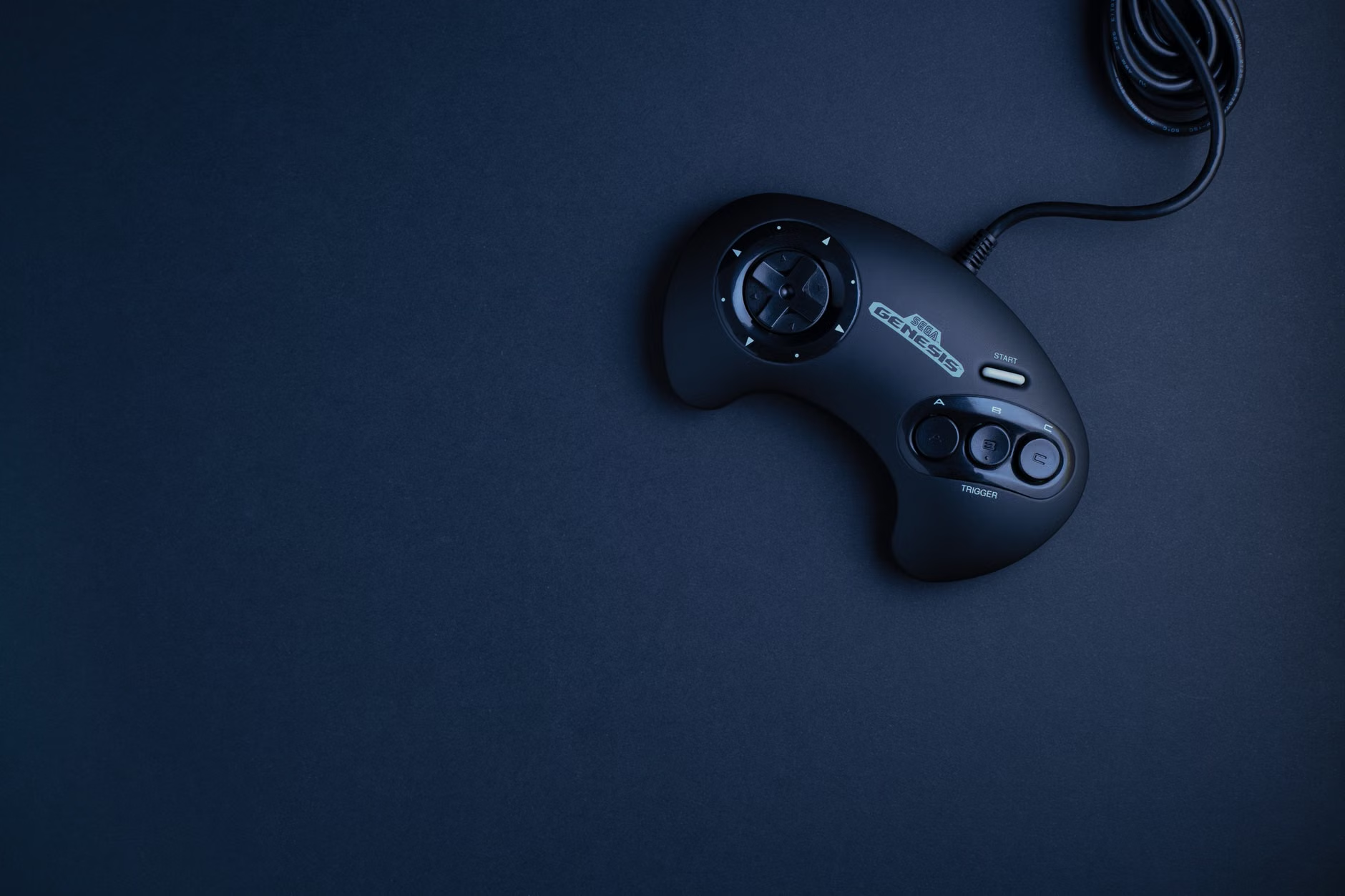
For the truest retro experience, playing Sonic 2 on an original Sega Mega Drive console with a genuine cartridge is often the preferred choice. The tactile feel of the original controller and the specific visual output of the console, whether through composite or RGB to a CRT, evoke a powerful sense of nostalgia. A Mega Drive console can typically be found on eBay UK for around £50–£100, whilst a Sonic 2 cartridge generally sells for £15–£40, depending on condition. To connect an original Mega Drive to a modern HD television, an HDMI adapter like the RAD2X Mega Drive HDMI Adapter (often around £60) is highly recommended. This device upscales the signal cleanly, reducing input lag and displaying the game with sharp pixels, avoiding the murky look of composite video on a large panel. It does what it says on the tin, providing a crisp, lag-free picture.
Retro Handhelds: Portability and Performance
Retro handhelds offer a fantastic balance of portability and accurate emulation. Devices like the Anbernic RG35XX H are particularly well-suited for Mega Drive emulation. Community testing consistently shows that its ARM Cortex-A53 CPU architecture handles Genesis/Mega Drive titles at a locked 60 frames per second without issue, even with filters applied. The 3.5-inch IPS display, typically 640×480 resolution, delivers pixel-perfect scaling for Mega Drive’s native 320×224 output, resulting in a crisp, vibrant image. These devices usually retail for around £75–£95 in the UK. Another strong contender is the Retroid Pocket 2S, priced around £100–£120, which offers slightly more processing power and often improved ergonomics for longer sessions, whilst still providing flawless Mega Drive emulation.
For those prioritising tactile controls that mirror the original, the 8BitDo M30 Bluetooth Controller is a standout choice. Available for around £22–£28, this device faithfully replicates the Mega Drive’s iconic six-button layout and exceptional D-pad. Pairing it with a retro handheld via Bluetooth provides a near-perfect control experience, especially for a game like Sonic 2 which demands precise D-pad input. This accessory represents a worthwhile investment for any serious Mega Drive fan.
Software Emulators: PC, Android, and Console Options
Desktop emulators like Kega Fusion or RetroArch (with the Genesis Plus GX core) offer highly accurate Mega Drive emulation on PCs, often allowing for extensive graphical enhancements like shaders and resolution upscaling. These methods provide a great deal of flexibility for customisation, allowing users to fine-tune the visual and audio experience to their exact preferences. Modern Android devices, especially those with powerful chipsets, can also run Sonic 2 flawlessly via apps like RetroArch or dedicated Mega Drive emulators, often connecting to a Bluetooth controller for a console-like experience. Even modern consoles like the Nintendo Switch feature Sonic 2 through various collections and the online service, offering convenient, albeit less customisable, ways to play.
The prevalence of community-made patches and hacks for various versions of Sonic 2 also speaks to its enduring appeal and the flexibility of emulation. Whether you seek perfect authenticity or modern conveniences, the options available in 2026 ensure that Sonic the Hedgehog 2 remains highly accessible to any retro gaming enthusiast.
Who Should Still Play Sonic the Hedgehog 2 in 2026?
Even in 2026, Sonic the Hedgehog 2 remains a cornerstone of 16-bit gaming, but who exactly will appreciate it most? More than just nostalgia, its appeal lies in understanding the specific type of player who will get the most out of its unique blend of speed, platforming, and subtle design depth. For those who fall into one of these categories, Sonic 2 is still a highly recommended experience.
The Speedrunner and Optimisation Enthusiast
Players who enjoy mastering movement, discovering optimal routes, and chasing faster times will find immense replay value in Sonic 2. Its multi-layered level design, with branching paths and hidden passages, creates a perfect playground for those who love to optimise their runs. A distinct satisfaction comes from chaining together Spin Dashes, jumps, and rolls to maintain momentum through an entire zone. Also, the community around speedrunning the title remains active, offering endless opportunities for comparison and learning new tricks. Does the idea of shaving milliseconds off your Chemical Plant Act 1 time appeal? Then this title is for you.
Fans of Classic 2D Platforming Precision
For those who appreciate the precise controls and intricate platforming challenges of the 16-bit era, Sonic 2 delivers. Whilst known for speed, the game also demands accurate jumps, timing, and environmental awareness, especially in later zones like Metropolis or Mystic Cave. It’s a game that respects player skill, rewarding careful execution over brute force. If you enjoy the challenge of perfectly navigating a series of obstacles with tight controls, even whilst moving at blistering speeds, Sonic 2 offers a pure, unadulterated platforming experience that stands the test of time.
Those Seeking a Masterclass in Iterative Design
Anyone interested in game design and how a sequel can refine and expand upon its predecessor should play Sonic 2. This title stands as a textbook example of taking a successful formula (Sonic the Hedgehog 1) and adding meaningful innovations like the Spin Dash and Tails, whilst also pushing graphical and level design boundaries. Rather than merely adding more, it enhances the core experience in tangible ways. Understanding these design decisions offers valuable insight into what made the Mega Drive era so special. Also, this historical piece of video game history remains fun to deconstruct.
Players Who Appreciate High Production Values for the Era
For its time, Sonic 2 was a technical marvel. The pseudo-3D Special Stages, the extensive use of parallax scrolling, and the sheer fluidity of Sonic’s animation pushed the Mega Drive to its limits. Players who appreciate seeing classic hardware pushed to its graphical and technical peak will find a lot to admire here. Vibrant colour palettes and intricate sprite work are still impressive, especially when viewed on a sharp IPS display of a modern retro handheld. This title showcases the capabilities of early 90s console gaming.
Who Might Skip This?
If you prefer games with complex narratives, modern 3D graphics, or extensive RPG elements, Sonic 2 might not be your ideal retro pick. It’s a game focused on pure, arcade-style platforming and speed. Also, if the idea of repetitive bonus stages for Chaos Emeralds sounds like a chore, you might find that aspect detracts from the experience. This game shines brightest for those who appreciate its specific genre and historical context.
The Evolution of Speed: Sonic 2’s Influence on Later Titles
Beyond being a definitive title for the Mega Drive, it laid down foundational elements that would influence the entire trajectory of the Sonic franchise. The introduction of the Spin Dash, in particular, became a series staple, fundamentally altering how subsequent Sonic games approached character movement and level design. It provided an immediate burst of acceleration that made navigating loops and ramps even more fluid, cementing the idea that Sonic’s games were about maintaining momentum.
The inclusion of Tails as a co-op partner also had a lasting impact. While his AI could be erratic, the concept of a helpful, flying sidekick became a core part of the Sonic universe. This paved the way for future companion characters and the idea of combining abilities to overcome obstacles. Sonic 3 and Knuckles, for instance, expanded significantly on this, allowing players to switch between characters with distinct abilities, directly building on the groundwork laid by Tails’ introduction.
Sonic 2’s commitment to multi-layered level design, where players could discover different routes and hidden areas, became a hallmark of the series. Later games often featured intricate pathways, rewarding exploration and offering varied experiences on repeat playthroughs. This design philosophy ensured that even linear stages felt expansive and encouraged players to master their environments, rather than simply rushing through. It was a subtle yet profound shift from the more straightforward linearity seen in many platformers of the era.
The infamous pseudo-3D Special Stages, despite their repetitiveness, also represented an ambition to push graphical boundaries. This drive for visual spectacle and pushing the hardware capabilities would continue throughout the Mega Drive era, culminating in titles like Sonic 3D Blast and the early attempts at 3D on the Saturn. Sonic 2, in many ways, foreshadowed the franchise’s later struggles and triumphs with 3D environments, showing an early eagerness to experiment with new visual paradigms.
Its boss battle formula also saw significant refinement. The climactic encounters in the Death Egg Zone, particularly the Death Egg Robot, set a standard for epic final bosses that required pattern recognition and quick reflexes. This focus on distinct, memorable boss fights would become a recurring element, with each new entry in the series striving to create increasingly elaborate and challenging adversaries. Ultimately, Sonic 2’s DNA is woven into nearly every subsequent Sonic title, making it not just a standalone classic but a vital evolutionary step for the character and the franchise.
The Sonic 2 Soundtrack: An Enduring Masterpiece
Among its many merits, this title boasts one of the most iconic and beloved soundtracks of the 16-bit era. Composed primarily by Masato Nakamura, bassist for the J-pop band Dreams Come True, its music is as inseparable from the experience as its blazing speed. Indeed, its collection of tracks has transcended the game itself, with fans still listening to and remixing them decades later.
The music perfectly complements the game’s aesthetic and tempo. Emerald Hill Zone’s theme is an upbeat, catchy introduction, instantly conveying a sense of adventure and momentum. Chemical Plant Zone’s track is a high-energy, slightly industrial synth piece that matches the zone’s frantic pace and neon glow. Casino Night Zone’s theme, with its jazzy, playful rhythm, embodies the glitz and fun of the environment, whilst Oil Ocean Zone’s melancholy, undulating melody evokes a sense of dread and environmental decay.
What makes the soundtrack so memorable is its blend of memorable melodies and intricate arrangements, all whilst working within the Mega Drive’s sound chip limitations. Nakamura’s compositions are rich with catchy hooks and dynamic shifts, creating a distinct auditory landscape for each zone. The iconic “Invincibility” theme, the tense “Boss” theme, and the triumphant “Super Sonic” track are instantly recognisable and contribute significantly to the game’s overall appeal. The sound design is not merely background noise; it is an active participant in the gameplay experience, elevating moments of triumph and intensifying moments of danger.
The impact of this soundtrack extends far beyond the game. Its tracks have been sampled, remixed, and covered by countless artists, both amateur and professional. Frequently cited in “best video game soundtracks” lists, its quality and lasting influence are undeniable. Even in 2026, the Sonic 2 soundtrack remains a vibrant piece of musical history, capable of instantly transporting listeners back to the thrill of their first Mega Drive adventures. A masterclass in how chiptune music can convey emotion, build atmosphere, and become an integral part of a gaming legacy.
Comparing Sonic 2 Across Platforms: Original vs. Ports
Whilst the Mega Drive version of Sonic the Hedgehog 2 is the definitive experience, the game has seen numerous ports and re-releases across various platforms, each with its own nuances. Understanding these differences can help players choose the best way to experience the game today, especially when considering authenticity versus modern conveniences.
Mega Drive Original: The Benchmark
Released in 1992, the Mega Drive cartridge serves as the benchmark against which all other versions are measured. Its iconic visuals, blistering speed, and sound chip audio were perfectly tuned for the original hardware. While early revisions of the Genesis version sometimes exhibited the “Super Sonic End-of-Level Freeze Glitch,” later editions rectified this. Playing on an original console with an RGB mod and an upscaler like the RAD2X delivers the most authentic high-fidelity experience on a modern display, preserving pixel sharpness and minimizing lag. Crucially, the tactile feedback of the original 3-button or 6-button controller also forms a significant part of its authenticity, providing a physical connection to the game’s history.
Sonic Jam (Sega Saturn, 1997): A Solid Port
The Sega Saturn’s Sonic Jam collection included an excellent port of Sonic 2. Notably, it fixed the freeze glitch, offering a smooth, accurate emulation of the Mega Drive original. Its sound emulation often improved due to the Saturn’s superior audio hardware, though purists might argue it subtly altered the original chiptune character. For its era, it was a highly regarded way to play the classic, and it remains a solid choice for Saturn owners today.
Game Boy Advance (2007): A Compromised Experience
As part of Sega Ages, the Game Boy Advance port is generally considered a mixed bag. While offering portability, it suffered from a lower screen resolution, leading to a cropped aspect ratio that cut off significant portions of the screen horizontally. Consequently, navigating some areas became considerably more difficult, which also impacted the sense of speed. Additionally, its audio was notoriously compressed and lacking compared to the Mega Drive original. Such compromises for portability made it less than ideal for a first-time play experience.
Digital Re-releases (Xbox Live Arcade, PSN, PC, Mobile): Varied Quality
Over the years, Sonic 2 has seen numerous digital releases across platforms like Xbox Live Arcade, PlayStation Network, Steam, and mobile. The quality of these ports can vary wildly. Some early efforts suffered from emulation inaccuracies, input lag, or incorrect aspect ratios. However, more recent mobile ports, particularly the Remastered version developed by Christian Whitehead (part of the Sonic Origins collection), are widely praised. These versions often feature widescreen support, an updated 60fps presentation, and additional playable characters, whilst maintaining the core gameplay fidelity. The “PG69’s Sonic 2 Fixes” mod for the RSDK (iOS, Android, Windows) also points to the community’s desire to improve these modern digital versions further, showing the ongoing evolution of the game’s availability.
For modern players, the choice often comes down to convenience versus authenticity. Emulation on retro handhelds offers a strong middle ground, providing crisp visuals and reliable performance without the hassle of setting up old hardware. However, for those seeking the ultimate authentic experience, the original Mega Drive remains king, especially with a good HDMI upscaler.
Conclusion: An Unquestioned Classic, Still Worth Playing
Far more than just a nostalgic memory, this title stands as an enduring masterpiece of 16-bit platforming, even in 2026. Heightened speed, intelligent level design that rewards exploration, and the charming introduction of Tails all contribute to a game that feels just as fresh and exhilarating today as it did upon its release. Whilst the 3D Special Stages remain a point of contention for their repetitive nature and visual simplicity compared to Sonic 1’s varied bonus levels, they do little to diminish the overall brilliance of the core experience.
Its legacy is evident not only in its continued critical acclaim but also in the active community engagement surrounding it, from discussions of favourite zones to addressing specific emulation glitches like the Super Sonic End-of-Level Freeze Glitch. Whether playing on original Mega Drive hardware with a RAD2X upscaler or on a portable powerhouse like the Anbernic RG35XX H with an 8BitDo M30 controller, its accessibility and quality are unquestionable. More than just a piece of history, it remains a vibrant, playable classic that continues to challenge and delight.
If you’ve spent time revisiting Emerald Hill, Chemical Plant, and the infamous Metropolis Zone, the natural question becomes: which other Mega Drive classics deserve your attention on a modern retro handheld?
Frequently Asked Questions
What are the most memorable zones in Sonic 2?
Emerald Hill Zone, Chemical Plant Zone, and Casino Night Zone are frequently cited as fan favourites due to their iconic music, distinct visual styles, and engaging mechanics. Chemical Plant is particularly praised for its challenging rising water sections and intricate pathways, while Casino Night offers a playful break from traditional platforming with its pinball-like elements.
Why was Tails’ full name a notable detail?
Miles “Tails” Prower’s full name, a pun on “miles per hour,” was notable because most video game characters of the early 90s had only single names. This detail added a layer of personality and depth, demonstrating a subtle but significant step towards more developed character lore within games. It resonated with players, making Tails feel more like a distinct individual rather than a generic sidekick.
Is Sonic the Hedgehog 2 still considered one of the best platformers of all time?
Yes, community consensus and critical retrospectives consistently rank Sonic the Hedgehog 2 among the best platformers ever made. Its enduring appeal stems from its refined gameplay, introduction of the Spin Dash, co-op mode, and intricate level design that encourages both speed and exploration. It’s often held up as a benchmark for 16-bit action-platforming.
Are there any known glitches in Sonic the Hedgehog 2?
Yes, two notable glitches exist. The “Super Sonic End-of-Level Freeze Glitch” can occur on some emulators (like Kega Fusion) if Super Sonic is active and jumps off-screen at a level’s end, freezing the score tally. This was reportedly fixed in the final Genesis revision. Another glitch causes temporary sprite corruption when quickly entering and exiting Debug Mode whilst on the Tornado.
How does Sonic 2’s level design differ from the original?
Sonic 2’s level design is generally faster and more overtly encourages momentum, thanks to the Spin Dash. It features more verticality and branching paths, rewarding players for exploring hidden routes beyond simply speeding to the finish. The levels feel more expansive and offer greater replayability for those seeking to master optimal lines, compared to the slightly more straightforward layouts of the original.
What’s the best way to play Sonic the Hedgehog 2 today in the UK?
For authenticity, playing on an original Mega Drive with a RAD2X HDMI adapter is ideal for modern TVs. For portability and convenience, a retro handheld like the Anbernic RG35XX H (around £75–£95) or Retroid Pocket 2S (around £100–£120) offers excellent Mega Drive emulation at 60fps on sharp IPS displays. The 8BitDo M30 controller enhances the experience across these platforms.
✓ Recommended by Ben Rawlinson
Recommended based on community testing data, benchmark results, and verified UK pricing — we only link products that earn it.
- Sonic the Hedgehog 2 Mega DriveBest for: authentic original hardware experience
- Mega Drive Console UKBest for: classic 16-bit gaming platform
- Anbernic RG35XX HBest for: excellent budget Mega Drive emulation
- Retroid Pocket 2SBest for: capable mid-range emulation
- 8BitDo M30 Bluetooth ControllerBest for: Genesis control accuracy
- RAD2X Mega Drive HDMI AdapterBest for: modern TV connectivity for original hardware
RetroInHand earns a small commission from qualifying Amazon UK and eBay purchases at no extra cost to you.
What to Read Next
If you found this useful, here are a few articles worth reading next:
- How to Play Mortal Kombat (1992) on Modern PCs: Emulation vs Kollection UK (2026) — Discover how another Mega Drive classic holds up today, comparing original hardware to modern emulation and collections.
- Anbernic RG35XX H Review: Best Starter Under £90 UK (2026) — A detailed look at one of the best budget retro handhelds for Mega Drive emulation, perfect for Sonic 2.
- Best MicroSD Cards for Retro Handhelds UK 2026: Top Picks — Essential guidance on choosing the right storage for your retro handheld, ensuring smooth emulation of titles like Sonic 2.


This article was produced with AI assistance and reviewed by the editor. See our Editorial Standards.