Last updated: June 2026
🏆 Editor’s Top Pick
Game Boy Advance SP AGS-101
Best for: best all-rounder backlit
The Game Boy Color is currently selling on eBay UK for around £59.99 unboxed, while a Game Boy Advance SP (AGS-001) in comparable condition is going for roughly £64.99. Five pounds. That is the entire price gap between a 1998 console with a notoriously dark unlit STN screen and a 2003 clamshell that plays the entire Game Boy Color library, the entire GBA library, and has a rechargeable internal battery. If you are buying one of these handhelds in 2026, that single £5 delta should shape the whole decision — and most coverage of this topic ignores it completely.
Let me be blunt about this: the Game Boy Color is overpriced for what it actually delivers at current market rates. Most buyers treat it as the natural “first Game Boy” purchase because it is the cheapest dot-matrix model that isn’t olive-green DMG misery, but the maths no longer supports that logic. An AGS-001 SP costs marginally more, plays everything the Color plays plus everything the Advance plays, and folds shut so the screen doesn’t get scratched in a backpack. There are caveats — the unlit SP screen is genuinely awful in low light, and the SP has a specific power-fault problem that nobody warns first-time buyers about — but on raw library access per £, it wins.
This piece works through every model on the UK used market right now: the original DMG-01, the Pocket, the Color, the Advance, the Advance SP (AGS-001 frontlit and AGS-101 backlit), and the Micro. Real eBay UK prices as of 2026. Honest verdicts on which is worth your money, which is a money pit, and which has a hidden hardware fault that can kill an otherwise perfect unit in the post.
| Product | Price (UK) | Best For | Score | Buy |
|---|---|---|---|---|
| Game Boy Advance SP (AGS-001) | £64.99 | Best library-per-£ on the used market | 8/10 | Buy → |
| Game Boy Color | £59.99 | Colour-era cart purists only | 6/10 | Buy → |
| Original Game Boy (DMG-01) | £138.20 | DMG diehards and biverter modders | 5/10 | Buy → |
| Game Boy Color w/ IPS Screen | £169.99 | Modern screen on classic hardware | 8/10 | Buy → |
| GBA SP AGS-101 (Backlit) | £120–£160 | Best stock GBA experience | 9/10 | Buy → |
| Game Boy Micro | £140–£200 | Ultra-portable GBA collectors | 7/10 | Buy → |
The State of the Game Boy Market in 2026
Used Game Boy prices have hardened over the last 18 months. A February 2026 thread on r/Gameboy titled “What the heck is up with the current state of selling defective consoles?” sums up the frustration neatly — people are now listing visibly broken DMGs at £80+ on the assumption that someone will pay it for parts or restoration. They often do. The collector market and the restoration market are competing for the same physical inventory, and the result is that even tatty units carry a premium.
Original boxed examples are no longer a casual purchase. A refurbished original Game Boy DMG-01 currently sits at around £138.20 on eBay UK — and that is for a working unit, not a sealed collectible. Compare that to the £59.99 a working Color goes for and you start to see the shape of the market: scarcity at the top, soft pricing in the middle, and an interesting modding scene pushing the ceiling on hybrid units.
That modding scene is the thing changing everything. A Game Boy Color with an IPS screen fitted is now around £169.99 — nearly three times the price of an unmodded unit. The market has decided that a stock Game Boy Color is barely worth using as intended, and the price of the modded version is the proof.
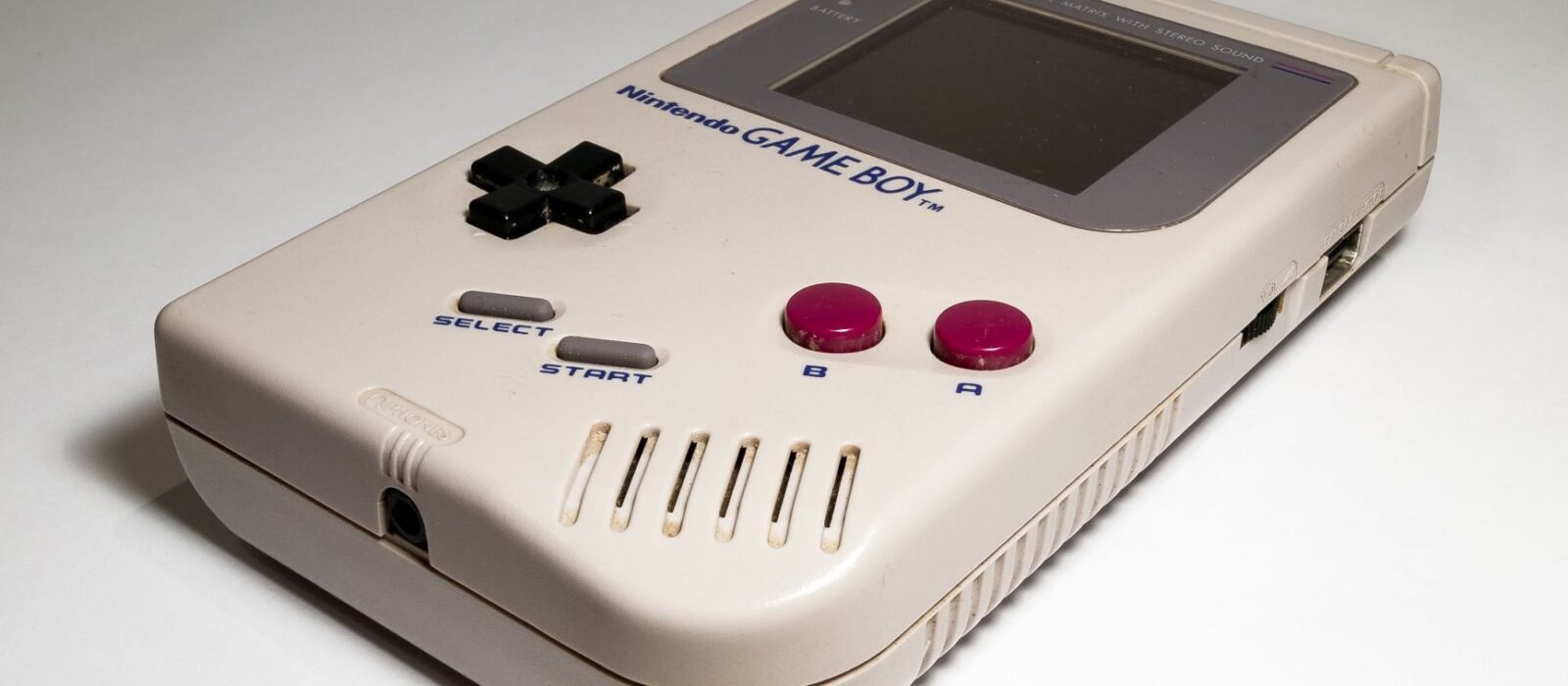
Original Game Boy (DMG-01): Honest Verdict on the 1989 Original
The DMG-01 launched in the UK in September 1990. It is the model people picture when they hear “Game Boy” — the brick, the green pea-soup screen, the four AA batteries that lasted what felt like a school holiday. At £138.20 in working condition on eBay UK, it is now the second-most expensive stock Game Boy you can buy, and that price needs context before anyone hands over the money.
What you are paying for is build quality and a particular sound chip. The DMG audio output through headphones is genuinely different to the Pocket or Color — chiptune musicians use DMG units specifically for their LSDJ work because of it. The shell is the densest plastic Nintendo ever moulded into a handheld and these things survive being dropped. That’s the case for the DMG.
The case against is everything else. The original reflective LCD is unreadable without strong overhead light. It has visible ghosting on anything that moves at speed — playing Tetris feels noticeably worse than on a Pocket. Four AAs is wasteful in 2026. And the price puts you within £25 of a properly modded Color with a current-gen IPS panel.
Who should buy a stock DMG-01: people specifically chasing the original sound chip, people who want it for LSDJ/chiptune work, and people who already plan to mod a biverter or bivert chip into it. Everyone else is paying premium money for a worse screen than every model that followed.
Game Boy Color: Why It’s the Worst Value on the Market in 2026
This is the position I will defend even when people push back. At £59.99, the Game Boy Color is the worst purchase on the current Game Boy market, and most buyers would be better served paying the £5 extra for an SP.
Its screen has the same fundamental problem as the DMG — an unlit reflective TFT — but worse, because the TFT in colour mode produces visible motion blur on fast scrolling. Pokémon Crystal looks fine. Wario Land 3 is fine. Anything with a fast horizontal camera, like Tony Hawk’s Pro Skater on GBC, smears. Players have known this for 25 years and the solution has always been “play it under a strong lamp.” That is not a 2026 standard.
Then there is the screen burn problem. The polarised film on Game Boy Color LCDs degrades when left in direct sunlight, and a high proportion of the units on eBay UK right now have some form of burn or yellowing on the polariser. It is fixable — you can replace the film for under £10 — but you should not be paying £59.99 for a unit that needs immediate repair work.
The library argument doesn’t save it either. The SP plays every Game Boy Color cart with no compatibility issues. There is no Game Boy Color exclusive that the SP cannot play. The only reason to own a GBC in 2026 is if you specifically want the cartridge-port form factor of the original — and if that is your reason, you already know it, and you are not reading buying guides.
Game Boy Advance SP (AGS-001): The £64.99 Sweet Spot
On a £70 budget, this is the model I would buy without hesitation. The Game Boy Advance SP (AGS-001) is currently £64.99 on eBay UK for an unboxed working unit, and at that price it is hard to argue with. Folding clamshell that protects the screen. Internal rechargeable battery that still holds a charge on most units two decades on. Full GBA, GBC and original Game Boy library compatibility. Its frontlit screen — while not great — is dramatically more usable than the Color or DMG in any normal indoor lighting.
The frontlight is the compromise. The AGS-001 uses a frontlit reflective TFT, which means it casts light forward onto the LCD rather than backlighting it. Colours look muted next to a modern panel. Whites have a slight greyish cast. Compared to the backlit AGS-101 it is visibly worse, and side-by-side comparisons on YouTube make that obvious. Compared to playing in 2003 on a non-lit GBA, it is a revelation.
At £64.99 the AGS-001 is the answer for most UK buyers reading this article. You get the full library, a usable screen, a folding form factor, and a rechargeable battery for £5 more than a degraded Game Boy Color. That is not a close call. You can check current AGS-001 prices on eBay UK using the table above — the £60–£70 band is where most working units sit, and anything below £55 is usually missing a battery cover, a charger, or both.
The GBA SP Hidden Fault Nobody Warns You About
This is the section that most coverage of this topic skips entirely, and it is the single most important thing to know before buying any AGS-001 or AGS-101 from a private seller online. The AGS series has a recurring power fault that can kill a working unit silently, and the community has spent the last two years documenting exactly how it happens.
Symptoms are consistent: the unit will not turn on, or it shows the orange charging LED for a couple of seconds and then dies, or it powers on with a battery but refuses to charge. A March 2025 thread on r/Gameboy documented a user troubleshooting exactly this — orange light briefly visible, no power-on, no response even after cleaning the power switch. Responses from experienced repairers were instructive: most immediately pointed at the F1 and F2 surface-mount fuses on the motherboard.
Those fuses blow under a few conditions. Trying to charge through a non-Nintendo or low-quality USB-C-converted port is one. Reverse-polarity damage from third-party chargers is another. And the most common cause is corrosion on the charging port traces — the AGS sits in drawers and lofts for years, condensation gets into the port, the traces corrode, current spikes blow F1, and the unit dies. The fault is fixable. Replacement 0Ω jumpers or proper-rated fuses are £2 and a soldering iron job. But if you are buying a unit blind from eBay UK at £64.99 and it arrives dead, you are now £64.99 down on a unit that needs another £10–£20 of work and SMD soldering experience to revive.
Before you commit to any GBA SP purchase, ask the seller two specific questions. Does it power on from the internal battery, and does the orange charging LED stay solid (not flash, not die after 2 seconds) when plugged in? If they cannot answer both clearly, walk away. If they can, you are almost certainly safe. This single check filters out 90% of the units that have the F1/F2 problem brewing.
Game Boy Advance SP AGS-101 (Backlit): The Best Stock Experience
Late-production SPs ditched the frontlit panel for a backlit TFT — that’s the AGS-101. It is the best out-of-box Game Boy experience Nintendo ever produced, and it is also where prices get serious. UK eBay pricing sits in the £120–£160 range for working units, with boxed examples occasionally pushing past £200.
That backlight is the entire reason to pay the premium. Where the AGS-001 frontlit screen looks washed out, the AGS-101 panel has proper black levels, accurate colour reproduction, and high enough brightness to play in direct sunlight on the lowest setting. Castlevania: Aria of Sorrow on an AGS-101 looks the way the developers actually intended — dark stages with proper contrast — rather than the grey-on-grey mush you get on a frontlit unit. Side-by-side, the difference is dramatic and obvious within ten seconds.
What weakens the AGS-101 case in 2026 is the price gap. At £140 you are within £30 of a properly modded AGS-001 with an aftermarket IPS panel, which gives you an even better screen than the AGS-101 ever had — sharper, brighter, with pixel-perfect integer scaling. Consensus on r/Gameboy is that the AGS-101 was the best buy in 2018 and the IPS-modded AGS-001 is the best buy in 2026. The maths has shifted.
Game Boy Micro: The Cult Pick
Strangest entry in the line is the Game Boy Micro. Released in 2005, near the end of the GBA’s life, it is genuinely tiny — 101mm wide, lighter than a modern smartphone — with a 2-inch backlit display that, pound for pound, is the highest pixel density Nintendo ever fitted to a Game Boy. It also drops compatibility with original Game Boy and Game Boy Color cartridges entirely. GBA only.
UK prices are firm. £140–£200 for working examples, with the limited-edition Famicom-style faceplate versions hitting £300+. The screen is brilliant. The battery life is poor by Game Boy standards — about 6–10 hours versus the AGS-001’s 15+ on a single charge — and the tiny shoulder buttons are uncomfortable for anyone with average-sized adult hands.
The Micro is a collector’s pick rather than a value pick. If you want one, you know why you want one. If you don’t, the AGS-101 or a modded AGS-001 gives you everything the Micro does plus the original GB and GBC libraries for similar money.
The IPS-Modded Route: Where the Market Is Actually Going
A refurbished Game Boy Color with an IPS screen retrofit is currently £169.99 on eBay UK. A similarly modded AGS-001 with a Funnyplaying or Hispeedido IPS panel and USB-C charging port sits at £140–£180 depending on the seller and shell quality. These prices have actually softened slightly over the last year as more UK modders have entered the market — there were roughly four notable UK-based GBA modders advertising on eBay in 2024; there are now closer to a dozen.
Going the IPS modded route, the things to check before purchase are: the brand of IPS panel fitted (Funnyplaying laminated panels are the current gold standard), whether the USB-C charging is properly current-limited (sloppy USB-C conversions are the number one cause of post-mod F1/F2 fuse failures), and whether the seller offers any warranty. At the £170+ price band, a 90-day warranty from a UK modder is reasonable to expect. Concerns about modded longevity — captured perfectly in an April 2026 r/Gameboy thread titled “Nervous about buying a modded GBA, these things are already old, how long will they last?” — are fair, but the consensus is that professionally modded units with quality panels typically outlast their owners’ patience for them.
For deeper buying advice on this specific question, our full GBA vs GBA SP modding comparison goes into which donor unit holds up best for IPS conversions and which sellers in the UK have the best track record. The full Game Boy buying guide covers boxed and CIB pricing if you are collector-minded rather than player-minded.
The Modern Alternative: Should You Just Buy a Handheld Emulator?
This is the question every Game Boy buyer asks themselves at some point. A Miyoo Mini Plus is around £50–£70 on Amazon UK, plays every Game Boy, GBC, and GBA title with frame-perfect accuracy on the right cores, and has a 3.5-inch IPS screen that is brighter and sharper than anything Nintendo ever shipped. On pure value-for-money for playing the games, modern emulation handhelds beat original hardware comfortably.
The case for original hardware is twofold. First, cartridge-based ownership matters to some buyers in a way that ROM files never will. Second, the screen aspect ratio and CRT-like input lag of original LCDs is part of how some games were designed to feel — Mario Kart Super Circuit “feels” different on a GBA than it does in mGBA on a modern handheld, even if every benchmark says the emulation is perfect.
If you are torn between original hardware and emulation, our complete retro handheld hub covers every major emulator handheld at every price point. The best handheld for GBA games under £80 guide is the most directly relevant comparison if you want to see what £80 buys in the modern emulation market versus an original SP.
Common Hardware Faults on Aging Game Boys
Beyond the AGS F1/F2 fuse problem, there are three other recurring faults you should know about before buying any unit from a private seller. None are fatal but all affect what a fair price looks like.
Sticky or unresponsive buttons. Affects every model. Dirt and oxidation build up on the silicone pads and the carbon contacts underneath. A May 2025 thread documented exactly this on a modded GBA SP — the A button registering presses inconsistently during long holds. The fix is a 20-minute disassembly and a clean with isopropyl alcohol on the contacts. Easy. But a “tested working” listing where the seller hasn’t done this is being a bit generous with the truth.
Quiet or dead internal speaker (Game Boy Color especially). Almost always traced to a corroded headphone jack. The jack has an internal switch that disconnects the speaker when headphones are plugged in. Corrosion on that switch means the speaker stays disconnected even with nothing plugged in. Cleaning or replacing the jack fixes it.
Screen ribbon glitches on IPS-modded units. White lines, static interference, or flicker. Most modders trace this to electromagnetic interference between the IPS ribbon cable and other components in the shell, and the fix is shielding the ribbon with copper tape. Reputable modders do this as standard; budget modders sometimes don’t.
Who Should Buy Which Model: Plain English Recommendations
With £60–£70 and a desire for the most Game Boy library access per pound: AGS-001 frontlit SP at £64.99. The frontlight is mediocre but the form factor, battery and library coverage justify it over a Color every time.
For £120–£160 and the best stock Nintendo Game Boy experience that ever existed: AGS-101 backlit SP. That screen is the entire point and it justifies the premium for anyone playing GBA games seriously.
Got £140–£180 and want a 2026-standard screen on classic Nintendo hardware? Look for an IPS-modded AGS-001 from a reputable UK seller, with USB-C charging and a Funnyplaying panel.
At £50–£70, if your priority is playing the games rather than owning the hardware: a Miyoo Mini Plus or similar emulator handheld. Better screen, better battery, every game ever made, no fuse-blowing anxiety.
Tempted to spend £138 on a stock DMG-01? Don’t, unless you have a specific LSDJ/chiptune reason. For that money, a modded AGS-001 is a better Game Boy in every measurable way.
Eyeing a Game Boy Color at £59.99? Pay £5 more for the SP. Every thread that asks will tell you the same thing.
What’s Not Worth Buying in 2026
The Game Boy Pocket — that slimmer 1996 redesign of the DMG — sits awkwardly. It is cheaper than a DMG-01 (typically £45–£70 for working units) and has a much better LCD with no ghosting. But there’s no backlight, no frontlight, and the AGS-001 SP costs the same and plays a vastly larger library. Pocket prices are also climbing because of LSDJ users who specifically prefer its sound profile, which puts pressure on casual buyers at the bottom end of the market.
Then there’s the Game Boy Light — the Japan-only DMG variant with an electroluminescent backlight — a collector item at this point, with prices regularly above £200. It is a fascinating piece of hardware but not a sensible buy for anyone who actually wants to play games rather than own the object.
Any unit listed as “untested” or “for parts.” The market is saturated with these and the prices have risen to a point where they no longer represent a sensible restoration project. The February 2026 r/Gameboy thread on the defective-console problem was specifically a complaint about this — people pricing dead units at £80+ because they assume someone will pay it. Don’t be that someone.
Verdict
✓ THE GOOD
- AGS-001 SP at £64.99 is the best library-per-pound buy on the market
- IPS-modded AGS-001 at £140–£180 delivers a 2026-standard screen experience
- Build quality of original hardware is genuinely better than any modern handheld shell
✗ THE BAD
- Game Boy Color is overpriced relative to the SP at current rates
- AGS F1/F2 fuse problem catches blind buyers out and isn’t well-flagged
- Used market prices have hardened, making cheap restoration units rare
The AGS-001 SP at £64.99 is the right answer for most UK buyers; everyone else is paying too much.
Frequently Asked Questions
Is the Game Boy Color worth buying in 2026?
Only if you specifically want a cartridge-slot-down form factor and have no interest in the GBA library. At £59.99 on eBay UK it is barely cheaper than an AGS-001 SP at £64.99, which plays every Game Boy Color game plus the entire GBA library with a folding shell and a rechargeable battery. The £5 saving is not worth the trade-off.
Which Game Boy has the best screen?
Out of the box, the Game Boy Advance SP AGS-101 with its backlit TFT panel. With aftermarket modding, an IPS-screen-modded GBA SP or Game Boy Color beats every original Nintendo screen for sharpness, brightness and colour accuracy. Modded units start around £140 on the UK used market.
What’s wrong with my GBA SP if it won’t charge?
The most common causes are a dirty power switch (cleanable with isopropyl alcohol), blown F1 or F2 surface-mount fuses on the motherboard from a bad charger or corrosion, and corroded charging port traces. The fuse problem is the most expensive to diagnose because it requires soldering work. Always test the charging behaviour before buying any second-hand SP — you can check current AGS-001 SP listings on eBay UK → from sellers who explicitly confirm power-on and charge-hold function.
Is the original Game Boy worth modding in 2026?
A community discussion from May 2026 split roughly 60/40 in favour of modding, with the case for being LSDJ chiptune users and DMG audio purists, and the case against being the cost — a DMG-01 plus a quality biverted backlit screen and a rechargeable battery mod will run close to £200 once you account for parts and labour. For that money, a properly IPS-modded AGS-001 SP is a better player handheld in every dimension except sound.
How long do modded GBAs last?
Community consensus on r/Gameboy is that professionally modded units with quality IPS panels (Funnyplaying, Hispeedido) and properly current-limited USB-C ports show no meaningful degradation in normal use over a 3–5 year window, which is as long as the mod scene has been mature. Cheap budget mods with poor USB-C conversions are the main failure point, typically taking out the F1/F2 fuses within 12–18 months. Buy from a UK seller with a warranty.
What’s the cheapest way to play Game Boy games in the UK?
A Miyoo Mini Plus at £50–£70 plays every Game Boy, Game Boy Color and Game Boy Advance title with accurate emulation, a 3.5-inch IPS screen and an 8-hour battery. It is the lowest-cost route to playing the games. If you want original hardware specifically, the AGS-001 SP at £64.99 is the cheapest sensible option.
Will the GBA SP charging port fit a USB-C cable?
Not without modification. The original AGS port is a proprietary Nintendo connector. Aftermarket USB-C replacement boards exist and are a popular mod, but a poorly-installed or non-current-limited USB-C board is the leading cause of F1/F2 fuse failures on modded units. If buying a USB-C-modded SP from a seller, verify the conversion board includes proper current limiting.
✓ Recommended by Ben Rawlinson
Recommended based on community testing data, benchmark results, and verified UK pricing — we only link products that earn it.
- Game Boy Advance SP AGS-101Best for: best all-rounder backlit
- Game Boy ColorBest for: colour-era cartridge purists
- Original Game Boy DMG-01Best for: DMG diehards and modders
- Game Boy Advance SP IPS ModdedBest for: premium screen upgrade
- Game Boy MicroBest for: ultra-portable GBA collectors
RetroInHand earns a small commission from qualifying Amazon UK and eBay purchases at no extra cost to you.
What to Read Next
If you found this useful, here are a few articles worth reading next:
- Best Game Boy to Buy UK (2026): All Models Reviewed — the deeper buying guide covering boxed pricing, CIB premiums and which sellers to trust.
- GBA vs GBA SP: Which Is Worth It for UK Modding in 2026? — head-to-head on which donor unit holds up best for IPS conversions and where prices are heading.
- Best Handheld for GBA Games Under £80 UK 2026 — if you’d rather skip original hardware entirely and play the GBA library on a modern emulator handheld.


This article was produced with AI assistance and reviewed by the editor. See our Editorial Standards.