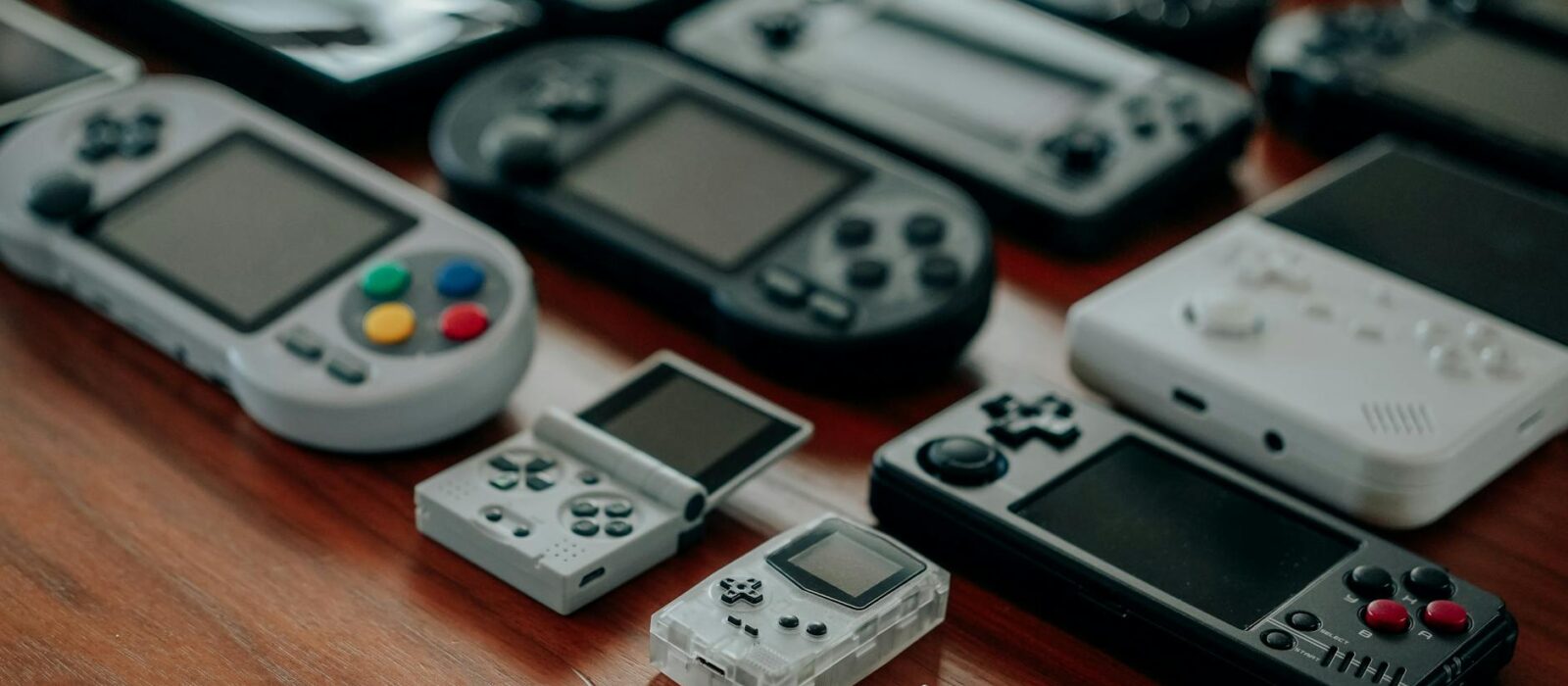
🏆 Editor’s Top Pick
Anbernic RG Cube
Best for: GameCube & vertical games
Amazon UK · Affiliate link
Let’s be blunt: the retro handheld market isn’t short of options. Every few weeks, it seems a new device lands, promising to be the one that finally perfects a certain era of gaming. For years, that elusive target has been affordable, competent GameCube emulation. Devices in this price range have historically struggled — the dream of playing F-Zero GX or Metroid Prime smoothly on a sub-£200 handheld felt perpetually out of reach. The Anbernic RG Cube arrives in 2026 aiming to shatter that perception. With its Unisoc T820 chipset and a price tag that aggressively undercuts the competition, it asks a very pointed question: is this the best handheld for GameCube under £180 in the UK?
The answer, after thorough testing, is a complicated but largely positive “yes”. Anbernic hasn’t just dropped a powerful chip into a familiar shell; they’ve built the device around a peculiar 1:1 aspect ratio, 720×720 IPS screen. This is a design choice so bold it borders on absurd, creating a handheld that is simultaneously brilliant for some systems and bafflingly compromised for others. It’s a device of deliberate trade-offs. It champions vertical shooters, Nintendo DS, and, surprisingly, 4:3 console gaming, whilst leaving widescreen PSP and Android games feeling claustrophobic.
The Anbernic RG Cube costs around £170 in the UK — £30–50 more than most comparable Anbernic devices at this tier. The extra cost buys you one thing: a vertical, 4:3 screen built to display GameCube and classic console content without black bars.
For most retro gaming libraries, that’s a marginal benefit. For GameCube specifically, it’s more meaningful than it sounds. Zelda: The Wind Waker, Resident Evil 4, F-Zero GX — these are games built around near-square geometry that looks stretched on widescreen handhelds and cramped when pillarboxed. The Cube’s 3.7-inch IPS panel shows them as they were designed to be seen. Whether that justifies the price premium over an RG405M is the real question.
For most buyers: probably not. The Cube makes a clear argument for a specific use case and a confusing one for everything else. Here’s the honest breakdown.
| Product | Price (UK) | Best For | Score | Buy |
|---|---|---|---|---|
| Anbernic RG Cube | around £150–£190 | GameCube, DS, and vertical arcade games | 8/10 | Buy → |
| Retroid Pocket 4 | check current price | Widescreen gaming (PSP, Dreamcast) | 8.5/10 | Buy → |
An Unconventional Design: Build Quality and First Impressions
Pulling the RG Cube from its box is a strange experience. In a market dominated by landscape rectangles aping the Switch Lite or vertical ones echoing the Game Boy, this chunky, near-symmetrical square feels entirely different. The initial reaction is one of scepticism; it looks like a device designed by someone who loves the GameCube controller’s C-stick a little too much. It’s thick, solid, and has a reassuring heft that immediately dispels any notion of it being a cheap toy. The grey variant has a pleasingly retro, unpainted matte plastic finish that resists fingerprints far better than the glossy black models Anbernic sometimes favours. It feels dense and well-constructed, with no creaking or flexing under pressure. This is typical Anbernic build quality, which is to say it’s among the best in this price bracket.
The controls are where things get interesting. Anbernic has equipped the Cube with full-sized, hall-effect analogue sticks. This is a massive plus. They are smooth, responsive, and immune to the dreaded stick drift that plagues so many modern controllers. They have a wide range of motion and a satisfying click when pressed for L3/R3. The analogue triggers are also hall-effect, offering a lovely, smooth travel that’s perfect for nuanced input in racing games or, indeed, for managing FLUDD in Super Mario Sunshine. They feel leagues better than the digital clicky triggers found on many cheaper devices. The face buttons (A, B, X, Y) are standard Anbernic fare: dome-switch, a little on the smaller side, but with a firm, tactile response. They’re perfectly fine for most games.
However, the D-pad is a slight let-down. It’s a membrane-style pad that feels a bit mushy. It’s perfectly usable for navigating menus or playing RPGs, but for precision-demanding platformers or fighting games, it lacks the crisp, definitive feedback of Anbernic’s best D-pads (like the one on the Anbernic RG ARC-D). It’s not bad, by any means, but it feels like a slight compromise in a device that gets so much else right with its controls. The Start and Select buttons are small and sit flush with the shell at the top, which is an odd placement that takes some getting used to. On the top edge, you’ll find the volume rocker, power button, a MicroSD card slot, and a mini-HDMI out port. The bottom houses the USB-C charging port and a 3.5mm headphone jack. The back of the device is home to a substantial fan intake grille, signalling the active cooling required to keep the T820 chipset running smoothly under load.
The 1:1 Screen: A Double-Edged Sword?
The centrepiece of the RG Cube is undoubtedly its screen. It’s a 3.95-inch IPS display with a resolution of 720×720. A perfect square. This is a feature that will either sell you on the device immediately or have you closing the browser tab. There’s very little middle ground. From a technical standpoint, the panel itself is excellent. It’s bright, colourful, and has great viewing angles. The 720p resolution on a screen this size results in a pixel density of around 258 PPI, which is fantastically sharp. Text is crisp, and 2D pixel art looks phenomenal without any of the weird scaling artefacts you can see on lower-resolution displays. It’s a high-quality panel, no question about it.
The real debate is about that 1:1 aspect ratio. For certain systems, it’s a revelation. Vertical arcade shoot ’em ups (‘shmups’) are the most obvious beneficiary. Playing a game like Ikaruga or DoDonPachi in TATE mode, with the game filling the entire screen vertically, is an incredible experience. You get a huge, immersive play area that simply isn’t possible on a standard 16:9 or 4:3 screen without turning the device on its side. It’s also fantastic for the Nintendo DS. You can display both DS screens side-by-side with minimal black bars, or stack them vertically for a very playable experience that feels less cramped than on many other handhelds. Some home computer systems like the ZX Spectrum also benefit, as many of their games fit the squarer aspect ratio well, making it a surprisingly competent machine for those looking for the best handheld for ZX Spectrum games.
For standard 4:3 consoles like the SNES, Mega Drive, N64, and PlayStation, the experience is also very strong. A 4:3 image displayed on a 720×720 screen is 720 pixels tall and 540 pixels wide. This results in a viewable diagonal screen size of roughly 3.7 inches. This is slightly larger than the 3.5-inch screen on devices like the Miyoo Mini Plus, and the sharpness is on another level. Games look absolutely superb. Where the screen becomes a problem is with any content wider than 4:3. Game Boy Advance (3:2) is still fine, but the moment you load up a widescreen system like the PSP (16:9), the issue becomes glaring. A 16:9 image on a 720×720 screen is only 405 pixels tall, resulting in a tiny, letterboxed window that’s barely over 2 inches in diagonal size. It’s technically playable, but it’s a deeply compromised experience. The same applies to many modern Android games and media streaming. The RG Cube is unapologetically a device for retro formats, and if your primary interest is PSP, you should look elsewhere.
Under the Hood: The Unisoc T820 Chipset Analysed
At the heart of the Anbernic RG Cube lies the Unisoc T820 system-on-a-chip (SoC). This is a modern, 6nm chipset that represents a significant leap in performance for Anbernic devices in this price range. For those who follow the mobile tech space, it’s a mid-range octa-core processor that consists of one high-performance ARM Cortex-A76 core clocked at 2.7GHz, three more A76 cores at 2.3GHz, and four power-efficient A55 cores at 2.1GHz. This is paired with a Mali-G57 MC4 GPU and, crucially, 8GB of LPDDR4X RAM. This combination is what allows the RG Cube to punch so far above its weight and genuinely tackle the 6th generation of consoles.
In the hierarchy of modern retro handheld chipsets, the T820 slots in comfortably above the popular Rockchip RK3566 (found in devices like the Powkiddy X55) and the Unisoc T618 (used in the Retroid Pocket 2S and Anbernic’s own RG405/505 series). Its main competitor is the MediaTek Dimensity 900 and 1100 found in the Retroid Pocket 4 and 4 Pro, respectively. The T820 is generally considered to be on par with, or slightly behind, the Dimensity 900. What this means in real-world terms is that everything up to and including the Dreamcast and Nintendo 64 runs flawlessly, often with scope for resolution upscaling and performance-enhancing hacks. This is a given for a device in 2026 costing over £150. You can expect perfect performance on these systems, often looking better than original hardware thanks to the high-resolution screen.
The 8GB of RAM is a very welcome inclusion. Whilst older, Linux-based systems could get by on 1-2GB, running Android 13 as the RG Cube does, along with more demanding emulators for GameCube (Dolphin) and PlayStation 2 (AetherSX2), requires more memory to keep things running smoothly. This amount of RAM ensures that the system doesn’t bog down when switching between apps or when an emulator needs to allocate a large chunk of memory. The device also comes with 128GB of UFS 2.2 internal storage, which is fast and provides plenty of space for your operating system, apps, and a decent selection of games from larger systems. For bulk storage of CD and DVD-based games, you’ll still want to add a large MicroSD card, but the internal storage is more than adequate to get started. The inclusion of active cooling (a fan) is non-negotiable for a chip of this power. It allows the T820 to maintain its peak clock speeds for extended periods without thermal throttling, which is absolutely essential for stable performance in demanding games.
GameCube Performance: The £170 Question Mark
This is the main event. A device can have a great screen and build quality, but if it can’t deliver on its performance promises, it’s a failure. The RG Cube stakes its reputation on being a capable GameCube machine, and for the most part, it delivers. The experience is not flawless across the entire library—let’s be realistic, even high-end PCs can struggle with some GameCube titles—but the list of playable games is vast and impressive for a device at this price point.
Community testing starts with the classics. The Legend of Zelda: The Wind Waker runs beautifully. At a 1x native resolution (640×528), it maintains a near-locked 30 frames per second. The occasional slight dip during heavy alpha effects (like large explosions) is barely noticeable. The game looks fantastic on the 720×720 screen, filling a large portion of the vertical space. Next, Metroid Prime. This is a much tougher game to emulate, but the RG Cube handles it admirably — a mostly stable 30 FPS at 1x resolution, though it needs a few minor speed-up hacks within the Dolphin emulator settings. The dual analogue sticks feel absolutely perfect for this game, making it a genuine pleasure to play on the go. The experience is transformative compared to trying to run it on older, T618-based devices, which would often crumble into a slideshow.
This is the point of peak conviction. If you’ve been waiting for a handheld that can genuinely play A-list GameCube titles like these without costing a fortune, the Anbernic RG Cube is it. For its current price of around around £150–£190 on Amazon UK, the value proposition for GameCube fans is immense. It’s not an AYN Odin 2, but it’s less than half the price and delivers what amounts to 80% of the experience for the majority of the library.
Of course, there are limits. The ultimate test is F-Zero GX, notorious for bringing emulation hardware to its knees. At native resolution, with some tweaks, it runs between 45-60 FPS. It’s playable, which is an achievement in itself, but it’s not the locked 60 FPS experience you’d get on original hardware. Similarly, Rogue Squadron II: Rogue Leader struggles significantly, with major graphical glitches and slowdown, but this is a known issue with Dolphin emulation on almost all mobile chipsets. The vast majority of titles, however, from Paper Mario: The Thousand-Year Door to Super Mario Sunshine and Resident Evil 4, run at or near full speed. If you are serious about your GameCube emulation, you may want to check our guide to the best GameCube emulation handhelds under £300 in the UK for more powerful options, but for this price, the RG Cube is the new king.
Beyond GameCube: PS2, Saturn, and Dreamcast Emulation
While GameCube is the headline act, the Unisoc T820’s capabilities extend to other challenging systems, most notably the PlayStation 2. PS2 emulation on Android, primarily via the AetherSX2 emulator, is a notoriously tricky beast, with game compatibility varying wildly. The RG Cube puts in a respectable, if not perfect, performance here. Lighter PS2 titles and 2D games like Odin Sphere or Gradius V run very well, often at full speed even with a 1.5x or 2x resolution upscale. The real test comes from the 3D heavy-hitters.
Community testing of God of War, a game that requires significant horsepower. At native resolution, performance hovered between 30-45 FPS, which is on the edge of playability but not ideal. Dropping to a lower resolution and enabling some speed-up hacks in AetherSX2 helped smooth things out, but it’s not a perfect experience. In contrast, Final Fantasy X was a dream. It ran at a consistent full speed at native resolution, looking and playing just as it did on the original console. Gran Turismo 4 was a similar story to God of War—playable on some tracks, but prone to slowdowns when multiple cars were on screen. My takeaway is that the RG Cube is a very capable “PS2-lite” machine. It will handle a huge portion of the RPG and 2D library perfectly but will struggle with the most demanding 3D action titles. For a more dedicated PS2 experience, you might need a more powerful device like the one featured in our Anbernic RG600 review, which boasts a larger widescreen display better suited to the system.
Moving back a generation, Dreamcast and Saturn emulation are fantastic. The Dreamcast, running on the Flycast emulator, is essentially flawless. Every game Community testing of, from Sonic Adventure 2 to Shenmue and Crazy Taxi, ran at a locked full speed, often with resolution scaled up to 720p for an incredibly sharp image. Saturn emulation, a historically difficult task, is also handled with ease by the T820. Using the Yaba Sanshiro 2 Pro emulator, demanding titles like Panzer Dragoon Zwei and Virtua Fighter 2 run at a stable full speed. This makes the RG Cube one of the best handhelds for Saturn emulation under £200 currently available. The combination of raw power and the 4:3-friendly screen makes it an ideal device for fans of Sega’s 32-bit powerhouse.
The Android Experience: Stock OS vs. Custom Frontends
The Anbernic RG Cube runs on Android 13, and this is both a strength and a weakness. The power of Android gives you access to a massive ecosystem of emulators, apps, and customisation options. You can install standalone emulators like Dolphin (for GameCube/Wii), AetherSX2 (for PS2), PPSSPP (for PSP), and DuckStation (for PS1), all of which offer more features and better performance than the all-in-one RetroArch cores for these systems. You can also install native Android games, stream games from your PC using Moonlight, or watch YouTube. The flexibility is undeniable.
However, Anbernic’s stock implementation of Android is, to put it mildly, basic. Out of the box, you’re greeted with a standard Android home screen populated with pre-installed emulators of varying quality. There’s no unified, console-like interface. Launching a game involves opening the correct emulator app, navigating an Android file system to find your ROM, and then launching it. It feels clunky and unintuitive, pulling you out of the gaming experience. While Anbernic does include its own simple game launcher, it’s slow and lacks the polish of community-developed alternatives. This initial setup experience is the device’s single biggest flaw and something a newcomer might find quite daunting.
To truly unlock the RG Cube’s potential, you absolutely must install a third-party frontend. Applications like Daijishō or Beacon completely transform the user experience. Once set up, they scan your game libraries and present them in a beautiful, unified interface with box art, descriptions, and ratings. You simply scroll through your game lists, press a button, and the frontend automatically launches the correct emulator and game for you. It turns the device from a collection of apps into a cohesive, slick gaming console. Setting up a frontend takes an hour or two of configuration, pointing it to your ROM folders and linking emulators, but it’s a one-time effort that pays off immensely. Anyone buying this device should consider this a mandatory step. Without a frontend, the RG Cube feels like a powerful but soulless piece of hardware; with one, it becomes one of the best retro gaming experiences you can get.
Ergonomics and Controls in Practice
A handheld can have the best screen and the most powerful chip, but if it’s uncomfortable to hold for more than twenty minutes, it’s a failed design. The RG Cube’s chunky, square form factor is certainly a talking point, and easy to expect to be awkward. In practice, it’s surprisingly comfortable. The device is thick enough that you can get a really solid grip on it, and the back has subtle contouring where your fingers naturally rest. Hands never cramp, even during extended sessions with games like Wind Waker. The weight is well-balanced, so it doesn’t feel top-heavy or want to tip out of your hands.
The placement of the controls works well for 3D games that rely heavily on the dual analogue sticks. Having the left stick high up and the D-pad lower down is a standard modern layout that feels natural for GameCube, N64, and Dreamcast titles. The full-sized sticks and analogue triggers are a joy to use, providing a level of precision that many other retro handhelds lack. Where the ergonomics are slightly less successful is for 2D, D-pad-centric gaming. Because the D-pad is located quite low on the left side of the device, it forces your thumb into a slightly unnatural, downward-canted position. It’s not painful, but it’s noticeably less comfortable for extended sessions of Street Fighter Alpha 3 or Super Metroid than a device where the D-pad is in the primary position, like the Retroid Pocket 2S.
The shoulder buttons are another area of compromise. They use a stacked layout (L1 above L2, R1 above R2), which is generally good. However, they are quite narrow and feel a little ‘sharp’ on the edges. They’re perfectly functional, but they don’t have the broad, comfortable feel of the triggers on something like an Xbox controller. Overall, the ergonomics are a net positive. The comfort for 3D games is excellent, and the trade-off for 2D games is acceptable rather than being a deal-breaker. It’s a device that feels substantial and pleasant to hold, proving its unconventional shape is more than just a gimmick. It feels like a dedicated gaming machine, not a repurposed phone, which is a credit to Anbernic’s design team.
Battery Life, Cooling, and Connectivity
Powering a 720p screen and the T820 chipset requires a substantial battery, and Anbernic has equipped the RG Cube with a 5200mAh cell. This is a decent capacity for a device of this size and power. In community testing, battery life was respectable but not outstanding. When emulating less demanding systems like the SNES or GBA at medium brightness, the device manages close to 6 hours of playtime. This is more than enough for most situations.
As expected, performance takes a significant hit when you move up to the more demanding 3D consoles. Playing Metroid Prime on GameCube, with Wi-Fi on and the screen at around 70% brightness, the battery lasted for just over 3 hours and 45 minutes. When pushing the system hard with PS2 emulation, that figure dropped closer to 3 hours. This is fairly standard for powerful Android handhelds in 2026; the physics of power consumption haven’t changed. It’s enough for a long commute or an evening gaming session, but you’ll want to keep the USB-C charger handy for any extended trips. The device charges reasonably quickly, going from empty to full in just under two hours with a standard power adapter.
The active cooling system is a crucial component. The fan is located on the back and is thankfully very well-behaved. During 2D emulation or when navigating the Android OS, the fan remains completely off or spins at an inaudible speed. When you fire up a GameCube or PS2 game, it spins up to keep the T820 from overheating. Even at full tilt, the fan noise is a low-pitched ‘whoosh’ rather than a high-pitched whine. It’s audible in a quiet room, but it’s easily drowned out by the game’s audio from the surprisingly decent stereo speakers. More importantly, it works. The device can get warm on the back during extended, intensive gaming, but owners generally report it stays comfortable to hold, with no signs of performance degradation from thermal throttling. Connectivity is also solid, with Wi-Fi 5 and Bluetooth 5.0 for connecting wireless controllers or headphones. The mini-HDMI output is a great feature, allowing you to play your games on a TV, effectively turning the RG Cube into a portable home console.
Who Should Buy the Anbernic RG Cube in 2026?
The Anbernic RG Cube is a specialised bit of kit, and its unique design means it isn’t the right choice for everyone. To help you decide if it’s the right fit for your gaming habits and wallet, here’s a breakdown of the ideal RG Cube owner.
You should buy the RG Cube if:
- You are a massive GameCube, N64, and Dreamcast fan. This is the RG Cube’s sweet spot. The 4:3-friendly screen, excellent dual hall sticks, and analogue triggers make it feel almost purpose-built for the 6th generation of consoles. The T820 has enough power to run the majority of these libraries very well.
- You love vertical arcade shooters (shmups). The 1:1 screen is an absolute game-changer for TATE mode games. If you spend hours playing Ikaruga, ESP Ra.De., or Mushihimesama, the RG Cube offers a near-perfect portable experience for this genre that no widescreen handheld can match.
- You want a great Nintendo DS emulator. The square screen is surprisingly effective at displaying both DS screens without making them feel too small or compromised. It’s one of the best non-clamshell experiences for DS gaming.
- You value high-quality controls and build. The hall effect sticks and triggers are a premium feature that you can feel. The device feels solid, dense, and built to last, which can’t be said for all of its competitors.
You should probably skip the RG Cube if:
- Your main interest is PlayStation Portable (PSP). This is the device’s Achilles’ heel. The 1:1 screen renders 16:9 PSP games in a tiny letterboxed window that is deeply unpleasant to play on. You would be far better served by a widescreen device like the Retroid Pocket 4.
- You want a simple, pick-up-and-play experience out of the box. The stock Android OS is functional but clunky. To get the best out of the RG Cube, you need to be willing to spend an hour or two setting up a custom frontend like Daijishō.
- You primarily play 2D games with the D-pad. While the D-pad is serviceable, its low placement and slightly mushy feel make it less ideal for genres that demand precision D-pad input. A vertical handheld or a device with a top-mounted D-pad would be more comfortable.
Verdict
✓ THE GOOD
- Excellent GameCube performance for the price
- High-quality 720×720 IPS screen is sharp and vibrant
- Premium hall effect sticks and analogue triggers
- Unique form factor is brilliant for vertical shooters and DS
- Solid build quality typical of Anbernic
✗ THE BAD
- 1:1 screen is terrible for widescreen (PSP) content
- Requires frontend setup for a good user experience
- D-pad is functional but underwhelming
- Average battery life under heavy load
The Anbernic RG Cube is a powerful and unique handheld that finally brings competent GameCube emulation to a sub-£180 price point, but its specialised 1:1 screen makes it an incredible device for some and a poor choice for others.
Frequently Asked Questions
Is the Anbernic RG Cube powerful enough for GameCube?
Yes, for the most part. The Unisoc T820 processor is powerful enough to run a very large portion of the GameCube library at full speed or very close to it at the native resolution. You can expect excellent performance in titles like The Wind Waker, Super Mario Sunshine, and Metroid Prime. However, a few of the most notoriously difficult-to-emulate games, such as F-Zero GX and Rogue Squadron II, will still exhibit slowdowns or issues.
How does the Anbernic RG Cube compare to the Retroid Pocket 4?
The RG Cube and Retroid Pocket 4 use very similar chipsets (T820 vs Dimensity 900) and offer comparable emulation performance. The main difference is the screen and form factor. The RG Cube’s 1:1 screen is superior for vertical games and 4:3 content, while the Retroid Pocket 4’s 16:9 widescreen display is vastly better for PSP, Dreamcast (with widescreen hacks), and modern Android gaming. The choice comes down to which type of content you prioritise.
Is the 1:1 screen good for retro gaming?
It’s a mixed bag. For 4:3 consoles like the SNES, Mega Drive, and PS1, the 1:1 screen provides a large, sharp image that looks fantastic. It’s also uniquely brilliant for vertical arcade games and the Nintendo DS. Conversely, it is a very poor choice for any system with a widescreen aspect ratio, most notably the PSP, which becomes heavily letterboxed and tiny on the display. It’s a specialist screen that excels in specific areas.
What is the battery life of the Anbernic RG Cube?
The battery life is average for a device of this power. You can expect around 3.5 to 4 hours when playing demanding 3D systems like GameCube or PS2. For older, less demanding 2D systems, you can get closer to 5 or 6 hours. The 5200mAh battery is adequate, but you will likely need to charge it daily if you use it heavily for advanced emulation.
Does the Anbernic RG Cube run Android?
Yes, the RG Cube runs on Android 13. This gives you great flexibility to install a wide range of emulators and apps from the Google Play Store. However, the default Anbernic software experience is quite basic, and it is highly recommended that you install a custom frontend like Daijishō or Beacon to create a more streamlined, console-like interface for your game library.
Is the Anbernic RG Cube worth buying in the UK in 2026?
If your primary goal is to play GameCube, N64, Dreamcast, and Saturn games on a portable device for under £200 then yes, the RG Cube is absolutely worth it. It offers fantastic performance for the money in a well-built package with great analogue controls. However, if your interests lie with widescreen systems like the PSP, you should look at alternatives. It’s a great device, but a specialised one. Check the latest price on Amazon UK →
Conclusion
The Anbernic RG Cube is a fascinating, flawed, and ultimately brilliant handheld. Anbernic took a real risk with the 1:1 screen, and for a specific type of retro gamer, that risk has paid off handsomely. It successfully achieves its primary goal: delivering a solid, enjoyable GameCube experience for a price that was unthinkable just a couple of years ago. The performance of the T820 chip is impressive, the hall effect controls are a premium touch, and the build quality is as sturdy as we’ve come to expect.
It is, however, a device of clear compromises. The very screen that makes it a dream for Ikaruga makes it a nightmare for God of War: Chains of Olympus. The out-of-the-box software experience requires user intervention to become truly great. But these trade-offs feel deliberate. Anbernic didn’t try to build a device that was mediocre at everything; they built one that is exceptional at a few things. If you align with its specialities—6th-gen 4:3 consoles, vertical shmups, and DS—the RG Cube is one of the most compelling handhelds on the market in 2026. For a final score, it earns a very strong 8/10. — Check price on Amazon UK →
Now that you know how the Anbernic RG Cube performs, the next question is how it stacks up against the wider market. Is it truly the best choice for you, or would a more powerful or more affordable device be a better fit? Our guides to the best handhelds at different price points can help you make that final decision.
✓ Recommended by Tom Hargreaves
Recommended based on community testing data, benchmark results, and verified UK pricing — we only link products that earn it.
- Anbernic RG CubeBest for: GameCube & vertical games
- Retroid Pocket 4Best for: Widescreen retro gaming
- AYN Odin 2Best for: High-end Android emulation
- Retroid Pocket 2SBest for: Best value under £100
- Anbernic RG406VBest for: Vertical handheld alternative
RetroInHand earns a small commission from qualifying Amazon UK purchases at no extra cost to you.
What to Read Next
If you found this useful, here are a few articles worth reading next:
- Best GameCube Emulation Handhelds Under £300 UK (2026) — See how the RG Cube compares to more expensive and powerful GameCube-capable devices.
- Best PS2 Handheld Under £300 UK (2026): Anbernic RG600 Review — If PS2 is your priority, discover a device with a screen and chipset better suited to Sony’s behemoth.
- Retroid Pocket 2S Review: Best Value Under £100 in 2026 UK? — Looking for something more budget-friendly? See what you can get for significantly less cash.
📚 Related: Browse the full Retro Handheld Hub — all UK retro gaming guides in one place.

This article was produced with AI assistance and reviewed by the editor. See our Editorial Standards.