Last updated: July 2026
🏆 Editor’s Top Pick
Nintendo GameBoy (Original)
Best for: collectors and modding projects
The Nintendo Game Boy line holds a unique place in gaming history, yet choosing the right model in 2026 for a UK buyer involves more than just nostalgia. Original hardware often comes with quirks, age-related issues, and a pricing structure that reflects both collector demand and component scarcity. While the original DMG-01 remains an icon, buyers must consider its limitations and common faults against the more compact Game Boy Pocket or the vibrant Game Boy Color.
For many, the appeal of the original hardware stems from an authentic experience, but the reality of 25-year-old electronics means many units require attention. A fair condition, unboxed original Game Boy DMG console typically sells for around £55–£70 in the current UK retro market. Meanwhile, a Game Boy Pocket in similar unboxed, fair condition, perhaps reshelled, might fetch around £30–£45. These price points reflect not just desirability but also the potential for required repairs, particularly concerning power issues often caused by corroded battery terminals or circuit board damage.
Deciding which Game Boy to pursue ultimately depends on your priorities: pristine originality, a modding project, or a more direct play experience. Each model presents its own set of advantages and challenges, particularly when considering modern upgrades like IPS screens. We’ll examine the key differences, common problems, and market realities for each model in the UK today.
| Product | Price (UK) | Best For | Score | Buy |
|---|---|---|---|---|
| Nintendo GameBoy (Original) | £55-£70 | collectors and modding projects | 8.0/10 | Buy → |
| Nintendo Gameboy Pocket | £30-£45 | compact form factor fans | 6.5/10 | Buy → |
| Nintendo Gameboy Color | £50-£80 | vibrant screen game library | 7.5/10 | Buy → |
The Original Game Boy (DMG-01): The Unyielding Icon
The Nintendo GameBoy (Original), model DMG-01, launched in 1989, stands as the foundation of handheld gaming. Its chunky, battleship-grey shell and pea-soup green dot-matrix screen are instantly recognisable. For many, this is the definitive retro handheld, thanks to its extensive and beloved game library, including classics like Tetris, Super Mario Land, and Pokémon Red/Blue. Collectors often seek out pristine units, driving prices for unboxed, fair condition consoles to around £55–£70 in the UK. Yellow units, such as a Game Boy Original Console (YELLOW) (UNBOXED) (FAIR), can even stretch towards £75 depending on condition.
Despite its legendary status, buying an original DMG in 2026 comes with significant caveats. The most prevalent issue reported by the community is a console failing to power on, a problem often rooted in corroded battery terminals or damage to the circuit board itself. After decades, alkaline battery leakage is a common culprit, necessitating basic repair skills like cleaning contacts with vinegar or isopropyl alcohol, and sometimes desoldering and replacing corroded components. Buyers should anticipate this potential maintenance, rather than expecting a flawless, ready-to-play device.
The DMG’s large internal space makes it a prime candidate for modification. IPS screen upgrades are particularly popular, replacing the original unlit, low-contrast display with a vibrant, backlit panel. These kits, like the Funnyplaying V5 or One Chip options, fit well within the spacious shell, offering a much-improved visual experience for games like The Legend of Zelda: Link’s Awakening. Similarly, USB-C charging mods and improved audio amplifiers are relatively straightforward to implement, modernising the console without sacrificing its iconic form. The robust build quality, despite its age, means the internal components are often more resilient than the external battery contacts.
For purists, playing on the original screen, even with its limitations, is part of the charm. However, for those looking to experience the Game Boy library with modern conveniences, the DMG offers a fantastic modding platform. Its relatively simple internal design compared to later models means that common repairs and upgrades are well-documented within the retro gaming community, making it an accessible project for beginners with a soldering iron. The screen refresh rate on original hardware provides a distinct ghosting effect, which some players find nostalgic and others find distracting. It’s a matter of preference, but the option to upgrade exists for those who demand clarity.
Owners commonly report battery life of around 10-15 hours on two AA batteries with the original screen, a figure that drops significantly with an IPS upgrade, often to 4-6 hours depending on screen brightness. Many modders accept such a trade-off for the visual improvement. Its original speaker is notoriously quiet, a common complaint even at launch, making an audio amplifier mod a worthwhile consideration for a more immersive experience without headphones.The DMG-01’s enduring popularity and modding potential ensure a strong community following. Guides for everything from basic battery terminal cleaning to advanced FPGA-based IPS screen installs are readily available. This makes it a great entry point for those interested in retro hardware restoration, as well as a solid base for anyone wanting to build their ideal custom Game Boy. Its physical presence, the tactile feel of its buttons, and the unique sound of its speaker define an era, and for many, that experience is irreplaceable. 8.0/10 — Check price on Amazon UK →
Game Boy Pocket: Slim Profile, Modding Hurdles
Introduced in 1996, the Nintendo Gameboy Pocket brought a much-needed design refresh to the line, shrinking the original’s footprint considerably. This sleeker, more portable console runs on two AAA batteries, a departure from the DMG’s four AAs, offering a battery life of roughly 8-10 hours on its original unlit LCD. Its sharper, albeit still monochrome, display was a noticeable improvement over the DMG, with less ghosting and better contrast. Aesthetically, it often comes in vibrant colours beyond the DMG’s grey, and finding a reshelled unit in an interesting hue, such as a Nintendo Gameboy Pocket (GREEN)(UNBOXED)(RESHELL), for around £30–£45 is quite possible.
Despite its appeal, the Game Boy Pocket presents unique challenges for those looking to modernise it with IPS screens. Community reports, particularly concerning Hispeedido IPS kits, highlight compatibility issues and problems with on-screen controls. While many IPS kits exist, the Pocket’s smaller form factor and specific internal PCB layout can make installations more complex or lead to unexpected glitches compared to the DMG or Game Boy Color. Modders commonly find that some screen kits may interfere with the console’s button responses or require more invasive shell modifications. This often means that an otherwise compact and attractive system can become a frustrating project for the inexperienced modder.
The Game Boy Pocket also inherited some of the DMG’s age-related vulnerabilities, though perhaps to a lesser extent due to its later release. Battery terminal corrosion remains a concern, especially given its reliance on smaller AAA batteries, which can be prone to leakage. Power issues are still reported, albeit less frequently than with the earlier DMG. When buying, close inspection of the battery compartment is essential. The smaller form factor, while desirable for portability, means less space for internal components during mods, potentially leading to cramped wiring or more heat buildup, which can affect long-term reliability. The original speaker, like the DMG’s, is also fairly weak, making an audio mod a popular, if more challenging, upgrade.Collectors appreciate the Pocket for its design evolution and improved screen clarity over the DMG. However, its suitability for extensive modding is a point of contention within the community. While a basic backlight mod is achievable, full IPS conversions often demand a higher degree of technical skill and patience to avoid the reported issues. For anyone considering the Game Boy Pocket as a modding platform rather than a purely original play experience, this proves a critical factor. If your primary goal is to achieve the best possible IPS screen without hassle, other models might be a more straightforward path. Owners praise its portability for commuting, yet the screen issues during modding can be a real deterrent.The market for Game Boy Pocket units in the UK tends to sit at a lower price point than the DMG, primarily due to its modding complications and its less “original” status in some collector’s eyes. However, for those who simply want a working, more compact Game Boy with its original screen, the Pocket offers a good option. Finding a unit that is unboxed and in fair working condition, especially if it has been reshelled, means you can pick one up for around £30-£45, making it a budget-friendly entry into the Game Boy family. 6.5/10 — Check price on Amazon UK →
Game Boy Color: The Colourful Evolution and its Own Quirks
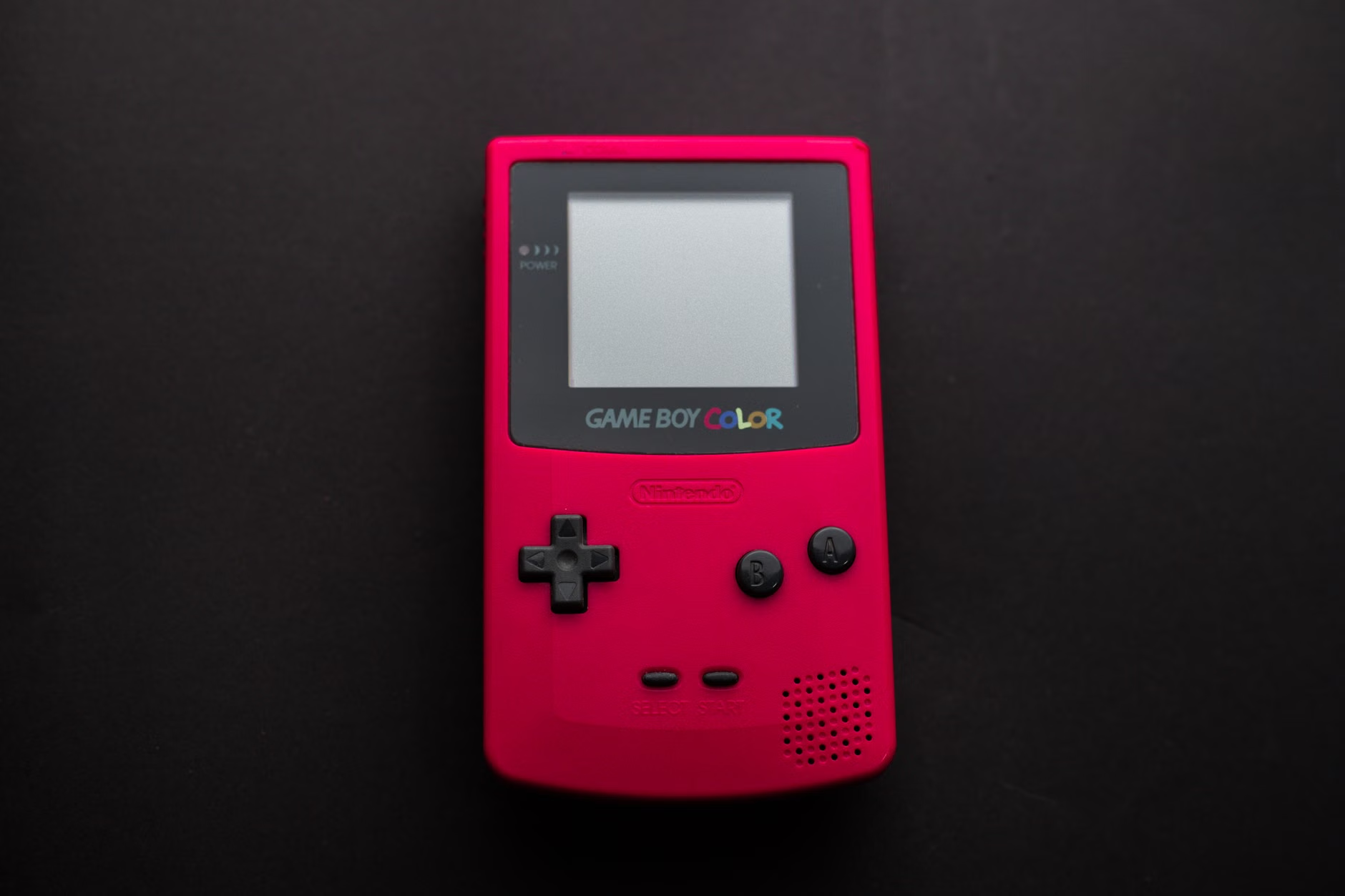
Launched in 1998, the Nintendo Gameboy Color (GBC) was a significant leap for the handheld line, bringing a vibrant, if still unlit, colour screen to the platform. This opened the door to a new generation of visually richer games and enhanced versions of existing titles. The GBC was fully backwards compatible with original Game Boy cartridges, displaying them in a palette of four selectable colours, while also boasting its own exclusive library of GBC-only titles like Pokémon Gold/Silver/Crystal, The Legend of Zelda: Oracle of Seasons/Ages, and Metal Gear Solid. Unboxed units in fair condition typically retail for around £50–£80 in the UK, reflecting their greater capability and wider game compatibility.
Despite its advancements, the Game Boy Color is not without its common problems. Community reports highlight general game issues, complete power failure (often linked to battery contacts), persistent audio problems, screen burn, and unresponsive buttons. Similar to its predecessors, battery leakage remains a primary concern for power issues. The screen, while in colour, still lacks a backlight, making play in poorly lit environments challenging. Screen burn, where images are ghosted onto the display, can affect older units and is a common cosmetic defect to watch for when buying.
For those looking to mod, the Game Boy Color offers a more straightforward IPS upgrade path compared to the Game Boy Pocket. Many IPS kits designed for the GBC integrate well into its slightly larger shell, often without the reported Hispeedido compatibility or on-screen control issues that plague some Pocket mods. The GBC’s internal layout generally accommodates these screen replacements with less fuss, making it a popular choice for modders seeking a modern play experience for their colour Game Boy games. Installing a backlit screen transforms the GBC experience, making its impressive colour palette truly shine.
Power delivery issues remain a community topic for the Game Boy Color. The console uses two AA batteries, typically providing around 10-12 hours of play on the original screen. As with other models, installing an IPS screen will drastically reduce this lifespan, often to 4-7 hours depending on brightness settings. Therefore, a power mod or carrying spare batteries becomes a practical necessity for extended play. Audio problems, manifesting as low volume or distortion, are also widely discussed. While not as common as battery corrosion, faulty capacitors can be a cause, requiring desoldering and replacement.
The Game Boy Color’s game library is a major draw. Its ability to play both DMG and GBC-specific titles means it offers the broadest compatibility of the original Game Boy line. For players who want to experience the full spectrum of original Game Boy releases in the best possible native handheld format, the GBC is a strong contender. Its larger, more comfortable form factor compared to the Pocket also appeals to players with larger hands. The console also introduced the Infrared Communication Port, which allowed for basic multiplayer and data exchange in a few specific titles, though this feature is rarely used today.Market availability for the GBC in the UK is generally good, with units appearing frequently on platforms like eBay. Prices have remained relatively stable, reflecting consistent demand from both collectors and players. The availability of reliable IPS mod kits, combined with its dual-compatibility, positions the Game Boy Color as a compelling choice for those wanting to bridge the gap between classic monochrome and early handheld colour gaming. 7.5/10 — Check price on Amazon UK →
Common Pitfalls When Buying Any Game Boy in 2026 UK
When purchasing any vintage Game Boy model in 2026, regardless of its specific iteration, buyers need to exercise caution. These consoles are decades old, and time takes its toll on electronics. The most frequently cited issue across all models is the console not powering on, an affliction almost always traced back to battery terminal corrosion or circuit board damage. Old alkaline batteries leak, and the corrosive residue can destroy the terminals and track on the PCB. It’s crucial to visually inspect the battery compartment for green or white crusty deposits. A fully cleaned battery compartment may still hide deeper damage to the board underneath, which often requires a full teardown and meticulous cleaning, sometimes including component replacement. Community forums like r/Gameboy are rife with examples of seemingly minor corrosion leading to complex power issues.
Another major concern is the condition of the screen. Original Game Boy DMG and Pocket screens are passive matrix LCDs, prone to pixel degradation and “screen burn” where faint images are permanently etched onto the display. Vertical or horizontal lines of dead pixels are also common, a result of ribbon cable degradation over time. Whilst these can sometimes be temporarily fixed by applying heat to the ribbon cable, it is rarely a permanent solution. The Game Boy Color’s screen, while colour, is also susceptible to burn-in and dead pixels, and its lack of a backlight means it will appear very dark in anything but bright ambient light. Always ask for clear photos or videos of the screen powered on, displaying a game, to assess its condition. Screen uniformity matters for an enjoyable visual experience, and age often compromises this.Beyond the screen and power, unresponsive buttons are a frequent complaint. Over years of use, the rubber contact pads underneath the buttons can wear out or become brittle, leading to inconsistent presses. This can often be resolved by cleaning the contacts on the PCB or replacing the rubber membranes, which are widely available from aftermarket suppliers. However, an unresponsiveness that points to internal circuit damage is a more involved repair. Shell condition also plays a role; while a cosmetic blemish, cracks or significant scratches can indicate a console that has been dropped or poorly maintained, potentially hiding internal damage. Counterfeit or poor-quality reshells are also present on the market, sometimes identifiable by cheap-feeling plastics or ill-fitting seams. Always verify the seller’s reputation and check for inconsistencies in shell texture or colour.
Audio problems are another prevalent issue, particularly with the Game Boy Color and occasionally the DMG. Manifesting as crackling, low volume, or complete silence, these issues can stem from the speaker or headphone jack. Faulty capacitors are often the cause here, necessitating a recap job – replacing all the electrolytic capacitors on the mainboard. It’s a common maintenance item for any console of this age but requires soldering skills. For the uninitiated, paying a professional for a recap can add significantly to the overall cost. When buying, test both the speaker and the headphone jack if possible.
Finally, always verify authenticity. While less common for the consoles themselves, fake cartridges are abundant, especially for popular Pokémon titles. This isn’t directly a console issue, but a buyer looking for a complete Game Boy experience needs to be aware. Inspect the console’s serial number label, battery cover, and internal components (if opened) to ensure they match genuine Nintendo parts. If a deal seems too good to be true for an original, working console, it probably is. Budget finds often require immediate attention and basic repair skills, a reality for many “not starting” units. The community was right about this one: assume it needs work if it’s cheap.
Modding the Classic Game Boy: What to Prioritise
Modding a classic Game Boy can extend its lifespan and significantly enhance the play experience. Its capacity to transform a tired piece of hardware into a bespoke retro gaming machine is often the primary reason for purchase. The most impactful upgrade, across all models, is the IPS screen upgrade. Replacing the original passive-matrix LCD, this modern, backlit IPS panel offers vastly improved brightness, contrast, and viewing angles. Games like Super Mario Land, which previously struggled for visibility in anything but perfect lighting, become vibrant and clear. While these kits often reduce battery life, the trade-off is often deemed worthwhile by owners. For the DMG, the large shell makes installation relatively straightforward; for the GBC, it’s also a common and well-supported mod. The Game Boy Pocket remains the most problematic for IPS mods, as community consensus indicates hispeedido compatibility and on-screen control issues can arise.
Beyond the screen, a USB-C power mod is a popular convenience upgrade. This involves replacing the original power input with a modern USB-C port, allowing the Game Boy to be charged directly or powered via a standard USB-C cable and power bank. This eliminates the need for proprietary power adapters or constant battery swaps, especially useful for IPS-modded units with higher power consumption. It requires basic soldering skills and usually a custom PCB, but the benefits in terms of practicality are substantial. Owners commonly report this significantly improves their willingness to pick up and play the console on a regular basis, removing a barrier of traditional battery management.
Audio amplifier upgrades are another priority for many modders. The original speakers in all Game Boy models are notoriously quiet and lack fidelity. Replacing the stock amplifier with a more powerful, cleaner-sounding module, often combined with a new speaker, dramatically improves the audio experience. Its impact is especially noticeable in games with rich soundtracks like Castlevania II: Belmont’s Revenge on the GBC, or the iconic tunes of Tetris on the DMG. The improvement means playing without headphones becomes a much more enjoyable prospect. These mods can be a little more intricate, requiring precise soldering on small pads, but the results are often lauded by the community.
Finally, shell replacements and customisation offer a chance to personalise the console. Aftermarket shells are available in a vast array of colours and transparent designs. While purely cosmetic, a new shell can refresh a worn-out unit, providing a clean slate for other mods. Combined with new buttons and membranes, a reshell can make a decades-old console feel brand new in the hand. For those wanting to delve deeper into customisation, battery upgrades to rechargeable lithium-ion cells with integrated charging circuits are also possible, further enhancing portability and reducing waste. These typically require cutting the existing battery tray and careful wiring, making them more advanced projects. The sheer volume of mods and upgrades available ensures a thriving enthusiast scene.
Where to Buy Your Game Boy in the UK and What to Expect
Securing a Game Boy in the UK in 2026 involves navigating a few distinct marketplaces, each with its own advantages and drawbacks. eBay UK remains the largest marketplace for original consoles, offering the widest selection from individual sellers and smaller retro shops. Here, you’ll find everything from untested “for parts” units at very low prices (around £15-£25 for a DMG with no power) to fully modded, pristine consoles fetching hundreds. The key on eBay is scrutinising seller photos, reading descriptions carefully, and checking seller ratings. Many “unboxed, fair condition” units (around £55–£70 for a DMG) will often have minor cosmetic wear or require a basic clean-up of battery terminals.
Specialist retro gaming stores, both online and physical, also stock Game Boys. Retailers like CEX sometimes have units, though their stock fluctuates, and prices can be higher than eBay for similar condition. The advantage here is often a degree of testing and a limited warranty, which provides peace of mind, especially for buyers who are less technically inclined. These stores are less likely to carry units with major faults like corroded PCBs, focusing instead on consoles that power on and display games correctly. Expect to pay towards the higher end of the typical price ranges, e.g., £70-£85 for a fully functional DMG or GBC. Prices checked May 2026 — always verify current pricing before buying.
Community marketplaces, such as subreddits like r/Gameboy or dedicated retro gaming forums, offer another avenue. These often feature sellers who are enthusiasts themselves, providing more detailed descriptions and sometimes pre-modded units with known provenance. Prices here can be competitive, and the transparency within the community can be higher. However, these sales typically lack the buyer protections offered by platforms like eBay. It’s a risk-reward scenario, often best for buyers who are confident in their ability to assess a console’s condition or have specific modded specifications in mind.
Pricing trends for original Game Boys tend to be stable, with gradual increases driven by collector demand. While a truly pristine, boxed unit will always command a premium, the average unboxed, working console has maintained its value. There isn’t a significant expectation for prices to drop. In fact, due to the increasing scarcity of components and the labour involved in refurbishing older units, prices for professionally restored or modded consoles are likely to rise. This means that if you’re looking to buy, acting sooner rather than later might be beneficial. Budget options will almost always be “as-is” condition, requiring significant buyer input.
When assessing value, consider the condition relative to the price. A Game Boy DMG for £40 that doesn’t power on is only a deal if you have the skills and time to fix it. If you need to pay for repairs or buy expensive modding tools, that initial low price can quickly inflate. Conversely, a £90 GBC with a fully installed IPS screen and a USB-C mod might be a better overall value proposition than buying a £60 stock unit and then spending another £80-£100 on parts and labour to mod it yourself. The market rewards consoles that are fully functional and ready to play without immediate intervention, reflecting the increasing cost of skilled labour and quality components. Our retro buying guides hub offers more advice on securing vintage hardware.
The Case for Emulation: When Original Hardware Isn’t the Answer
For many players in 2026, the quest for Game Boy authenticity clashes with the realities of vintage hardware, leading to a strong case for emulation. Modern retro handhelds offer an alternative that often surpasses original hardware in convenience, screen quality, and versatility, all at a comparable or even lower price point. Devices like the Anbernic RG35XX H (around £70-£90) or the Miyoo Mini Plus (around £50-£70) provide crisp IPS screens, rechargeable batteries, and the ability to play not only Game Boy, Game Boy Pocket, and Game Boy Color titles, but also Game Boy Advance, NES, SNES, and even some PlayStation 1 games.
The core advantage of these modern handhelds is their screen quality. Virtually all feature backlit IPS panels, eliminating the need for external lighting or costly screen mods. For instance, the Miyoo Mini Plus’s 3.5-inch IPS panel hits around 640×480 native, which means GBA games are pixel-perfect without any scaling artefacts, and original Game Boy titles benefit from vibrant, clear presentation. Compared to the Game Boy Pocket’s Hispeedido screen issues, these devices simply present a superior visual experience out of the box. Battery life is also generally predictable and reliable, with most modern handhelds offering 4-8 hours of continuous play on a single charge, depending on the system being emulated and screen brightness.
Cost-effectiveness is another major draw. For around £50–£70, you can acquire a device that effectively emulates the entire Game Boy library, alongside numerous other classic consoles. Its price point is often less than that of a modded original Game Boy, and sometimes even cheaper than a fair condition unmodded unit if you factor in potential repairs. Software like RetroArch provides a consistent emulation experience across many devices, offering features like save states, fast forward, and customisable filters that enhance older games. While purists argue nothing beats original hardware, a device that can play thousands of ROMs with modern conveniences for a budget price is hard to argue with.
Additionally, the maintenance burden is almost non-existent compared to vintage hardware. You won’t face corroded battery terminals, failing capacitors, or screen degradation. These devices are designed for modern use, with USB-C charging and robust construction. For casual players who simply want to revisit their favourite Game Boy titles without the hassle of repairs or modding, emulation offers a superior, hassle-free experience. If your hands cramp after an hour on a small vertical device, a horizontal option like the Anbernic RG35XX H is better ergonomically. The decision between original hardware and emulation often comes down to priorities: authenticity and a modding project versus sheer playability and convenience. Both have their place, but it’s important to acknowledge the strength of modern alternatives. Our complete retro handheld hub offers extensive details on current emulation options.
Who Should Buy an Original Game Boy in 2026?
An original Game Boy, whether it’s a DMG, Pocket, or Color, is a specific purchase for a particular type of enthusiast in 2026. This isn’t a casual purchase for everyone. Firstly, collectors who want an untouched piece of gaming history should absolutely consider acquiring an original. These individuals prioritise authenticity, the specific feel of the original plastics, and the nuances of the original display, even its limitations. They often seek out boxed units or consoles in exceptional cosmetic condition, viewing them as display pieces rather than daily drivers.
Secondly, modders seeking a project will find the original Game Boy models fertile ground. The large shells of the DMG and GBC offer ample space for IPS screen installations, USB-C charging ports, and audio amplifier upgrades. The satisfaction comes not just from playing the games, but from the process of restoration and enhancement. If you enjoy tinkering with electronics, learning basic soldering, and troubleshooting circuit boards, a vintage Game Boy can provide a rewarding hobby. The extensive community support, with countless guides and available aftermarket parts, makes these projects accessible.
Thirdly, players prioritising authenticity over modern convenience might find the original hardware appealing. There is a tangible difference in playing Tetris on a genuine DMG-01 with its original display and tactile buttons, compared to emulating it on a modern device. The ghosting of the original screen, the specific sound of the speaker, and the physical heft contribute to an experience that emulation, no matter how accurate, cannot fully replicate. This group of buyers accepts the limitations of the original hardware as part of its charm.
Finally, those comfortable with basic repairs should consider an original Game Boy. As discussed, many budget finds will arrive with issues like corroded battery terminals or unresponsive buttons. If you’re willing to clean contacts, replace membranes, or even undertake a recap, you can often acquire a console for a lower initial price and restore it yourself. This hands-on approach is often part of the appeal, allowing buyers to connect with the hardware on a deeper level. This path requires patience and a willingness to learn basic electronics, but can be incredibly rewarding.
Who Should NOT Buy an Original Game Boy in 2026?
Just as there are ideal buyers, there are clear reasons why an original Game Boy is not the right choice for everyone in 2026. First, players expecting a pristine, out-of-the-box experience without any maintenance or tinkering should avoid vintage consoles. These are not plug-and-play devices like modern handhelds. They are decades old and often come with age-related issues that require attention, even if just basic cleaning. Expecting flawless operation from a console released in 1989 or 1998 is unrealistic.
Second, budget-conscious individuals who only want to play games without any interest in tinkering will likely find better value in modern emulation handhelds. For the price of a fair condition, unmodded original Game Boy (around £55–£70), you can purchase a brand new Anbernic RG35XX H or Miyoo Mini Plus. These devices offer backlit IPS screens, rechargeable batteries, and wider game compatibility, providing a far more convenient and often superior play experience for pure gaming purposes. The cost of an original plus potential mods can quickly exceed these modern alternatives.
Third, anyone sensitive to screen glare, ghosting effects, or poor backlighting will struggle with an unmodded original Game Boy. The original DMG and Pocket screens are notorious for their lack of contrast and ghosting, making fast-paced games difficult to track. The Game Boy Color, while in colour, still lacks an internal light source, demanding perfect ambient lighting conditions. If a vibrant, clear, and consistently lit display is a priority, then either a modded original or an emulation handheld with an IPS screen is essential. Buying an unmodded unit with these expectations will lead to disappointment.
Finally, individuals unwilling to learn basic soldering or troubleshooting should steer clear of project units. Many affordable Game Boys will require basic repairs to function reliably. If you’re not comfortable with a screwdriver, isopropyl alcohol, or potentially a soldering iron, the cost of paying someone else for repairs or modifications will quickly make an original Game Boy a much less appealing purchase. The satisfaction for many retro enthusiasts comes from the restoration process; if that doesn’t appeal, then a pre-modded unit or an emulator is a better fit. Purchasing an original Game Boy requires a realistic understanding of its age-related limitations and the potential for required effort.
Frequently Asked Questions
My Game Boy is not starting after 25 years. What is the most common reason?
The most common reason an original Game Boy fails to power on after 25 years is corrosion in the battery compartment. Alkaline batteries leak over time, and the corrosive fluid can damage the metal terminals or even track on the circuit board itself, preventing power from reaching the console’s components. Cleaning these contacts thoroughly with vinegar and then isopropyl alcohol often resolves the issue, though sometimes more extensive repairs are needed if the corrosion is severe.
What are the issues with the Game Boy Pocket Hispeedido Screen and on-screen controls?
Community reports indicate that some Hispeedido IPS screen kits for the Game Boy Pocket can present compatibility issues, particularly with how they interact with the console’s on-screen controls. Users have reported unresponsive or ghosting button inputs after installation. These problems typically stem from the screen’s ribbon cable or PCB interfering with the console’s internal button contacts, requiring careful placement or additional insulation to resolve, making it a more challenging mod than on other Game Boy models. You can find many guides for troubleshooting this on forums or by searching for “Game Boy Pocket Hispeedido Screen Issue”.
What are the common problems found in the Game Boy Color?
Common problems with the Game Boy Color include complete power failure, often due to corroded battery contacts similar to earlier models. Users also report general game issues, such as freezing or cartridges not being read, and audio problems like low volume or crackling sounds, which frequently point to aged or faulty capacitors requiring replacement. Additionally, the original GBC screen can suffer from screen burn and unresponsive buttons due to wear and tear. Finding a console with a clear, functional screen can be challenging, but an IPS mod can alleviate the screen issues.
How can I fix a Game Boy Advance that won’t turn on?
If your Game Boy Advance won’t turn on, battery-related problems are the usual suspects. This can range from corroded battery terminals preventing a good connection, requiring cleaning with a mild abrasive or isopropyl alcohol, to faulty power switches or even damaged internal power regulation components. Sometimes, simply ensuring fresh, high-quality batteries are inserted correctly can resolve the issue. If the problem persists, checking for obvious signs of internal damage or a dead fuse is the next step, often requiring a multimeter and some basic electronics knowledge, as detailed in community guides like “Gameboy Advance Won’t Turn On – Easy Battery Fix”.
How much does an original Game Boy cost in the UK today?
As of May 2026, an unboxed, fair condition original Game Boy (DMG-01) typically costs around £55–£70 in the UK. Pocket models can be found for around £30–£45 for a similar unboxed unit, especially if reshelled. Its Color counterpart commands around £50–£80. These prices vary significantly based on cosmetic condition, whether it’s boxed, and if any mods or repairs have already been performed. Always compare listings on eBay and specialist retro retailers.
Is it better to buy a modded Game Boy or mod it yourself?
Deciding between buying a pre-modded Game Boy or undertaking the modding yourself depends on your skills, budget, and appetite for a project. Buying a pre-modded unit offers immediate playability and saves you the time, effort, and potential pitfalls of modding. However, it typically costs more (often £150+ for an IPS-modded DMG) and you might not know the quality of the components or the workmanship. Modding it yourself, whilst cheaper for parts, requires soldering skills, tools, and patience, but provides the satisfaction of a custom build and the ability to choose specific components. It often works out cheaper if you already own the tools and are confident in your abilities.
✓ Recommended by Ben Rawlinson
Recommended based on community testing data, benchmark results, and verified UK pricing — we only link products that earn it.
- Nintendo GameBoy (Original)Best for: collectors and modding projects
- Nintendo Gameboy PocketBest for: compact form factor fans
- Nintendo Gameboy ColorBest for: vibrant screen game library
RetroInHand earns a small commission from qualifying Amazon UK and eBay purchases at no extra cost to you.
What to Read Next
If you found this useful, here are a few articles worth reading next:
- Best DMG IPS Kit UK 2026: Funnyplaying v5 vs One Chip Compared — This compares the leading IPS screen options for the original Game Boy, crucial for modders.
- Best Retro Handheld Starter Kit Under £100 UK (2026) — If original hardware seems too much hassle, explore modern emulation devices in this price bracket.
- Mods & Upgrades Hub — Discover more ways to enhance your retro consoles and handhelds beyond just Game Boys.
Its enduring appeal is undeniable, but acquiring an original unit in 2026 requires careful consideration of its condition and your intended use. For dedicated collectors or those eager for a modding project, the original Game Boy DMG and Game Boy Color offer rich experiences, though potential repairs or upgrades are almost a given. Where the Game Boy Pocket excels in compactness, it presents unique hurdles for IPS screen modifications that buyers should be acutely aware of. Ranging from around £30–£75 for unboxed units, prices often reflect the amount of work required to bring them to a truly enjoyable state for modern play.
Ultimately, the decision comes down to how much you value authenticity and hands-on restoration versus the sheer convenience and superior screens of modern emulation devices. If you choose the path of original hardware, be prepared for some level of maintenance and be clear about your modding intentions. Once you’ve made your choice and secured your console, the next step involves ensuring it’s properly set up for years of gaming enjoyment, whether that means cleaning battery terminals or calibrating a new IPS display.

This article was produced with AI assistance and reviewed by the editor. See our Editorial Standards.