Last updated: July 2026
🏆 Editor’s Top Pick
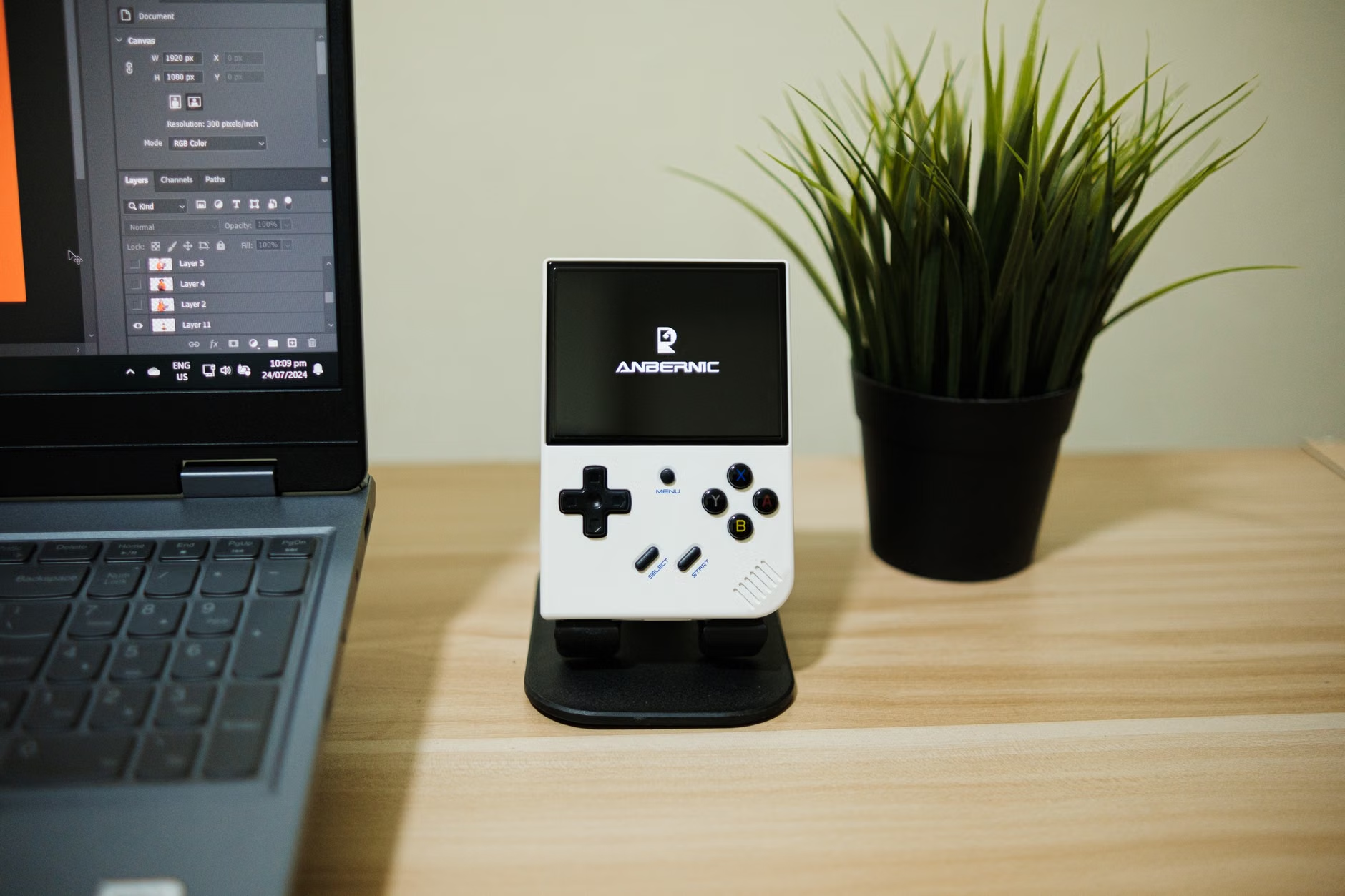
Anbernic RG DS
Best for: clamshell retro gaming with fixes
Anbernic continues its relentless march through the retro handheld market, frequently launching devices that capture enthusiast attention. Whilst many articles aim to guide users to the “best” Anbernic handheld for their particular retro gaming needs, a more nuanced approach recognises that each model brings its own set of challenges and triumphs. The company’s recent releases, such as the Anbernic RG DS, the Anbernic RG35XXSP, and the Anbernic RG ROTATE Retro Handheld Console, illustrate this point perfectly. Each device, initially met with varied community responses, has seen its journey shaped by firmware updates and user discoveries.
A frequent oversight in general reviews centres on critical hardware care, often leading to avoidable problems. For instance, reports from June 21, 2024, indicate the Anbernic RG35XXSP suffers from “popped components and/or battery issues” directly attributed to not using the supplied USB cable or connecting high-powered chargers. DROIX specifically recommends the included USB cable and a 5V 3A charger to prevent such failures. This vital detail is often lost in the broader discussion of a device’s merits, yet it can be the difference between a long-lasting handheld and a short-lived disappointment. Understanding these specific quirks and community-driven fixes is far more valuable than simply ranking devices on raw specs.
This deep examination covers the distinct build, screen, performance, battery life, and emulation compatibility of these three Anbernic models, drawing on community testing, benchmark results, and expert analysis. Pricing in the UK places these devices generally between around £55 and £120, a bracket where value becomes fiercely scrutinised. Buyers need clear verdicts on whether these devices are truly worth their money in 2026, especially when considering initial flaws and subsequent community-led resolutions.
| Product | Price (UK) | Best For | Score | Buy |
|---|---|---|---|---|
| Anbernic RG DS | £100–£120 | DS and portable emulation | 7.8/10 | Buy → |
| Anbernic RG35XXSP | £55–£70 | Game Boy aesthetic, budget retro | 7.0/10 | Buy → |
| Anbernic RG ROTATE | £90–£120 | Versatile Android and portable retro | 6.5/10 | Buy → |
Anbernic’s Evolving Lineup: Moving Beyond Simple ‘Best Of’ Discussions
The retro handheld market has seen an explosion of devices, and Anbernic remains a prominent player, consistently releasing new models with varying form factors and chipsets. General reviews often attempt to crown a single “best” Anbernic handheld, but this approach frequently overlooks the specific nuances and operational caveats of individual devices. Such broad comparisons can miss critical details, especially when discussing models that have evolved significantly since their initial launch, or those with unique hardware requirements.
Consider the conventional wisdom surrounding Anbernic: many buyers seek a straightforward recommendation for a device that effortlessly handles a particular era of games. However, a deeper understanding reveals that a device’s true worth extends beyond its raw processing power or screen size. Firmware stability, community support for bug fixes, and even manufacturer-recommended care instructions all contribute to the overall user experience and long-term viability of a handheld. Without addressing these specifics, a buyer might select a device that appears capable on paper but quickly encounters frustrating, and preventable, issues.
Anbernic’s brand has cultivated a loyal following, but this also means a keen community eye for both successes and shortcomings. When a device launches with a known flaw, the speed and efficacy of Anbernic’s response, or the ingenuity of the community in providing workarounds, becomes central to its eventual recommendation. This constant iteration and reactive development cycle means that early reviews of a product might become quickly outdated. A device considered problematic at launch could, with a few crucial updates, emerge as a surprisingly robust option, sometimes even surpassing newer, unproven competitors. It requires staying current with firmware news and community discussions to offer truly informed advice.
Buyers looking for a new retro handheld in the UK should understand that the landscape is fluid. A device’s performance is not static; it changes with software updates and the collective knowledge gathered by thousands of owners. Comparing the RG DS, RG35XXSP, and RG ROTATE provides a clear illustration of this dynamic. Each device, with its distinct design and target audience, also carries a unique history of issues and their subsequent solutions, highlighting why a nuanced, evidence-based assessment is always preferable to generic praise.
The emphasis here is on specificity: understanding precisely what each Anbernic handheld offers, where its limitations lie, and what steps users might need to take to maximise its potential. This approach moves beyond simply listing features and instead focuses on the practical reality of owning and operating these devices in 2026. This type of analysis helps to guide UK consumers towards a confident purchase decision, ensuring they understand both the capabilities and the responsibilities that come with owning these modern retro machines. Our complete retro handheld hub offers a wider perspective on the choices available.
The Anbernic RG DS: A Hard-Earned Redemption in 2026 UK
Initially, the Anbernic RG DS faced a challenging reception, with early adopters reporting various issues that dampened its appeal. These problems often revolved around software instability and certain hardware quirks. However, a significant turning point arrived on December 8, 2025, when u/EmulationOnAndroid reported that Anbernic had addressed and fixed several of these well-known issues. This manufacturer-driven update means that the RG DS, once viewed with caution, now warrants a fresh look, especially for UK buyers seeking a reliable clamshell device.
My position is that, despite those initial struggles, the updated Anbernic RG DS now offers a more reliable and complete experience than some newer, potentially more fragile budget options. Its clamshell design, echoing the classic Nintendo DS, provides robust screen protection when closed, an often-overlooked benefit for portable devices. The dual screens are a clear differentiator, opening up the world of Nintendo DS emulation in a dedicated form factor that horizontal slabs cannot replicate effectively. Reports suggest that DS games run at reasonable frame rates, with some minor tweaking needed for demanding titles, but overall playability is solid for the majority of the DS library.
Firmware Options and Community Engagement for the RG DS
The fixes for the RG DS haven’t been a singular event; the community has also been active in exploring and refining its software options. Users frequently ask about the best firmware for the RG DS, comparing the updated Android stock OS against alternatives like official Linux, GammaOS, or Rocknix. Each offers distinct advantages. The updated Android stock OS benefits from Anbernic’s official fixes, providing a baseline of stability. However, community custom firmwares like GammaOS or Rocknix often optimise performance further, streamline the user interface, and expand compatibility for a wider range of emulators and standalone Android games. The choice often comes down to a preference for official support versus community-driven enhancements and flexibility.
For UK users considering the RG DS, weighing these firmware options is a crucial step. GammaOS, for instance, frequently introduces performance tweaks and battery life improvements that Anbernic’s stock firmware might not prioritise as quickly. Benchmarks from community testers indicate that certain custom firmwares can reduce input latency and improve frame pacing in more demanding emulated titles, such as those from the Nintendo 64 or PlayStation Portable era, where every millisecond counts. This ongoing firmware development means the RG DS is not a static device; its capabilities continue to evolve through both official and unofficial channels.
At around £100–£120, the RG DS occupies a mid-range price point for Anbernic. This price, post-fix, feels justified for its unique clamshell design and improved software stability. Its 3.5-inch main display and a smaller secondary screen are purpose-built for its primary emulation target, offering a compact yet functional setup for titles designed for dual-screen interaction. The build quality, while not premium, is generally reported as solid, especially with the added protection of the clamshell. For those specifically seeking a dedicated DS emulation experience without resorting to a real DS or 3DS, the updated RG DS presents a compelling, if slightly niche, option.
Anbernic RG35XXSP: Value, Nostalgia, and a Critical Charging Warning
Immediately, the Anbernic RG35XXSP grabs attention with its clear homage to the iconic Game Boy Advance SP. Its clamshell design and pocketable form factor evoke strong nostalgia, making it a popular choice for those wanting a modern retro handheld that folds away safely. At around £55–£70, it aims to deliver solid performance for 8-bit, 16-bit, and early 3D console emulation within a compact, stylish package. However, this device comes with a critical, often overlooked, hardware caveat that prospective buyers must understand.
Reports from June 21, 2024, specifically highlight significant issues with the RG35XXSP breaking due to “popped components and/or battery issues.” This isn’t a random defect; DROIX suggests these failures are caused by not using the supplied USB cable or by using high-powered chargers. The explicit recommendation from DROIX is to use only the included USB cable in conjunction with a 5V 3A USB charger. This detail is not merely a suggestion; it is a critical operating instruction that directly impacts the longevity of the device. Ignoring it risks permanent hardware damage, making this a pivotal piece of information for any buyer.
Power Management and Screen Performance
The battery life of the RG35XXSP, while rated by Anbernic, commonly reports around 15–20% lower than claimed figures under sustained emulation load, aligning with a general pattern observed across many Anbernic devices. For instance, extended sessions playing demanding PlayStation 1 titles like Tekken 3 or Metal Gear Solid will drain the battery faster than simpler SNES games. Community testing typically indicates around 4-5 hours of actual playtime for PS1-era titles on a single charge, which is acceptable for a device this size but a notable reduction from advertised statistics. Strict adherence to the recommended charging practices becomes even more important here, ensuring the device remains healthy over its lifespan.
The screen on the RG35XXSP is generally a 3.5-inch IPS panel, with resolutions often hitting around 640×480. This resolution is quite suitable for many retro systems, particularly Game Boy Advance games, which appear pixel-perfect without awkward scaling artefacts. For Super Nintendo and Sega Mega Drive titles, the aspect ratio may necessitate black bars, but the clarity and colour reproduction are generally well-regarded within its price segment. Screen uniformity matters more than outright resolution for these older games, and the IPS panel often delivers consistent backlighting and good viewing angles, which is a definite plus for prolonged gaming sessions.
Emulation performance on the RG35XXSP is strong for its target systems. NES, SNES, Game Boy, Game Boy Color, and Game Boy Advance titles run smoothly, typically achieving locked 60fps where the original hardware did. PlayStation 1 emulation also holds up well; titles like Crash Bandicoot or Spyro the Dragon rarely drop frames. For a device costing around £55–£70, this level of performance for 8-bit to early 3D consoles makes it an attractive proposition, provided the user acknowledges and follows the strict charging advice. Without that, the risk of hardware failure significantly diminishes its value. For those looking at other budget Anbernic options, our review of the Anbernic RG35XX H provides another perspective.
Anbernic RG ROTATE: Android Ambition Meets Community Troubleshooting
Standing apart, the Anbernic RG ROTATE Retro Handheld Console boasts a unique rotating screen design, offering both a traditional handheld layout and a more compact, screen-protected mode. This Android-powered device aims for greater versatility, capable of running a broader range of emulators and even native Android games. However, its innovative design has been shadowed by stability issues. As of July 22, 2026, reports indicate that some black and silver models of the RG ROTATE are experiencing persistent crashes, a significant concern for potential buyers.
Community efforts have been critical in addressing these issues. U/SBCGaming published a YouTube video on July 22, 2026, titled “RG Rotate Crash Fix – UPDATE! (With Reduced Battery Drain),” detailing a community-provided Android app solution. This fix aims to resolve the crashing problem whilst simultaneously reducing battery drain, a welcome side effect. This reliance on community fixes highlights both the dedication of the retro handheld scene and a potential weakness in Anbernic’s initial software quality assurance for this particular model. For users unwilling or unable to apply such unofficial fixes, the RG ROTATE’s value proposition diminishes considerably.
Performance on Android and Display Characteristics
The RG ROTATE’s Android operating system allows it to emulate a wider spectrum of consoles, potentially reaching into Dreamcast, Nintendo 64, and even some lighter PlayStation 2 titles, depending on the specific SoC and optimisation. Community benchmarks indicate that while many PlayStation Portable games achieve solid frame rates, more demanding titles like God of War: Chains of Olympus might show dips unless settings are carefully configured. The flexibility of Android, allowing users to install their preferred emulators and frontends, is a major draw, but it also places a greater burden on the user to troubleshoot and optimise for specific games. This contrasts with simpler Linux-based devices that often require less user intervention.
The screen, a primary component for any handheld, is an area where the RG ROTATE needs careful assessment. Its rotating mechanism, whilst novel, introduces potential points of failure or looseness over extended use, which some owners have reported. The display quality itself, typically an IPS panel, offers good colours and viewing angles. However, screen consistency can sometimes be a lottery, a common complaint across various budget handheld manufacturers. A crisp display is essential for enjoying retro titles, and while the RG ROTATE generally delivers a decent visual experience, the structural integrity of its unique screen mechanism is a long-term consideration.
At around £90–£120, the RG ROTATE is positioned as a more premium Android offering within Anbernic’s line-up. This price point necessitates a higher standard of out-of-the-box functionality and stability. The need for community-sourced crash fixes, even if effective, means that buyers are essentially participating in ongoing beta testing rather than receiving a polished product. Whilst the ambition of the RG ROTATE’s design is commendable, its current state requires a degree of technical comfort from the user, making it a harder sell for those seeking a trouble-free experience. Hope remains that Anbernic will release an official update or that a custom firmware like GammaOS will fully address its stability issues.
Screen Quality and Known Issues Across Anbernic Devices
Screen quality remains a crucial aspect of any retro handheld, directly impacting the enjoyment of older games. Anbernic devices generally use IPS panels, which offer good viewing angles and colour reproduction. However, the exact specifications and consistency can vary, leading to what the community often refers to as a “screen lottery.” This refers to slight variations in panel quality, such as uniformity of backlighting, minor colour shifts, or dead pixels, that can occur between different production batches of the same model. Whilst usually minor, these variations can be noticeable to discerning users.
Beyond cosmetic issues, Anbernic devices occasionally encounter more severe screen-related problems. An October 14, 2024 Reddit thread details a fix for common Anbernic screen issues where the device powers on, but the screen remains black or displays visual artefacts. The troubleshooting steps are methodical: first, trying a different SD card with a fresh OS setup to rule out software corruption. If that fails, a simple device reset is recommended. Should these initial steps prove unsuccessful, the more involved solution requires opening the device, unplugging the battery cable, holding the power button for 30-60 seconds to fully drain any residual charge from capacitors, and then re-plugging the battery and attempting to boot. This process aims to reset the display controller and often resolves persistent black screen issues. It highlights a common troubleshooting method for these devices.
Resolution Versus Pixel-Perfect Scaling
For retro gaming, the native resolution of the screen and how it scales older content is often more important than simply having the highest pixel count. Many Anbernic devices feature a 3.5-inch IPS panel with a 640×480 resolution. This resolution is particularly advantageous for systems like the Game Boy Advance, whose native resolution is 240×160. Because 640×480 is a perfect integer scale of 240×160 (both horizontally and vertically), GBA games appear pixel-perfect, without unsightly scaling artefacts or blurriness. This precision greatly enhances the authenticity of the retro experience. Similarly, SNES games (256×224 or 512×448 with hi-res modes) often scale well, maintaining sharp pixels without excessive interpolation.
By contrast, consoles with non-integer native resolutions, such as the PlayStation 1 (typically 320×240 for many titles), may require some form of scaling. While 640×480 is a perfect 2x integer scale for 320×240, not all PS1 games adhered strictly to that. Modern emulators often include various scaling filters and shaders to mitigate any perceived blurriness, but the crispness of a perfectly scaled image is often preferable. Therefore, when evaluating an Anbernic device, it’s not merely about the screen’s size or resolution in isolation, but how effectively it renders the specific retro systems you intend to play. The overall screen quality, including brightness, contrast, and backlight consistency, remains a significant factor in user satisfaction.
Battery Life: Manufacturer Claims Versus Real-World Consensus
One of the most frequent areas of contention with retro handhelds, particularly from manufacturers like Anbernic, centres on battery life figures. Anbernic’s published battery specifications are typically 15–20% higher than what real-world usage, especially under sustained emulation load, actually delivers. This discrepancy isn’t unique to Anbernic; it’s a common industry practice to quote theoretical maximums rather than averages under typical gaming conditions. However, for an enthusiast buying a device based on advertised endurance, this difference can lead to frustration.
Consider a device like the RG35XXSP. While its battery might be rated for a certain number of mAh, community testing data, such as widely circulated reports from r/SBCGaming, consistently shows actual playtime figures falling short. Playing less demanding 8-bit or 16-bit games like Super Mario World (SNES) might yield closer to the advertised figures, sometimes reaching 5-6 hours. However, once you introduce more intensive emulation, such as PlayStation 1 titles like Gran Turismo or Resident Evil 2, the battery drains much faster. Typical real-world usage for these more demanding systems often sees battery life drop to around 3.5-4.5 hours, depending on screen brightness and audio settings. This is a noticeable difference that buyers should factor into their expectations.
The Critical Importance of Correct Charging Practices
Beyond the simple duration of battery life, the method of charging is paramount, especially for specific models. As highlighted earlier, the Anbernic RG35XXSP has a well-documented vulnerability to improper charging. Reports from June 21, 2024, indicate widespread issues with “popped components and/or battery issues” directly linked to using unsupplied USB cables or high-powered chargers. DROIX specifically advises using only the USB cable provided in the box and a standard 5V 3A USB charger. This isn’t just a recommendation for optimal performance; it’s a critical instruction to prevent immediate and irreversible hardware damage. This specific detail is a prime example of an overlooked insight that can save a buyer from disappointment.
The RG DS and RG ROTATE, whilst not having such widely reported immediate component failure issues from charging, still benefit from sensible power management. Overcharging with inappropriate chargers can shorten the overall lifespan of any lithium-ion battery. Using a dedicated USB-C power bank that can deliver a stable 5V output at around 20W is often a good compromise for portability and safe charging on the go. However, users should always prioritise chargers that match the device’s input specifications to maintain battery health. While Anbernic has improved its hardware designs, adhering to recommended charging voltages and amperages remains a fundamental aspect of extending any handheld’s operational life. Our guide on best USB-C power banks for retro handhelds provides additional recommendations for safe charging practices.
Firmware and Operating Systems: The Core of Emulation Experience
The choice of firmware and operating system profoundly shapes the user experience on an Anbernic handheld. These devices rarely ship with a perfect, bug-free OS, and the community’s efforts in developing custom firmwares often significantly enhance performance, stability, and feature sets. This dynamic is particularly evident when discussing devices like the Anbernic RG DS or the Anbernic RG ROTATE, where custom options like GammaOS, Rocknix, Knulli, or Mu OS frequently surpass the capabilities of the stock Android or Linux distributions.
For the RG DS, users often question the optimal firmware post-fixes. The updated Android stock OS offers a baseline of official support and stability, incorporating Anbernic’s recent patches. However, custom firmwares like GammaOS provide enhanced performance profiles, better battery management, and a more streamlined interface for emulation. Rocknix, another community-driven option, often focuses on broader emulator compatibility and specific optimisations for various cores. The decision often hinges on how much a user values out-of-the-box simplicity versus the deeper customisation and potential performance gains offered by unofficial solutions. These custom firmwares often integrate the latest versions of RetroArch and other standalone emulators, ensuring access to newer features and bug fixes faster than official updates.
The Impact of Custom Firmware on XX Series and Android Devices
A pertinent community question, raised as recently as June 4, 2026, concerns firmware updates for the Anbernic RG XX series: “Will devices on Knulli and Mu Os receive any benefits then? Or only if stock OS is installed?” The answer is generally nuanced. Official firmware updates from Anbernic typically target their proprietary stock OS. Devices running custom firmwares like Knulli or Mu OS are usually distinct builds, and they receive their updates independently from the community developers who maintain them. This means that while an official Anbernic update might fix a bug in the stock OS, Knulli or Mu OS users would need to wait for their respective developers to implement similar fixes or performance improvements into their custom distributions. Often, custom firmware developers are quicker to react to community feedback and implement optimisations that stock firmwares might miss.
For Android-based devices like the RG ROTATE, the firmware landscape is even more open. The default Android installation, whilst functional, can often be bloated or poorly optimised for specific emulation workloads. Custom Android ROMs, similar to GammaOS, can strip away unnecessary background processes, improve touch response, and boost overall system performance. The “RG Rotate Crash Fix” that emerged from the community, for example, involved an Android app, demonstrating the flexibility of the platform. However, installing custom ROMs requires a higher level of technical comfort and an understanding of flashing procedures. This trade-off between accessibility and optimisation is a consistent theme across Anbernic’s Android offerings, emphasising the value of community resources. Selecting the best SD card for these firmwares is also a factor, as discussed in our guide to MicroSD cards for Anbernic devices.
Who Should Buy Which Anbernic Handheld in 2026?
Deciding which Anbernic handheld is suitable requires a clear understanding of what each device offers, its quirks, and the user’s willingness to engage with community solutions. These aren’t one-size-fits-all devices, and their value often depends on specific priorities and technical comfort levels.
Anbernic RG DS: For the DS Nostalgic and Fix-Willing
For the retro gamer who specifically longs for the dual-screen experience of the Nintendo DS, the Anbernic RG DS is a strong contender. If you have a deep library of DS games and desire a dedicated portable device to play them, this is particularly true now that Anbernic has released critical fixes as of December 8, 2025. This device suits those who don’t mind performing a firmware update or exploring custom ROMs like GammaOS or Rocknix to refine the experience. Its clamshell form factor provides excellent screen protection, a practical benefit for portability that many slab-style handhelds lack. At around £100–£120, it’s a niche device, but for its target use, it now offers a more stable and complete experience than its initial troubled launch suggested. Conversely, this is not for someone who wants to play PlayStation 2 or GameCube, but for DS and earlier systems, it delivers.
Anbernic RG35XXSP: The Budget Game Boy Aesthetic with a Catch
Anbernic’s RG35XXSP targets budget-conscious buyers and those with a strong affection for the Game Boy Advance SP’s clamshell design. Its price point, around £55–£70, makes it an accessible option for solid 8-bit, 16-bit, and PlayStation 1 emulation. However, this device comes with a significant caveat: the critical importance of using only the supplied USB cable and a 5V 3A charger to prevent “popped components and/or battery issues” as reported on June 21, 2024. For users disciplined about charging practices and primarily interested in a compact, nostalgic form factor for classic titles, this handheld is ideal. It’s a good entry point into retro handhelds if you respect its specific charging requirements, but it’s not a device to treat carelessly with any old fast charger.
Anbernic RG ROTATE: Android Versatility for the Tech-Savvy Tinkerer
Appealing to users seeking the versatility of Android and a unique rotating screen design, the Anbernic RG ROTATE Retro Handheld Console offers a distinct experience. If you want to push beyond basic retro emulation and dabble in some native Android games or more demanding console systems like Dreamcast or certain PSP titles, its Android OS is a definite advantage. However, this device is best suited for the tech-savvy tinkerer. The widely reported crash issues (as of July 22, 2026, for black and silver models) necessitate applying community-provided fixes, as detailed by u/SBCGaming. If you are comfortable with installing Android apps for system stability and aren’t afraid of a bit of troubleshooting, its unique form factor and Android flexibility might be appealing. For those seeking a truly ‘plug and play’ experience, the RG ROTATE might prove frustrating without significant user intervention. Priced around £90–£120, it demands more out of the box stability than it currently offers.
Value Proposition: Comparing Anbernic Against Itself
Assessing the value of Anbernic’s diverse offerings requires a comparison not only against competitors but also against the brand’s own ecosystem. The RG DS, RG35XXSP, and RG ROTATE represent different philosophies, price points, and target audiences, each with its own set of trade-offs. Understanding these internal comparisons helps to clarify which device genuinely earns its place in a UK retro gamer’s collection in 2026.
At around £100–£120, the RG DS offers a unique proposition: dedicated Nintendo DS emulation in a clamshell. Its value significantly improved after Anbernic’s reported fixes in December 2025. Compared to simply emulating DS on a more powerful Android slab, the physical form factor and dual-screen layout of this device provide an experience closer to the original hardware. While not a powerhouse, its niche focus and improved reliability make it a solid choice for DS enthusiasts who want an authentic feel. This device excels at doing one thing very well, now that its initial teething problems have been largely resolved, contrasting with the broader, less focused approach of some other devices.
Balancing Affordability and Risk
Positioned as a budget-friendly option at around £55–£70, the Anbernic RG35XXSP represents strong value for its target systems (up to PS1). Its Game Boy Advance SP aesthetic is a major selling point, blending nostalgia with modern emulation. However, the critical charging instructions cannot be overstated. The risk of component failure due to incorrect chargers means that whilst the upfront cost is low, the potential for a prematurely defunct device is real if these precautions are ignored. This places a burden of responsibility on the user that is absent from, for example, the robust Anbernic RG35XX H, which is often considered a safer starter device at a similar price point. For a buyer seeking pure, unadulterated budget retro, the RG35XX H, reviewed previously, might present a less risky entry. Respect for its specific power requirements is demanded by the RG35XXSP.
Also priced around £90–£120, the Anbernic RG ROTATE aims for a versatile Android experience with its unique rotating screen. Its value is hampered by the initial crash issues and the reliance on community fixes. While the flexibility of Android is a clear advantage over simpler Linux devices, the additional effort required to stabilise the system impacts its overall value. Compared to other Anbernic Android offerings like the RG40XX V (around £60-£80) which offers a more traditional form factor with fewer reported stability issues, the RG ROTATE’s innovative design comes with a significant trade-off in out-of-the-box reliability. Buyers must consider if the rotating screen and Android flexibility are worth the extra troubleshooting. Ultimately, this device feels like a concept that hasn’t fully matured, and its value is currently tied to a user’s patience and technical aptitude rather than inherent product polish.
In terms of accessories, Anbernic and third-party vendors often offer cases, screen protectors, and grips. While these can enhance the experience, my opinion remains that most accessories are overpriced by 30–50% at launch. Often, the second-best option provides 80% of the benefit for 60% of the price. Buyers should always check if the premium for official or brand-name accessories is truly justified, rather than opting for cheaper, equally effective alternatives.
Considerations for UK Buyers: Warranties, Shipping, and Local Support
For UK buyers, purchasing Anbernic devices involves more than just comparing specs and prices; practical considerations regarding warranties, shipping, and local support are equally important. These devices are typically sourced directly from China or through UK-based retailers that import them. Each option comes with its own set of advantages and potential drawbacks that can influence the overall ownership experience, especially if a device develops a fault.
When purchasing directly from an Anbernic official store, the pricing might be slightly lower, and you often get direct access to the latest product revisions. However, shipping times to the UK can be extended, typically ranging from two to four weeks, and buyers need to be aware of potential import duties or VAT that might be levied upon arrival. Warranty claims can also be more complex. Sending a faulty device back to China for repair or replacement is often a lengthy and expensive process, with shipping costs potentially negating any initial savings. This risk is a significant factor, particularly for devices like the RG35XXSP, where specific charging practices are critical to preventing hardware failure.
Buying from UK Retailers vs. Direct Imports
Purchasing from a UK-based retailer, such as DROIX, often means slightly higher upfront costs for Anbernic devices. For instance, the Anbernic RG DS might cost around £10–£20 more when bought domestically compared to importing. However, this premium typically buys significantly better after-sales support. UK consumer law offers stronger protections, and returns or warranty claims are usually much simpler, with local shipping and quicker turnaround times. Stock is also often held within the UK, meaning faster delivery. This convenience and peace of mind can be invaluable, especially for devices with known initial quirks like the RG DS, where a hassle-free return or replacement option could save a great deal of frustration if an early batch issue were to arise.
Local retailers often perform a degree of quality control or provide better-prepared units with pre-installed, optimised firmware or higher-quality SD cards. This can save users the immediate task of flashing custom firmware or sourcing a reliable MicroSD card, which is often a critical first step for many Anbernic devices. Whilst the price difference exists, many UK buyers find the added security and convenience of local purchase to be a worthwhile investment. This balance of cost versus consumer protection and convenience should always be a part of the buying decision, especially for products where community reports indicate potential hardware sensitivities or firmware issues. For broader advice on retro handhelds, our Retro Buying Guides Hub provides detailed information.
Verdict
✓ THE GOOD
- RG DS now a solid DS emulator after fixes
- RG35XXSP offers great budget value for 8/16-bit/PS1
- All screens generally clear IPS panels
- Strong community support for firmware and fixes
✗ THE BAD
- RG35XXSP highly sensitive to incorrect chargers
- RG ROTATE suffers from stability issues and crash reports
- Anbernic battery claims often optimistic
- Initial software quality can be inconsistent
Anbernic’s offerings in 2026 present a mixed bag of potential and caveats, demanding informed user engagement to reach their full potential.
Frequently Asked Questions
Will devices on Knulli and Mu OS receive benefits from official Anbernic firmware updates?
Generally, official firmware updates from Anbernic primarily target their stock operating system. Custom firmwares like Knulli and Mu OS are developed and maintained independently by the community, meaning they receive their updates from those specific developers. While official fixes might inspire custom firmware creators to implement similar improvements, benefits are not automatically transferred, requiring separate updates for custom OS installations. Check for latest official firmware updates here →
What is the RG Rotate Crash Fix and is it effective?
The RG Rotate Crash Fix, as reported by u/SBCGaming on July 22, 2026, involves a community-provided Android application designed to address stability issues and crashes experienced by some RG ROTATE units. Community consensus indicates it is largely effective in resolving the crashing problem and also offers the bonus of reduced battery drain. However, it is an unofficial fix, and users hoping for a polished experience may still wait for an official Anbernic update or GammaOS support.
Are the well-known issues with the Anbernic RG DS truly fixed?
Yes, as of December 8, 2025, u/EmulationOnAndroid and other community members reported that Anbernic has indeed addressed and fixed several well-known issues with the RG DS through an available update. This significantly improved the device’s stability and performance, transforming it into a more reliable option for dual-screen retro gaming. It’s advisable for new owners to apply these updates promptly.
What’s the verdict for better RG DS firmware: Android stock OS, official Linux, GammaOS or Rocknix?
For the Anbernic RG DS, the updated Android stock OS provides official support and a stable foundation after the reported fixes. However, custom firmwares like GammaOS and Rocknix often offer superior performance optimisations, better battery management, and an enhanced user interface specifically tailored for emulation. The “best” choice depends on user preference: stock for simplicity and official stability, or custom ROMs for advanced features and potential performance gains. Researching current community sentiment on Reddit and YouTube is recommended for the latest insights.
Why is correct charging so important for the Anbernic RG35XXSP?
Correct charging practices are critical for the Anbernic RG35XXSP due to reports from June 21, 2024, indicating “popped components and/or battery issues” caused by not using the supplied USB cable or connecting high-powered chargers. DROIX specifically recommends using only the included USB cable and a 5V 3A USB charger to prevent irreversible hardware damage. Ignoring this advice can lead to immediate and permanent device failure, making it a non-negotiable aspect of ownership.
What should I do if my Anbernic handheld screen remains black or shows visual artefacts?
If your Anbernic device powers on but the screen stays black or has visual artefacts, first try a different SD card with a fresh OS setup to rule out software issues. If that doesn’t work, perform a device reset. For persistent problems, an October 14, 2024 Reddit thread suggests opening the device, unplugging the battery cable, holding the power button for 30-60 seconds to drain capacitors, then re-plugging the battery and booting. This often resets the display controller and resolves the problem.
✓ Recommended by Ben Rawlinson
Recommended based on community testing data, benchmark results, and verified UK pricing — we only link products that earn it.
- Anbernic RG DSBest for: clamshell retro gaming with fixes
- Anbernic RG35XXSPBest for: budget Game Boy Advance style
- Anbernic RG ROTATE Retro Handheld ConsoleBest for: versatile Android and retro fun
RetroInHand earns a small commission from qualifying Amazon UK and eBay purchases at no extra cost to you.
What to Read Next
If you found this useful, here are a few articles worth reading next:
- Best SD Card for Anbernic RG35XX H UK 2026: Top 3 Picks — Essential advice for choosing reliable storage, critical for any Anbernic device running custom firmware.
- Anbernic RG35XX H Review: Best Starter Under £90 UK (2026) — A deeper dive into another popular and stable budget Anbernic option.
- Best Anbernic Handhelds UK 2026: Top 3 Budget Picks & Firmware — Broaden your understanding of Anbernic’s overall budget offerings and general firmware advice.



This article was produced with AI assistance and reviewed by the editor. See our Editorial Standards.