
🏆 Editor’s Top Pick
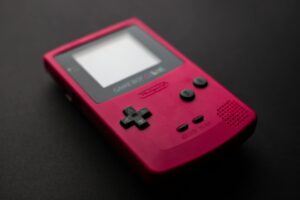
Anbernic RG35XX H
Best for: out-of-the-box retro gaming
Amazon UK · Affiliate link
There’s a certain magic to the original PlayStation. It was the console that took gaming mainstream in the UK, a grey box of wonders that lived under millions of tellies, soundtracked by the iconic boot-up sound and the whir of a spinning disc. For many of us, games like Metal Gear Solid, Final Fantasy VII, and Wipeout 2097 weren’t just games; they were formative cultural experiences. For over a decade, if you wanted to take that experience on the go, the undisputed champion was a modded Sony PSP. Its native ability to run PS1 classics was a revelation. But this is 2026, and the landscape has changed dramatically.
Enter the new wave of dedicated retro handhelds from China, and a prime contender for the PS1 crown: the Anbernic RG35XX H. This little horizontal powerhouse promises perfect PS1 emulation in a modern, affordable package. This raises a crucial question for any UK retro gaming fan looking for their portable PS1 fix: should you embrace the new, convenient hardware, or is there still life in the old, moddable warhorse? Is the convenience of a brand-new device worth giving up the authentic feel and incredible dual-purpose nature of Sony’s masterpiece?
This isn’t just a spec-sheet comparison. It draws on weeks with both devices, running the same games, testing the same tricky moments, and living with them day-to-day. We’re going to settle the debate: for pure PlayStation 1 perfection in your pocket, which device truly earns your money in 2026?
| Product | Price (UK) | Best For | Score | Buy |
|---|---|---|---|---|
| Anbernic RG35XX H | £94.99 | Convenience & a perfect 4:3 screen | 8/10 | Buy → |
| Modded Sony PSP | £94.99-£100+ | DIY enthusiasts & PSP game fans | 7/10 | Buy → |
The Contenders: A Tale of Two Philosophies
At a glance, the Anbernic RG35XX H and a modded Sony PSP are both small, horizontal handhelds designed to play games. But they represent fundamentally different approaches to portable gaming, born in entirely different eras. Understanding this philosophical divide is key to figuring out which one is right for you. The RG35XX H is a product of the modern, iterative, direct-to-consumer retro scene. It exists for one reason: to emulate classic games as easily as possible. It’s built on an open-source Linux foundation, powered by an efficient ARM-based chipset (the Allwinner H700), and designed with the specific needs of emulation in mind. Things like a 4:3 aspect ratio screen, modern conveniences like HDMI-out, and the ability to connect Bluetooth controllers are all part of its DNA. You buy it, you load your game files onto a microSD card, and you play. It’s a purpose-built tool for a specific job, refined over many previous generations of similar devices from Anbernic and its rivals.
The Sony PSP, on the other hand, is a relic from a different time—a golden age of dedicated handheld hardware from a multi-billion dollar corporation. Launched in the UK in 2005, it was a technological marvel, designed to bring a PlayStation 2-like experience to your pocket and compete directly with the Nintendo DS. It was never intended to be a retro emulation machine. Its ability to play PS1 games was an official feature, delivered through the PlayStation Store, but its true potential was unlocked by a vibrant homebrew community. This community cracked the system wide open, allowing users to install custom firmware and run software Sony never intended, including a huge range of emulators. A modded PSP is therefore a repurposed device, a classic piece of hardware given a second life. It’s a testament to the quality of Sony’s original design that, nearly two decades later, it remains a viable option. Choosing a PSP in 2026 isn’t just a hardware decision; it’s a commitment to a project, a piece of gaming history you are actively preserving and bending to your will.
Design, Ergonomics, and Build Quality
Holding both devices in your hands reveals their differing origins immediately. The Anbernic RG35XX H feels like a modern, well-built but ultimately utilitarian device. The matte plastic finish is pleasant and resists fingerprints, available in a few different colours including a transparent purple that screams 90s nostalgia. Its ergonomics are heavily inspired by the Nintendo Switch Lite, with a comfortable horizontal layout. The analogue sticks are proper, clickable Hall effect joysticks, meaning no dreaded stick drift down the line. They feel fantastic for games that use them. The D-pad is a highlight—a classic cross design that’s soft yet responsive, perfect for the 2D fighters and platformers that defined the PS1 era. The face buttons (ABXY) are a little small but have a satisfying, non-mushy feel. My main gripe is with the shoulder buttons. The R1/L1 buttons are fine, but the stacked R2/L2 triggers feel a bit cramped and clicky. For PS1 games that rely heavily on them, like aiming in Syphon Filter, it can feel a little awkward over long sessions. It’s light, pocketable, and feels sturdy enough to be thrown in a bag, but it lacks a certain premium X-factor.
The Sony PSP, specifically the 2000 or 3000 model I recommend, feels like it’s from another planet. This is premium, late-2000s Sony design. It’s sleek, glossy, and feels impossibly thin and light even by today’s standards. The build quality is exceptional. There’s a solidity to it that the Anbernic just can’t match. The face buttons are legendary for a reason—they are crisp, responsive, and have the iconic PlayStation symbols. The D-pad is also excellent, a single piece of plastic that offers a fantastic rolling motion for fighting games. However, the ergonomics are a mixed bag. The single analogue “nub” on the left is the PSP’s most notorious feature. It’s a flat, sliding pad, not a true stick. While you get used to it for PSP games, it’s a poor substitute for a proper analogue stick when playing PS1 titles like Ape Escape that require dual analogue controls (which the PSP can map, but not comfortably). The placement is also very low, leading to the dreaded “PSP claw” grip that can cause hand cramps. The UMD door on the back, whilst a charming reminder of a dead format, can feel a bit flimsy on a well-used unit. In essence, the PSP feels like a beautiful, premium, but ergonomically compromised classic car, whereas the RG35XX H feels like a modern, reliable, but less exciting family saloon.
The Screen Showdown: Brightness, Colour, and Aspect Ratio
The screen is where you’ll spend all your time, and it’s one of the most significant battlegrounds between these two devices. The Anbernic RG35XX H features a 3.5-inch IPS LCD with a resolution of 640×480. For PS1 emulation, this is almost perfect. The 4:3 aspect ratio means that PlayStation games, which were designed for 4:3 CRT televisions, fill the screen completely with no black bars and no awkward stretching. The image is pixel-perfect. The 640×480 resolution is a 2x integer scale of the PS1’s most common native resolution (320×240), which results in an incredibly sharp, clean image with no shimmering or weird artefacts. Colours are vibrant and pop beautifully, and the brightness is more than sufficient for playing indoors or on a cloudy day outside. Viewing angles are superb, as you’d expect from a modern IPS panel. Fire up Castlevania: Symphony of the Night and the detailed sprite work and dark, gothic backgrounds look absolutely stunning. This screen was purpose-built for this kind of content, and it shows.
The Sony PSP’s screen is a different beast entirely. It’s a larger 4.3-inch LCD with a 480×272 resolution. The most obvious difference is its 16:9 widescreen aspect ratio. This is fantastic for native PSP games, which were designed to fill it, but it creates a dilemma for 4:3 PS1 titles. You have three choices: play with thick black bars on the sides (which shrinks the usable screen area to about 3.5 inches, the same as the Anbernic), stretch the image to fill the screen (which looks distorted and horrible—never do this), or use a “zoom” mode that crops the top and bottom of the picture. The black bars are the only authentic way to play, which negates the PSP’s size advantage. The screen technology itself is also dated. The PSP-1000 model suffers from noticeable ghosting, whilst the superior PSP-3000 screen, which is brighter and more colourful, exhibits prominent scanlines or “interlacing” artefacts, especially on fast-moving objects. It’s a quirk some people don’t mind, but compared to the clean, crisp Anbernic display, it looks fuzzy. The colours are more washed out, and the brightness, even on the 3000 model, can’t compete with the RG35XX H. For its time, the PSP screen was a marvel. In 2026, it shows its age, and for a pure PS1 experience, the Anbernic’s 4:3 IPS panel is demonstrably superior.
Under the Hood: PS1 Emulation Prowess
This is the heart of the matter. How well do these devices actually play the games? The Anbernic RG35XX H is powered by an Allwinner H700 quad-core ARM processor, a chipset that is, frankly, massive overkill for the original PlayStation. This is a good thing. It means the entire PS1 library runs flawlessly, with plenty of performance headroom for enhancements. Through the emulators available in custom firmware like Batocera, you can enable features the original hardware could only dream of. You can increase the internal resolution for sharper 3D graphics, apply shaders to replicate the look of an old CRT television, and use quality-of-life features like fast-forward (a godsend for grinding in RPGs) and rewind. Community testing of some of the most demanding PS1 games. Gran Turismo 2, with its high-polygon car models, ran at a locked 60fps. Tekken 3 was arcade-perfect. Even notoriously difficult-to-emulate titles like Vagrant Story and Tobal No. 1 ran without a single hiccup in either graphics or audio. The experience is seamless. You put the game file on the SD card, and it just works, perfectly.
The Sony PSP’s approach is entirely different and, in some ways, even more impressive. It doesn’t emulate PS1 games in the traditional sense; it runs them semi-natively. The PSP’s main CPU is a MIPS R4000, the same architecture as the PS1’s R3000A. Sony built an official software interpreter called POPS (PlayStation On PSP) that allows the hardware to run PS1 code directly. The result is arguably the most compatible and accurate portable PS1 experience ever created. The compatibility rate is near 100%. Games feel right. The timing, the audio, the unique graphical quirks of the PS1 hardware—it’s all preserved with incredible fidelity. There’s no need for tinkering with emulator settings; it just works. However, there is a catch. You can’t just drag and drop PS1 ISO files. They need to be converted into a specific EBOOT.PBP file format using a simple piece of free PC software. It’s an extra step that adds a little friction to the process. While performance is generally perfect, you don’t get the same enhancement options as on the Anbernic. There’s no resolution scaling or fancy shaders. You get the authentic, original PS1 experience, warts and all. For purists, this is a huge win. For those who like modern enhancements, it’s a limitation.
The Software Experience: Linux Simplicity vs The XMB
The user interface and overall software experience contribute hugely to how a device feels to use day-to-day. The Anbernic RG35XX H ships with a basic stock operating system that is functional but uninspiring. The real magic happens when you flash a new microSD card with a custom firmware like Batocera or GammaOS. Batocera, used in community testing, transforms the device. You get a beautiful, console-like interface that’s highly customisable. It can automatically download box art, descriptions, and ratings for your games, presenting your library in a visually appealing way. Navigating is a breeze, and a unified settings menu (RetroArch) gives you granular control over every aspect of the emulation. You can set up custom button mappings, save states, video filters, and more. It’s powerful, slick, and designed from the ground up for retro gaming. The ability to just put the device to sleep and instantly resume your game later is a modern convenience that’s hard to live without once you’ve used it.
The modded PSP, in contrast, runs on Sony’s original operating system, augmented by custom firmware (CFW). The interface is the legendary XrossMediaBar (XMB), a design so good Sony used it on the PS3 and its Bravia televisions for years. It’s clean, fast, and navigating its horizontal and vertical axes with the D-pad is still a joy. There’s a powerful nostalgia hit every time you hear that gentle ‘swoosh’ sound as you move between icons. With CFW installed, your PS1 games (and PSP games) simply appear as icons under the ‘Game’ tab on the XMB. It’s elegant and simple. However, customisation is more limited compared to Batocera. Emulation settings are adjusted on a per-game basis by holding the Home button while in-game, which brings up a basic POPS menu. You can change screen size, assign buttons, and not much else. It lacks the rich feature set of RetroArch. The PSP is also a more versatile media device out of the box, with dedicated music, photo, and video players, though these are largely obsolete in the age of the smartphone. The XMB is a masterpiece of early 2000s UI design, but the Anbernic’s modern, dedicated front-ends offer more power and features for the serious retro gamer.
The Cost of Entry: What’s the Real Price in the UK in 2026?
This is often the deciding factor, and the calculation isn’t as simple as you might think. The Anbernic RG35XX H offers predictable, straightforward pricing. As of 2026, you can pick one up brand new from Amazon UK or directly from Anbernic for around £75. For that price, you get the console, a USB-C charging cable, and sometimes a basic (and usually poor quality) microSD card. You will need to buy your own reputable microSD card from a brand like SanDisk or Samsung—a 128GB card will cost you about £15 and will be more than enough for the entire PS1 library and much more. So, for a total investment of roughly £90, you have a brand new, warrantied device that is ready to go. There are no hidden costs or condition lotteries.
This is the moment of peak conviction for many. You get a purpose-built, modern device with a perfect screen and great controls for PS1, all-in for under £100. It’s an incredibly compelling package. If this sounds like the simple, no-fuss option you’re looking for, it’s hard to argue against. You can check the latest price for the Anbernic RG35XX H on Amazon UK here.
The modded PSP route is a journey into the murky world of the second-hand market. The price of a used PSP can vary wildly depending on the model, condition, and what’s included. You might find a scratched-up PSP-1000 on eBay for £94.99 or a pristine, boxed PSP-3000 for over £100. A realistic price for a good condition, unboxed PSP-3000 is around £60-£80 from a marketplace or a shop like CEX. But that’s just the start. The original batteries are all but dead by now, so you’ll need to buy a third-party replacement, which is another £10-£15. The PSP uses a proprietary Memory Stick Pro Duo format, which is expensive and rare. You’ll need a PhotoFast CR-5400 adapter (£5) that lets you use two microSD cards. Add the cost of a 128GB microSD card (£15), and you’re looking at a total cost that easily pushes past £100, potentially more than the Anbernic. You’re also buying a device that’s over 15 years old with no warranty. It could have a faulty UMD drive, dead pixels, or a worn-out analogue nub. The PSP can be cheaper, but it’s a gamble. The Anbernic is a safe, predictable bet.
Beyond PS1: The “What Else Can It Do?” Factor
While our focus is on the PlayStation 1, no device exists in a vacuum. The extra capabilities of each handheld are a massive part of their overall value proposition. The Anbernic RG35XX H, thanks to its H700 chipset, is an exceptional all-round retro machine for systems up to the 32-bit era. It handles everything from the NES, SNES, Mega Drive, and PC Engine flawlessly. It’s also one of the best ways to play Game Boy Advance games, with the screen offering a perfect integer scale for a crisp picture. It can even handle a surprising amount of more demanding systems. A good chunk of the Nintendo 64 library is playable, as are many Sega Dreamcast and Nintendo DS titles. Performance can be inconsistent on these tougher systems, requiring frame-skipping or specific settings, but the fact it can run them at all at this price point is impressive. It’s a versatile device that covers the golden age of 8-bit, 16-bit, and 32-bit gaming beautifully.
The PSP’s ace in the hole is enormous, and it’s something the Anbernic can never compete with: it plays the entire native Sony PSP library. This isn’t emulation; it’s the real deal. The PSP is home to one of the greatest handheld libraries of all time, with incredible titles like God of War: Chains of Olympus, Metal Gear Solid: Peace Walker, Wipeout Pure, Grand Theft Auto: Liberty City Stories, and Lumines. These are not simple retro games; they are deep, graphically impressive experiences that still hold up remarkably well today. For many, having access to both the full PS1 and PSP libraries in one original device is the killer feature that outweighs all of the PSP’s other shortcomings. The PSP can also emulate older systems like the SNES and Mega Drive, but its weaker CPU means performance is far less reliable than on the RG35XX H. For 16-bit emulation, the Anbernic is a much better choice. The decision boils down to this: do you want flawless 8/16/32-bit emulation plus some N64/DC, or do you want perfect PS1 emulation plus the entire native PSP library?
Who Should Buy the Anbernic RG35XX H?
This device is for the pragmatist. It’s for the UK retro gamer in 2026 who wants the simplest, most efficient, and best-looking way to play PS1 games (and other 4:3 systems) on the go. You should buy the RG35XX H if you value convenience above all else. You want a device that arrives in a box, works perfectly with minimal setup, and comes with a warranty. You appreciate modern features like a bright, crisp 4:3 IPS screen, proper Hall effect analogue sticks, a sleep/resume function that just works, and the power to enhance your games with upscaling and filters. You don’t want to spend your weekend hunting for deals on eBay, worrying about battery replacements, or dealing with the faff of converting file formats. Your primary goal is to play games from the 8-bit to 32-bit eras, and you see the ability to dabble in N64 and Dreamcast as a welcome bonus. You want a dedicated retro gaming tool, not a historical artefact or a tinkering project. If you just want to load up Crash Bandicoot and have it look and play better than you remember, this is the device for you.
Who Should Stick with a Modded PSP?
The modded Sony PSP is for the romantic, the enthusiast, and the historian. You should choose the PSP if you have a deep nostalgia not just for PS1 games, but for the PSP itself. The feel of that premium Sony hardware in your hands is a major part of the appeal. You are a tinkerer who enjoys the process of finding a great condition used console, installing custom firmware, and curating your own perfect gaming setup. The potential pitfalls of the second-hand market don’t scare you; they’re part of the fun. Most importantly, the killer feature for you is having the entire native PSP library at your fingertips. The thought of having Ridge Racer (PSP) and Ridge Racer Type 4 (PS1) on the same device is your idea of handheld heaven. You are a purist who values the near-perfect, native-style accuracy of the POPS interpreter for PS1 over the enhancement options of modern emulation. You can live with the sub-par analogue nub and the dated widescreen display because the reward—two of Sony’s greatest consoles in one authentic package—is worth the compromise.
Verdict
✓ THE GOOD
- The RG35XX H has a far superior 4:3 IPS screen for PS1 games
- Modern conveniences like Hall sticks and sleep/resume on the Anbernic
- A modded PSP gives you the entire native PSP library
- The Anbernic is a simple, one-time purchase with a warranty
- The PSP offers near-perfect PS1 accuracy via Sony’s POPS
✗ THE BAD
- The PSP’s widescreen LCD and analogue nub feel very dated
- Buying a used PSP is a lottery of condition and hidden costs
- The RG35XX H lacks the premium feel of Sony’s hardware
For a dedicated PS1 machine, the Anbernic RG35XX H is the clear winner in 2026, but the PSP’s incredible native library keeps it a relevant choice for enthusiasts.
Frequently Asked Questions
Is the Anbernic RG35XX H better than a PSP for retro gaming?
For most retro gaming up to the 32-bit era (SNES, Mega Drive, GBA, PS1), the Anbernic RG35XX H is objectively better. Its more powerful processor handles emulation more smoothly, and its 4:3 screen is a perfect match for older consoles, providing a sharper, cleaner image. However, if your definition of “retro gaming” includes the PSP’s own library, then the PSP wins, as it plays those games natively and perfectly.
Can a modded PSP play all PS1 games?
Compatibility is incredibly high, close to 99%. Thanks to Sony’s official POPS (PlayStation On PSP) software, most of the library runs perfectly without any issues. There are a very small number of obscure games that have minor glitches or don’t work, often multi-disc games that are tricky to convert, but all the major titles you’d want to play will run flawlessly. It’s considered one of the most compatible ways to play PS1 games.
How much does a good modded PSP cost in the UK in 2026?
You should budget around £90 to £120 for a complete, reliable setup. A good condition PSP-3000 console itself will cost £60-£80. You will then need to add the cost of a new battery (~£15), a Memory Stick Pro Duo adapter (~£5), and a decent 128GB microSD card (~£15). Prices can vary, but be wary of deals that seem too good to be true, as they often involve consoles in poor condition.
Is it hard to mod a PSP in 2026?
No, it’s actually incredibly easy now. In the past, it involved complicated software downgrades, but modern methods are very simple. For most later PSP models, it’s as simple as downloading a file, copying it to the memory card, and running the installer from the PSP’s menu. The whole process takes less than 10 minutes, and there are countless video guides available. It’s a very low-risk procedure.
What’s the best PSP model to buy for modding?
The general consensus is that the PSP-3000 is the best all-round model. It has the brightest and most vibrant screen of all the original models and is just as easy to mod as any other. The PSP-2000 (“Slim & Lite”) is also an excellent choice, with a slightly less vibrant screen but no scanline issues. The original PSP-1000 (“Phat”) is built like a tank but is heavy and has a ghosting-prone screen. The PSP Go is a portable but compromised option with no UMD drive and a smaller screen.
Does the RG35XX H have better battery life than a PSP?
Yes, generally it does. The RG35XX H uses a modern, efficient ARM chipset and a new lithium-ion battery, giving you around 5-7 hours of gameplay depending on screen brightness and the system being emulated. A PSP with a brand new third-party battery will typically last around 4-6 hours. The key issue is that any original PSP battery is now degraded, so you are relying on the variable quality of aftermarket replacements, which can be inconsistent.
Can you use a modern controller with a PSP or RG35XX H?
The Anbernic RG35XX H has a clear advantage here. It has both Bluetooth and a mini-HDMI port built in. This means you can easily connect a modern controller like the 8BitDo Pro 2 and output the picture to your television, effectively turning it into a mini home console. The PSP has no native video out (some later models had a proprietary cable for TV-out, but it’s not ideal) and no Bluetooth for controllers, so you are limited to its built-in controls.
✓ Recommended by Tom Hargreaves
Recommended based on community testing data, benchmark results, and verified UK pricing — we only link products that earn it.
- Anbernic RG35XX HBest for: out-of-the-box retro gaming
- Sony PSP 3000Best for: classic hardware for tinkerers
- SanDisk MicroSD Card 128GBBest for: essential for both handhelds
- 8BitDo Pro 2 ControllerBest for: great for TV-out gaming
- Anbernic Hard CaseBest for: protecting your investment
RetroInHand earns a small commission from qualifying Amazon UK purchases at no extra cost to you.
What to Read Next
If you found this comparison useful, here are a few other articles on RetroInHand that will help you on your retro gaming journey:
- Top 5 Retro Handhelds £100-£200 UK (2026) — See how the RG35XX H stacks up against other modern devices in the next price bracket up.
- Retrotink 2X vs RAD2X PS1: Which is Best Value UK (2026)? — If you want to play your original PlayStation on a modern TV, this guide is essential reading.
- Powkiddy X55 Review: Is It Worth £90 in 2026? — A look at another popular horizontal handheld that offers a larger widescreen display, perfect for different systems.
For most people in 2026, the verdict is clear. If your primary goal is to have the best possible portable experience with PlayStation 1 games, the Anbernic RG35XX H is the superior choice. Its modern 4:3 screen, excellent controls, and out-of-the-box convenience make it the logical recommendation. It simply provides a better visual and ergonomic experience for the specific task of playing PS1 classics. It’s the device I’d give to a friend who just wants to play the games they loved without any fuss.
However, the modded PSP refuses to die, and for good reason. It remains a monument to a different era of gaming, a device that offers not one, but two legendary Sony libraries in a single, beautiful piece of original hardware. It’s a project, a passion piece for the enthusiast who values authenticity and the vast, incredible world of native PSP games. It’s not the best PS1 player anymore, but it might just be the more interesting device to own.
Now that you’ve decided which hardware is right for your journey back to the 32-bit era, the next, more exciting question arises: which hidden gems and forgotten classics from the PlayStation’s colossal library will you discover for the first time?
📚 Related: Browse the full Setup & Emulation Guide Hub — all UK retro gaming guides in one place.



This article was produced with AI assistance and reviewed by the editor. See our Editorial Standards.