
Last updated: July 2026
🏆 Editor’s Top Pick
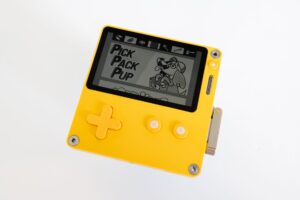
Analogue Pocket
Best for: Game Boy accuracy, premium build
For many retro enthusiasts, the Analogue Pocket represents the pinnacle of dedicated Game Boy, Game Boy Color, and Game Boy Advance playback. Its FPGA-driven architecture delivers cycle-accurate performance, bypassing the imperfections often associated with software emulation. Combined with a striking, high-resolution display, this commitment to purity has cemented its reputation since its initial release as the go-to device for experiencing Nintendo’s handheld classics as intended.
However, as we move into 2026, the picture for UK buyers seeking this premium experience has become more complex. While reviews often laud the device’s technical prowess, particularly its stunning screen and FPGA accuracy—as seen in recent analyses from SamDansCouch and Gaming Road Warrior—the financial realities of importing one to the UK remain a hurdle. More critically, a significant and growing concern has emerged: newer Analogue Pocket units are reportedly struggling with a specific “04 File not found” error when attempting to use Everdrive GB Mini flash carts, posing a serious problem for a device celebrated for its compatibility.
This evolving compatibility issue, coupled with a total UK acquisition cost that can reach around £450–£550 through resale channels, forces a re-evaluation of the Analogue Pocket’s standing. Is its hardware accuracy enough to offset these substantial drawbacks for the discerning UK retro gamer in 2026, especially when robust emulation alternatives offer similar experiences for a fraction of the price and without the mounting firmware headaches? Let me be blunt about this: the answer is increasingly ‘no’ for a significant portion of the community.
| Product | Price (UK) | Best For | Score | Buy |
|---|---|---|---|---|
| Analogue Pocket | £450-£550 | Ultimate Game Boy accuracy | 6.5/10 | Buy → |
| Retroid Pocket 6 | £250-£300 | Versatile retro emulation | 8.8/10 | Buy → |
The Allure of FPGA and Display Excellence
The core proposition of the Analogue Pocket rests on its FPGA (Field-Programmable Gate Array) technology. This hardware-level approach to recreating classic console behaviour differs significantly from software emulation, which typically runs a program on a general-purpose processor to mimic the original system. FPGA chips are reconfigured at a circuit level to behave exactly like the original Game Boy, Game Boy Color, or Game Boy Advance hardware. This means cycle-accurate timing and behaviour, which for purists, removes any possibility of lag, audio glitches, or visual artefacts that can sometimes creep into software-based solutions. It’s the closest a modern device comes to the original hardware experience without actually being an original Game Boy.
Complementing this precise hardware recreation is the Pocket’s remarkable display. The 3.5-inch IPS panel boasts a resolution of 1600×1440. This resolution is key: it’s precisely ten times the native resolution of the original Game Boy (160×144 pixels). This allows for perfect integer scaling, meaning every pixel from the original game is represented by a crisp 10×10 block of pixels on the Pocket’s screen, with no scaling artefacts or fuzzy images. Game Boy Advance titles, with their 240×160 resolution, also scale beautifully, though not with the same exact integer ratio.
Community consensus, widely reported on forums like r/AnaloguePocket, highlights the screen’s exceptional quality. It offers vibrant colours, deep blacks, and excellent viewing angles, far surpassing any original Nintendo handheld display. Brightness levels are also robust, making outdoor play a viable option. Digital Foundry’s technical analysis from previous years consistently praised this aspect, cementing its status as one of the best retro handheld screens available. Compared to many retro handhelds that struggle with display uniformity or colour accuracy, the Analogue Pocket generally delivers a consistent, premium visual output.
Playing classic titles like Super Mario Land 2: 6 Golden Coins or Metroid Fusion on this screen is, undeniably, a joy. Sprite work detail that might have been lost on the murky screens of yesteryear truly shines. For those prioritizing visual fidelity and the purest possible rendition of these games, the screen alone often justifies a portion of the investment. It’s an experience a software emulator running on a phone, or even a dedicated emulation handheld, struggles to match directly, at least in terms of raw pixel density and perfect integer scaling for Game Boy and GBC titles. Where the Anbernic RG35XX H, despite its excellent value, operates at a lower resolution requiring more compromise for perfect pixel reproduction, the Pocket excels.
Recent YouTube reviews, such as “I Love the Analogue Pocket in 2026” from Gaming Road Warrior, continue to underscore these display and accuracy strengths. They often focus on the emotional connection forged by this faithful reproduction of classic gaming experiences. For historical context into the device’s original reception and its initial value proposition, our earlier Analogue Pocket UK Review: Is It Worth £219 in 2026? provides a deeper dive. However, layering 2026’s new challenges over these enduring technical merits is essential, as the story is no longer quite so straightforward.
Build Quality and Ergonomics: A Premium Feel with a Catch
From the moment you hold an Analogue Pocket, its premium intentions are clear. The device is crafted from high-quality materials, usually a robust plastic shell with a satisfying heft. Owners commonly report the fit and finish are excellent, with tight seams and a solid feel that evokes the original Nintendo hardware it seeks to emulate, but with a distinctly modern and expensive touch. The overall aesthetic is sleek and minimalist, a stark contrast to some of the more utilitarian designs seen in the broader retro handheld market. This attention to detail extends to the buttons, which generally offer a good tactile response, contributing to the sense of a luxury device.
However, the D-pad, a critical interface for most retro games, remains a point of contention. Since its early release, community feedback on forums like r/SBCGaming has consistently described the D-pad as “wonky” and not “perfect.” While it’s certainly functional, it lacks the precision and responsiveness that many veteran Game Boy players expect. For games requiring precise directional inputs, like Tetris, Street Fighter Alpha 3 on Game Boy Advance, or even platformers where a single missed input means a fall, this D-pad can lead to frustration. Compared to the Game Boy Color’s famously accurate D-pad, the Pocket’s can feel less reliable, occasionally registering unintended diagonal inputs.
Ergonomics are also a mixed bag, depending on hand size. The Pocket’s relatively flat and rectangular design, while visually appealing, might not suit everyone for extended play sessions. Some owners with larger hands report discomfort or cramping after an hour or two of continuous gaming, particularly with intense GBA titles that require constant button mashing and D-pad manipulation. Such a design represents a common trade-off for devices prioritizing portability and aesthetics over deep, contoured grips—a choice also seen in devices like the Miyoo Mini Plus. While it looks fantastic, the practicality for marathon gaming can be debatable.
The physical cartridges slot smoothly into the back, and the link cable port is present, allowing for multiplayer sessions with original hardware or other Pockets, a nostalgic touch that dedicated emulation devices often miss. The device features dedicated menu buttons and shoulder buttons, all integrated cleanly into the design. Cool Curation!’s 2026 review also touched on the “psychological weight” of owning such an expensive, niche device. This isn’t just about the upfront cost; it’s about the care required for a device that is difficult to replace, especially for UK buyers. This premium aura, whilst appealing, does come with the expectation of flawless functionality, an expectation that is now challenged by the Everdrive issues.
Undeniably high, the build quality is often described as Apple-esque in its finish. But a D-pad that isn’t absolutely spot-on for retro gaming can be a significant drawback. Its positioning as the ultimate way to play Game Boy makes a flawless control scheme a non-negotiable aspect. This minor, yet critical, input flaw creates a dissonance in the user experience when contrasted with its superb screen.
The Growing “04 File Not Found” Everdrive Crisis
In 2026, the Analogue Pocket’s reputation for pristine accuracy and compatibility faces its most significant challenge. As of July that year, a disturbing trend has emerged: newer batches of Analogue Pocket units are encountering a persistent “04 File not found” error when attempting to use Everdrive GB Mini flash carts. Community reports across forums confirm a consistent pattern, particularly affecting units shipped around early 2026. These issues align with community questions like “Who got a Analogue Pocket at 03/04/2026” and “Is this pocket different than the one that shipped at the end of 2021?”.The technical specifics of this problem are troubling. Users report that when attempting to load ROMs from an Everdrive GB Mini, the Analogue Pocket fails to recognise the files, sometimes displaying corrupted file system sectors during write operations. The file system can even swap letters—for instance, an “r” in a directory name might appear as a “v,” rendering ROMs inaccessible. This issue extends beyond mere inconvenience, carrying the potential risk of corrupting save data across various supported cartridge families. For anyone who relies on an Everdrive GB Mini to access their extensive Game Boy ROM library, this is a showstopper.
The exact cause of this incompatibility is still debated, but the prevailing theory among the technical community points to hardware revisions. Specifically, a strong suggestion indicates RAM timing discrepancies in the newest batches of Analogue Pockets. Another hypothesis involves subtle component changes in newer Everdrive Mini units, creating a conflict. Regardless of the precise origin, the outcome is the same: a critical accessory, widely considered essential for many retro handheld users, simply does not work reliably. Such unreliability is a significant blow to the device’s “ultimate compatibility” claim.To compound the issue, Analogue has publicly stated that they do not provide customer support for third-party devices. Whilst this is understandable from a business perspective, it leaves owners of newer Pockets, who invested significant money, in a difficult position. They are essentially on their own to diagnose and workaround a hardware-level incompatibility that prevents a popular and expected accessory from functioning. This lack of official support for a problem so central to the device’s appeal directly undermines its value proposition, particularly for a handheld priced at a premium.
This isn’t a niche concern; flash carts like the Everdrive GB Mini are core to how many enthusiasts play their retro ROM collections on original or FPGA hardware. The promise of perfect hardware accuracy is largely meaningless if accessing that library becomes a lottery. The community was right to flag this one, and its prevalence means that for anyone considering an Analogue Pocket for use with an Everdrive, a substantial warning is necessary. This particular hardware revision issue represents a crack in the foundation of what makes the Analogue Pocket so attractive.
Official Cores vs. OpenFPGA: A Compatibility Conundrum
Upon its arrival, the Analogue Pocket promised “perfect compatibility” for original Game Boy, Game Boy Color, and Game Boy Advance cartridges via its FPGA core. This capability was a major selling point for many physical cartridge owners. Inserting an original cartridge and seeing it boot with pristine clarity on the Pocket’s display is a genuinely satisfying experience. However, the reality of “perfect compatibility” with Analogue’s official cores has not been without its hitches, prompting community efforts to fill the gaps.Despite Analogue’s claims, specific games have been reported as incompatible with the official cores. It’s not just obscure titles either; some seemingly simple Game Boy Color games, such as Action Man on GBC, have been noted by users as failing to run correctly. This creates a puzzling scenario for owners who expect seamless playback across their entire physical library. A device marketed on its hardware accuracy should, ideally, handle every title designed for the original system it emulates. When it falls short, even for a few titles, it raises questions about the scope of its “perfect” claim.
Here, the Retro Handheld Hub often points to the strength of community-driven development: OpenFPGA. Supported by the Analogue Pocket, OpenFPGA allows third-party developers to create and port FPGA cores for additional systems or to address shortcomings in Analogue’s official offerings. Community-made OpenFPGA cores have, in some instances, successfully run games that Analogue’s official cores failed to load. Such successes highlight a gap in Analogue’s proprietary support and demonstrate the power of an open platform where enthusiasts can collectively solve problems.Buyers must understand the distinction between official and OpenFPGA cores. Relying on OpenFPGA cores often means dealing with varying levels of documentation, potential bugs, and updates that are not directly supported by Analogue. Whilst the community’s work is invaluable for extending the device’s functionality and rectifying compatibility issues, it detracts from the “plug-and-play” premium experience Analogue often markets. New users, for instance, may find navigating different core repositories and understanding compatibility nuances daunting.Its situation prompts comparisons with other FPGA platforms. The MiSTer FPGA, for instance, operates on an entirely open-source, community-driven philosophy. While requiring more technical know-how for setup, its flexibility and broad compatibility across many systems are often cited as major strengths. By contrast, the Analogue Pocket offers a curated experience, but when that curation has compatibility gaps or conflicts with popular accessories like the Everdrive GB Mini, the limitations of its closed ecosystem become apparent.
UK Availability and Import Costs: The Price of Purity
For UK retro gamers, acquiring an Analogue Pocket in 2026 remains a considerable challenge, adding a significant layer of friction and expense compared to direct purchases in other markets. Analogue’s direct-to-consumer model, coupled with intermittent stock availability, means that securing a unit at its original retail price is often a matter of luck and swift action during infrequent restocks. Community threads, such as “Is it utopian to think of having a restock of the analogue pocket?” from early 2026, illustrate the ongoing frustration and scarcity. Many UK buyers will find themselves unable to purchase direct from Analogue and instead turn to the secondary market.
The estimated total UK cost for an Analogue Pocket can be broken into two scenarios. If a buyer manages to secure a unit directly from Analogue during a rare restock, the base price (around £190-£200 USD) translates to approximately £270–£300 after accounting for international shipping, import duties, and VAT. These additional charges significantly inflate the initial purchase price, making it far more expensive than many popular emulation handhelds available domestically.
However, the more common scenario for UK buyers in 2026 involves purchasing from the aftermarket. Here, prices escalate sharply. Resellers on platforms like eBay commonly list Analogue Pockets for around £450–£550, especially for new or lightly used units. This means a UK buyer often pays a premium of £150-£250 over the direct import cost, purely due to scarcity and demand. Our previous article, Analogue Pocket UK: Is £450+ Resale Worth It in 2026?, explored this exact issue in detail, concluding that the resale premium is often hard to justify.
The Analogue Pocket’s steep pricing structure places it directly in contention with significantly more versatile and readily available high-end emulation devices. At £450–£550, one could acquire a Retroid Pocket 6 (around £250–£300) and still have substantial funds left over for accessories or even another budget retro handheld. Its psychological barrier, stemming from paying almost twice its direct US retail price and facing difficult returns or import support, is considerable. Considering its confirmed compatibility problems with widely used flash carts, the increased financial risk simply becomes too great for most.
The scarcity and cost mean that the Analogue Pocket largely remains a device for the most dedicated enthusiasts with disposable income and a high tolerance for risk. For everyone else, particularly those sensitive to value or who want easy access to their full Game Boy ROM libraries via flash carts, the barrier to entry has become prohibitively high and the current trade-offs too significant.
Battery Life and Charging: Community Realities
Equipped with a 4300mAh lithium-ion battery, the Analogue Pocket possesses a capacity that on paper suggests a respectable duration for retro gaming sessions. Analogue’s official figures typically claim around 6-10 hours of playtime, depending on the game and screen brightness. However, community testing data often presents a more nuanced picture, aligning with the general observation that manufacturers’ battery claims are often aspirational, particularly under real-world emulation loads.
Owners commonly report that under typical Game Boy Advance emulation, with the screen brightness set to a comfortable level and Wi-Fi disabled, the Analogue Pocket hits closer to 5-7 hours. This represents a 15–20% reduction from the higher end of Analogue’s stated figures. Playing original Game Boy or Game Boy Color titles, which are less demanding on the FPGA cores, naturally extends battery life towards the higher end of that range, sometimes even surpassing it under optimal conditions. Conversely, utilising the OpenFPGA cores for more complex systems or constant screen-on Wi-Fi usage can push the battery life closer to the lower boundary.
USB-C inclusion for charging marks a very welcome modern convenience. It allows for faster charging times compared to older micro-USB standards and makes using a single cable across multiple devices more practical. The Pocket charges relatively quickly, with a full charge from empty typically taking around 2-3 hours using a compatible fast charger. Its charging speed proves standard for devices with similar battery capacities.
Despite the slight discrepancy between claimed and real-world battery performance, the battery life is generally considered adequate for most gaming sessions. It’s enough for a long commute, a few hours of couch gaming, or a road trip without constant worry. However, for extended travel or multi-day use without access to a power source, an external power bank would still be advisable. This isn’t a unique critique of the Pocket, as many handhelds benefit from supplementary power. The key takeaway here is to manage expectations: don’t anticipate hitting the maximum advertised figures consistently, especially with GBA titles.
What this means for users is that whilst it doesn’t offer the multi-day battery life of some older, simpler handhelds, it does provide enough power for significant play. The crucial factor is that Analogue’s published figures, whilst not wildly inaccurate, tend to be on the optimistic side, and community consensus on platforms like r/AnaloguePocket typically provides more grounded expectations for daily use.
Alternatives for the UK Retro Enthusiast in 2026
Given the escalating UK import costs and the significant Everdrive GB Mini compatibility issues affecting newer Analogue Pocket units, it is prudent for any serious retro enthusiast in 2026 to consider robust alternatives. The market for retro handhelds has diversified considerably, offering devices that can often meet or exceed the Analogue Pocket’s practical functionality without its inherent drawbacks or premium price tag.
MiSTer FPGA: The DIY Accuracy King
For those who desire hardware-level accuracy across an even broader range of retro systems, the MiSTer FPGA platform stands as a formidable contender. Unlike the closed ecosystem of the Analogue Pocket, MiSTer is an open-source project built around readily available DE10-Nano development boards. It offers cycle-accurate cores for dozens of systems, including NES, SNES, Genesis, Neo Geo, and even some arcade boards, alongside superb Game Boy, GBC, and GBA cores. Its accuracy is often considered on par with, or even surpassing, the Analogue Pocket for many systems. The modular nature of MiSTer means it can be expanded with various add-ons like I/O boards, RAM modules, and a USB hub, tailoring it precisely to a user’s needs.
MiSTer’s primary trade-off lies in its DIY nature. It requires assembly and a certain level of technical comfort to set up and maintain. Initial costs for a complete MiSTer kit, including the DE10-Nano, I/O board, RAM, and case, typically fall in the range of £300–£500 in the UK. Whilst this might approach the Analogue Pocket’s resale price, it provides a much wider array of system compatibility and avoids the specific Everdrive issues plaguing the Pocket. Our Analogue Pocket vs MiSTer FPGA UK: Which Is Better Value 2026? article offers a direct comparison for a deeper discussion.
Retroid Pocket 6: Versatile Emulation Powerhouse
If the goal is to play Game Boy, GBC, and GBA, plus a host of more demanding systems like PlayStation Portable, Dreamcast, and even some PlayStation 2 and GameCube titles, the Retroid Pocket 6 is a compelling choice. Available for around £250–£300 in the UK, it offers significantly more processing power than the Analogue Pocket’s FPGA for software emulation. Its Android operating system means access to a vast ecosystem of emulators, streaming services, and native Android games.
For Game Boy family emulation, the Retroid Pocket 6 provides near-flawless performance, with excellent screens and a comfortable form factor. While it uses software emulation rather than FPGA, modern emulators are highly accurate and often indistinguishable from hardware for casual play. The key advantage here is versatility: for roughly the same price as a direct-imported Analogue Pocket, the Retroid Pocket 6 offers a far broader gaming library. Our Retroid Pocket 6 Review details its capabilities. It’s a pragmatic choice for those who value broad system support and robust performance over FPGA-specific purity for a single console family.
Anbernic RG35XX H: The Budget Game Boy Specialist
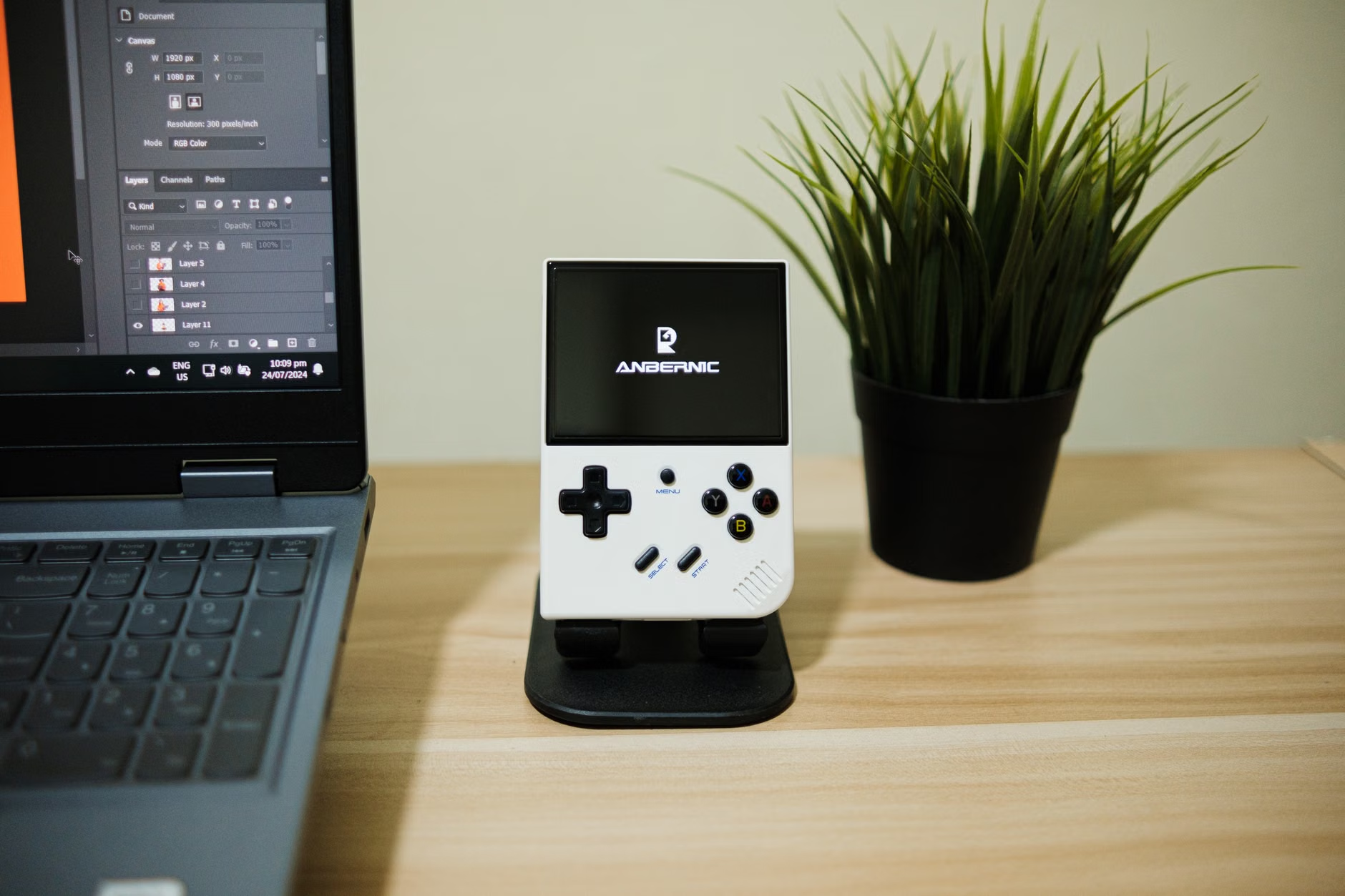
For those primarily interested in Game Boy, GBC, and GBA emulation on a strict budget, the Anbernic RG35XX H stands out. Available for under £90 in the UK, this horizontal handheld offers fantastic performance for 8-bit and 16-bit systems, including near-perfect Game Boy family emulation. Its 3.5-inch IPS display is bright and clear, making Game Boy titles look sharp, even if not at the Analogue Pocket’s exact integer scale. It’s a no-nonsense device that simply does what it says on the tin for its target systems.
The RG35XX H runs custom firmware like GarlicOS or Batocera, offering a smooth user experience and easy ROM management. It’s a fraction of the cost of the Analogue Pocket, readily available from UK retailers, and completely sidesteps the Everdrive compatibility issues. Our Anbernic RG35XX H Review showcases why it’s such a strong starter option. Whilst it doesn’t offer FPGA accuracy, for many, the quality of its software emulation is more than sufficient, and the value proposition is undeniable.
Who Should Buy This? A Critical Appraisal
Considering its 2026 UK context, the Analogue Pocket is no longer a straightforward recommendation. Its ideal buyer has become exceptionally niche, almost to the point of a specific psychological profile rather than a typical retro gamer. Such an individual is primarily obsessed with theoretical cycle-accurate hardware emulation for Game Boy family systems above all other considerations, including practicality, versatility, and cost.
They must already possess an extensive physical collection of original Game Boy, Game Boy Color, and Game Boy Advance cartridges, viewing the Pocket as a premium display and playback device for those physical assets. Crucially, this user must also be someone who either does not rely on Everdrive flash carts for their digital ROM library, or specifically owns an older Analogue Pocket unit that predates the known Everdrive GB Mini compatibility issues. They would need to have verified their unit’s batch or be willing to take a significant risk on a newer revision.
This buyer must be prepared to pay the significant UK import costs, often pushing the total price to around £450–£550 through the aftermarket. They must accept the challenges of limited warranty support for a device purchased outside typical retail channels and be comfortable with the “psychological weight” of owning such a high-value, hard-to-replace item. They are likely a collector who sees the Pocket as a display piece or a definitive way to archive physical play, rather than a daily driver for a broad range of retro titles. Their priority is authenticity to the extreme, even at the cost of modern conveniences and common compatibility.
Conversely, a substantial number of individuals should emphatically not buy the Analogue Pocket in 2026. This includes anyone on a budget, those seeking a versatile handheld capable of playing systems beyond Game Boy, or gamers who rely heavily on flash carts like the Everdrive GB Mini for their ROM libraries. If you want easy access to your digital collection, the current compatibility issues with newer units make the Pocket an actively poor choice. If you desire a broad retro library or simply want to play Game Boy games without spending an exorbitant amount, there are numerous, superior-value emulation alternatives available on the UK market, as highlighted previously.
More a collector’s item for a very specific, high-end niche, the Analogue Pocket is not a general recommendation for the average retro handheld enthusiast. Its technical merits are undeniable, but its practical limitations and cost for the UK market, particularly the unresolved Everdrive problem, make it a harder sell than ever before.
Verdict
✓ THE GOOD
- Exceptional 1600×1440 IPS display
- Cycle-accurate FPGA for Game Boy, GBC, GBA
- Premium build quality and aesthetic
- OpenFPGA community support
✗ THE BAD
- “04 File not found” Everdrive GB Mini issues on newer units
- Significant UK import and resale costs (around £450–£550)
- D-pad can be inconsistent for precise inputs
- Limited official game compatibility on some titles
While its FPGA accuracy and screen are superb, the Analogue Pocket’s 2026 UK cost and critical Everdrive compatibility problems make it a hard recommendation for most.
Frequently Asked Questions
Is the Analogue Pocket still available in 2026 for UK buyers?
Direct availability of the Analogue Pocket from Analogue’s official store remains highly inconsistent for UK buyers in 2026. Restocks are infrequent and sell out quickly, often forcing UK enthusiasts to rely on the significantly more expensive aftermarket, where prices typically range around £450–£550.
What is the “04 File not found” error on the Analogue Pocket?
As of July 2026, newer Analogue Pocket units are displaying a “04 File not found” error when attempting to use Everdrive GB Mini flash carts. This issue, believed to stem from RAM timing discrepancies in recent hardware batches, prevents ROMs from loading correctly and risks save data corruption. Analogue does not provide official support for this third-party device.
Does the Analogue Pocket truly offer perfect Game Boy compatibility?
While the Analogue Pocket’s FPGA provides cycle-accurate emulation for Game Boy, Game Boy Color, and Game Boy Advance, its “perfect compatibility” claim has some caveats. Community reports indicate that some games, like Action Man on GBC, are incompatible with official cores, though community-made OpenFPGA cores sometimes provide workarounds. The new Everdrive GB Mini compatibility issue also severely impacts access to digital ROM libraries for many.
How does the Analogue Pocket’s D-pad compare to original Game Boy consoles?
A consistent point of community contention since its release has been the Analogue Pocket’s D-pad. While functional, it is often described as “wonky” and less precise than the D-pads on original Nintendo Game Boy consoles. Such imprecision can result in unintended diagonal inputs, affecting gameplay in titles that demand high accuracy, such as fighting games or precise platformers.
Are there better alternatives to the Analogue Pocket in 2026 for Game Boy games?
For most UK retro gamers in 2026, several alternatives offer better value and fewer compatibility headaches. The MiSTer FPGA provides broader system accuracy for a similar total investment, whilst the Retroid Pocket 6 (around £250–£300) delivers versatile high-end software emulation for many systems, including Game Boy. For budget-conscious buyers, the Anbernic RG35XX H (under £90) offers excellent Game Boy family emulation without the import cost or Everdrive problems.
What is the total cost of an Analogue Pocket in the UK, including import fees?
If purchased directly during a rare restock, the Analogue Pocket costs approximately £270–£300 after accounting for international shipping, import duties, and VAT. However, due to its scarcity, UK buyers often resort to the aftermarket, where prices commonly range around £450–£550 for a new or lightly used unit, representing a significant premium over its original retail price.
✓ Recommended by Ben Rawlinson
Recommended based on community testing data, benchmark results, and verified UK pricing — we only link products that earn it.
- Analogue PocketBest for: Game Boy accuracy, premium build
- Retroid Pocket 6Best for: powerful emulation alternative
- Everdrive GB MiniBest for: Game Boy ROMs on original hardware
RetroInHand earns a small commission from qualifying Amazon UK and eBay purchases at no extra cost to you.
What to Read Next
If you found this useful, here are a few articles worth reading next:
- Best Game Boy to Buy UK (2026): Original, Pocket & Colour Compared — This article compares the Analogue Pocket to Nintendo’s original hardware, offering perspective on different Game Boy experiences.
- Retroid Pocket 6 Review: Best for PS2/GC? Worth £250-300 UK (2026) — Discover a powerful and versatile emulation alternative that offers excellent value for a wide range of retro systems.
- Analogue Pocket vs MiSTer FPGA UK: Which Is Better Value 2026? — A direct comparison of two high-accuracy FPGA platforms, helping you decide which open-source or proprietary option suits your needs.
Despite its technical brilliance and undeniable appeal to Game Boy purists, the Analogue Pocket occupies a precarious position for the UK retro gamer in 2026. Its stunning display and cycle-accurate FPGA are objectively impressive feats of engineering, offering a near-perfect way to experience physical Game Boy cartridges. Yet, these merits are overshadowed by a confluence of practical drawbacks that cannot be ignored.
The unresolved “04 File not found” error with Everdrive GB Mini flash carts on newer units is a significant blow to its practicality, alienating a core segment of its potential audience. Couple this with the exorbitant UK import and aftermarket costs—often pushing the total investment to around £450–£550—and the device becomes an increasingly difficult recommendation. For this price, alternatives like the Retroid Pocket 6 or a MiSTer FPGA setup offer far greater versatility and often a less frustrating user experience for a similar, or even lower, overall outlay.
Ultimately, the Analogue Pocket remains a collector’s piece, a niche luxury for those who prioritise an almost academic level of hardware authenticity and are willing to accept considerable trade-offs. For the vast majority of UK retro enthusiasts seeking the best value, broadest compatibility, and a hassle-free experience with their Game Boy ROMs, 2026 offers more compelling and financially sensible options. The question for Analogue now is whether future revisions or firmware updates will address these critical compatibility issues, restoring its former glory for a broader audience.

This article was produced with AI assistance and reviewed by the editor. See our Editorial Standards.